
Altarpiece of the Holy Family
Collection of altarpieces
- Town: Orduña
- Church: Church of the Holy Family
- Location: High Altar
- Artists: Felipe del Castillo (architect) and Martín del Hoyo (sculptor)
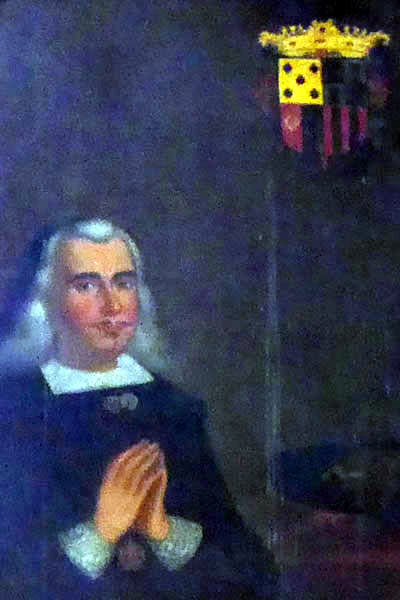
- Patron: Juan de Urdanegui and Constanza de Luxan y Recalde, marquises of Villafuerte
- Chronology: 17th century (1688-1689)
- Style: Baroque
A work in accordance with the plans of its patron, the commander Juan de Urdanegui, and for the service of the Society of Jesus
Interactive altarpiece: click on the pictures to get more information.
Church:
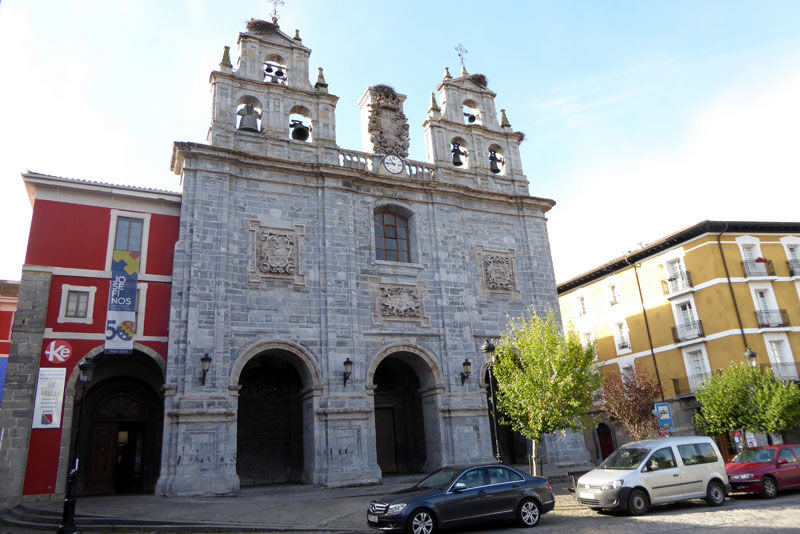
The Holy Family church originally was the church of the important Jesuit College in Orduña. This college is located in the centre of Orduña next to the customs facilities and the town hall. Its construction started in 1683 thanks to the donations given by 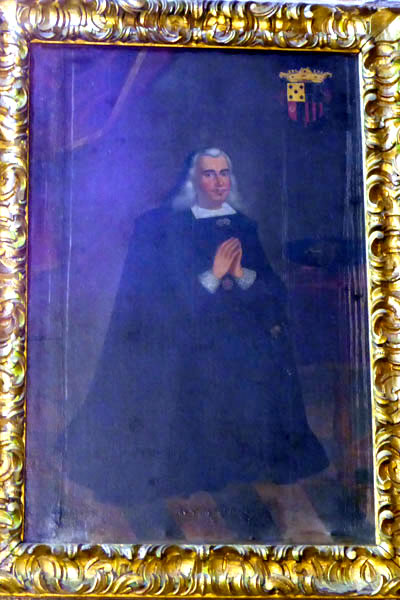
The church stands out for its monumentality with the portico, the two belfries and the large 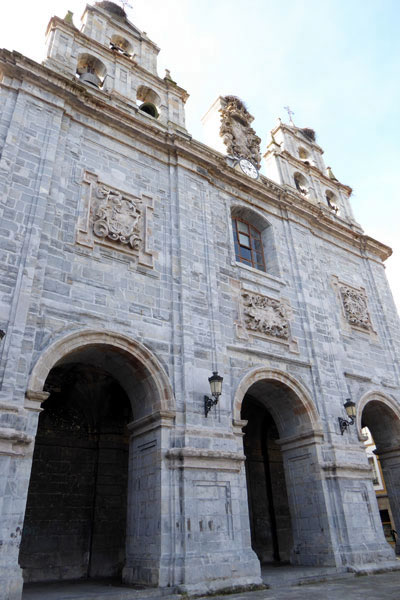
Patronage:
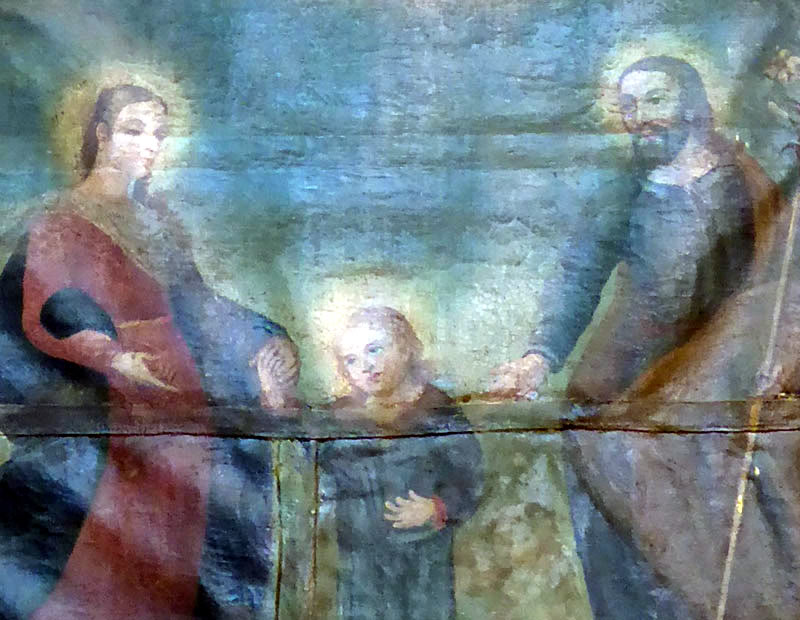
The Holy Family consists of Jesus of Nazareth, his mother Mary and his adoptive father Joseph.
The devotion to the Holy Family spread widely during the 17th century, at a time when the Jesuits prospered, who considered the Holy Family as example for christian families due to the virtues of humility, diligence, goodness, modesty and charity.
Description:
As this 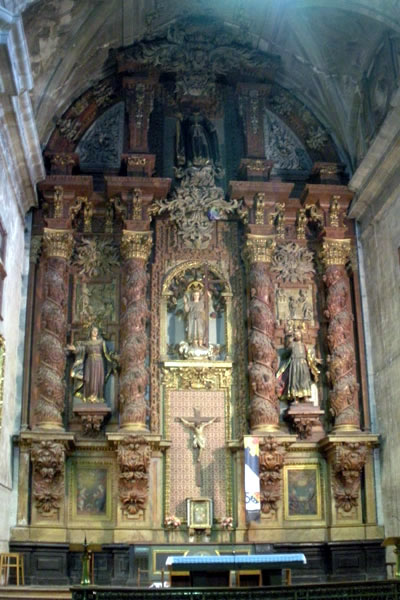

The altarpiece was built in the façade type and 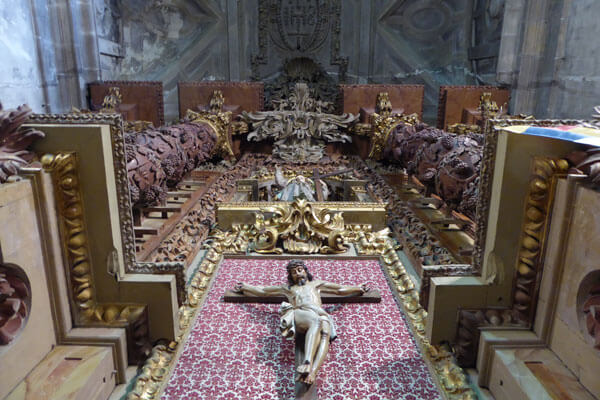

It is a highly decorated baroque altarpiece. Particularly noteworthy are the large twisted columns, known as Solomonic columns, covered with grapes and vine 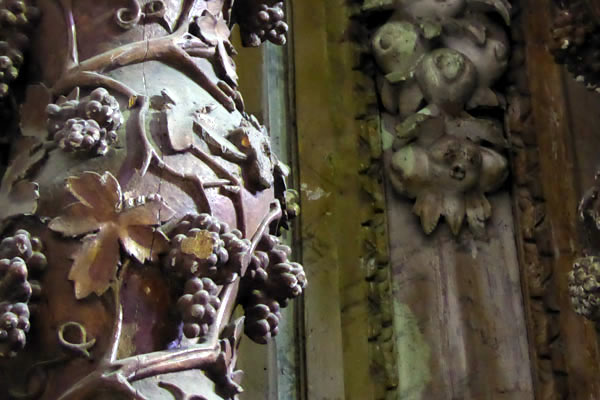

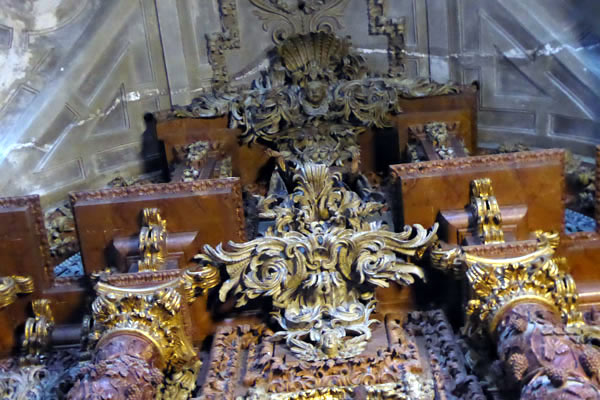

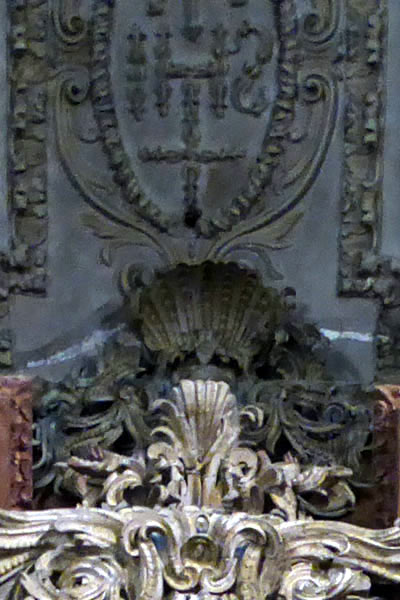
In contrast to this profusion of sculptural motifs, the painting or polychromy of the altarpiece is more sober, focusing mainly on the sculptures and imitating 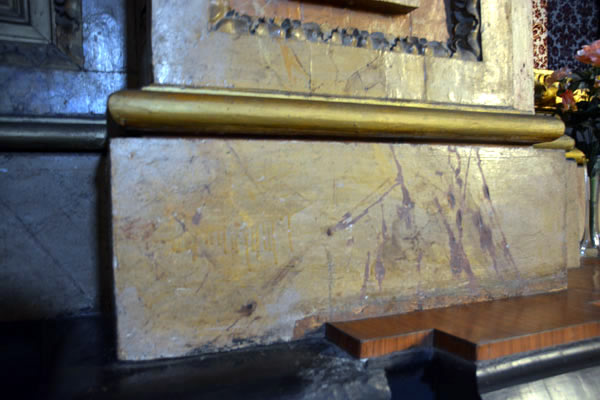
History:
This altarpiece was created between 1688 and 1689, thanks to the legacy that the nobleman and military man Juan de Urdanegui had assigned in 1666.
The work was carried out by the architect Felipe del Castillo, a native of Orduña who had participated in other projects for the Society of Jesus, such as the church of Los Santos Juanes in Bilbao, and the cantabrian sculptor Martín del Hoyo.
Sculptures:
Pedestal
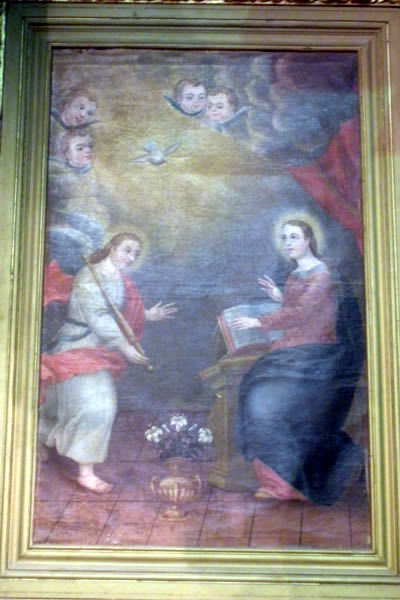
Annunciation
According to the gospels, the archangel Gabriel was send by God to announce Mary that she will be the mother of the Messiah. This moment is of great symbolic importance for the christianity, as it represents the mystery of the Incarnation, which means, the moment when God becomes a human to save humanity from sin. This painting shows the moment when the archangel appears to Mary, who is reading. Next to Mary are some white lilies, the symbol of purity and virginity. Above them appears the Holy Spirit flying as a white dove in allusion to the miraculous and divine conception of Christ.
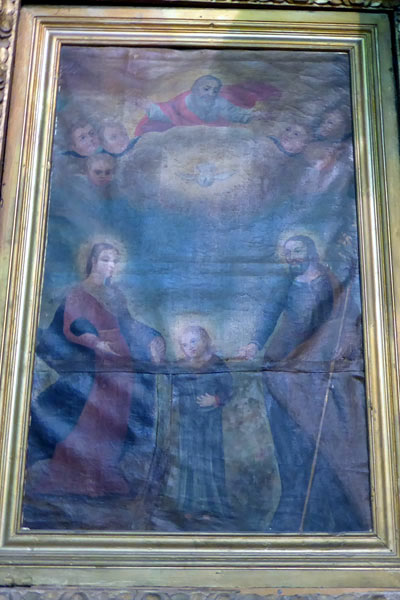
Holy Family
The Christ Child is accompanied by his mother Mary and his adoptive father Joseph. Mary holds the Child’s hand and Joseph carries the flourishing stick that identifies him as the husband of the Virgin Mary. Above them appear a white dove, representing the Holy Spirit, and God the Father. He is depicted as an old man with beard and is surrounded by angels. His apparition makes clear that Jesus is the Son of God.
Body 1
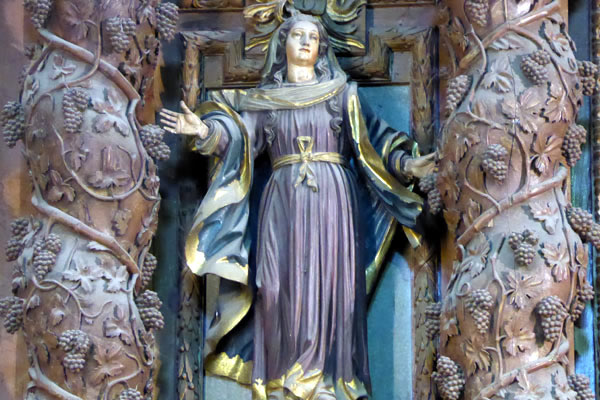
The Virgin Mary
Mary, the mother of Jesus, is depicted with loose hair, which is covered with a vault, and dressed with a blue coat and purple tunic.
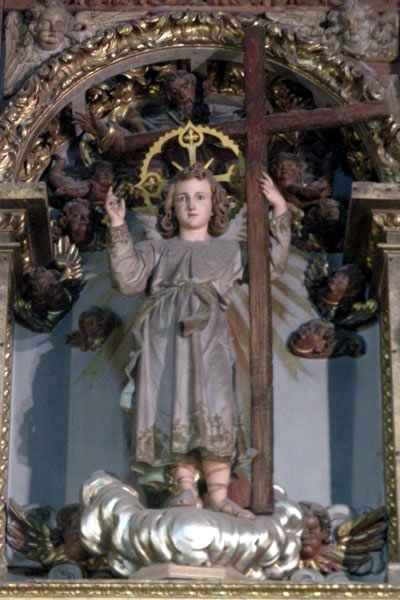
The Christ Child
The Christ Child holds a large cross in his left arm and raises the right hand for the blessing. A group of Angels behind him observe the scene, while God the Father in the centre outstretches his arms indicating that Jesus is the Son of God.
The Child is dressed with a tunic and sandals and stands out for its facial expression.

Saint Joseph
Saint Joseph carries in his right hand a flourishing stick that identifies him as the husband of the Virgin Mary and therefore as the adoptive father of Jesus of Nazareth.
He is dressed with a tunic and coat and the clothes are carved as they if they were moving in the wind.
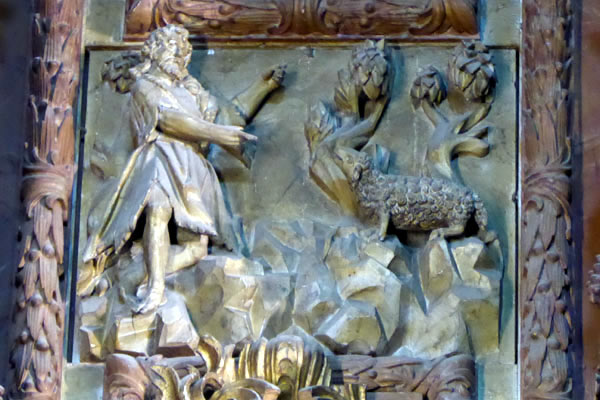
Saint John the Baptist in the desert
The relief represents the Patron Saint of Juan de Urdanegui, the nobleman who paid for this altarpiece. According to the gospels, John the Baptist carried out his work in the beginnings of christianity, in the region of the Jordan river. He baptised those who searched for the conversion – therefore he is called the Baptist. Among the people he baptised was Jesus of Nazareth.
The gospel describes him as a hermit who lived in the desert and covered himself with a camel-skin robe. Therefore, he is depicted with long hear and beard, dressed with a camel-skin robe and pointing to a lamb, the symbol for Christ.
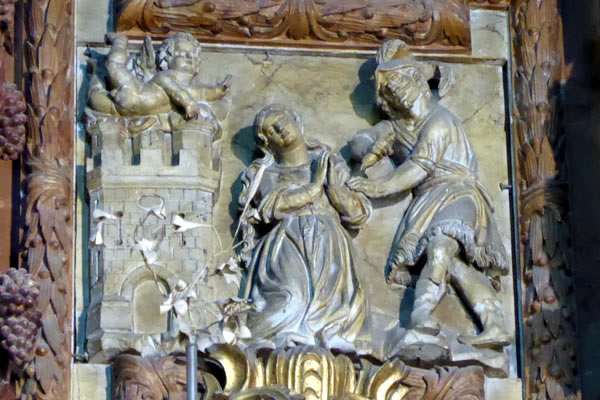
Martyrdom of Saint Constance
The relief represents the Patron Saint of Constanza de Oviedo, the wife of the nobleman who paid for this altarpiece. According to the legend, Constance was a young german woman from the 5th century. She had converted to christianity and promised not to marry but to keep her virginity. Therefore, she was one of 11,000 virgins who were martyred under Attila, the King of the Huns, in Cologne (today’s Germany).
The relief shows the moment when the hangman beheads Saint Constance. The Saint is in kneeling position with folded hands offering her suffering to God. An Angel is watching the scene.
Attic
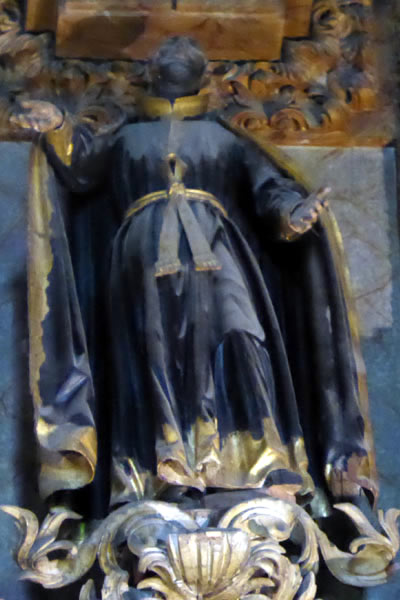
Saint Ignatius of Loyola
Ignatius of Loyola founded in 1534 the Company of Jesus, also known as the Jesuits. The Holy Family church in Orduña originally belonged to this congregation.
He is dressed with the order’s black habit.