
Collection of altarpieces
Altarpiece of the Virgin of Carmen
- Town: Markina-Xemein
- Church: Church of Our Lady of Carmen – Monastery. of the Discalced Carmelites friars
- Location: High Altar
- Artist: Marcos de Santa Teresa (architect and planner)
- Patron: Carmelite Community and Council of Markina
- Chronology: 18th century (1732)
- Style: Baroque
An altarpiece dedicated to the Virgin of Carmen, the patron saint of the Carmelites
Interactive altarpiece, klick on the pictures to get more information.
Church:
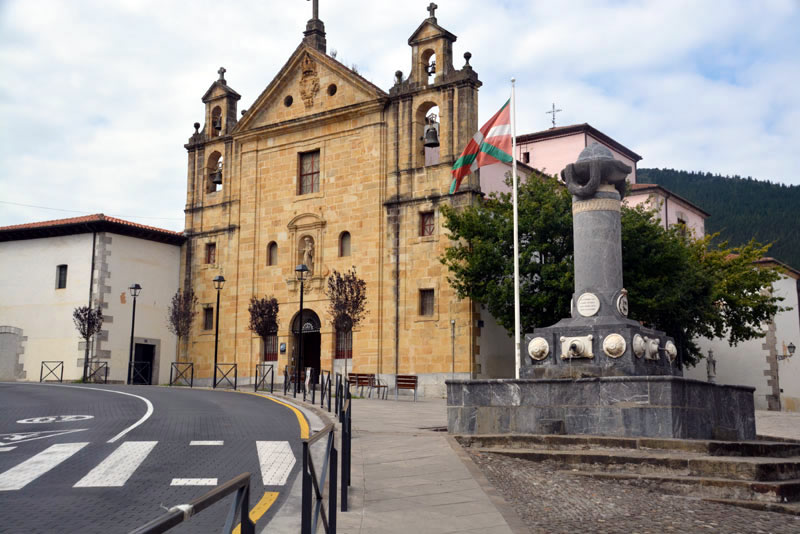
The Monastery of the Discalced Carmelites is located in the old town of Markina-Xemein and was founded in 1691 by the Abbot of Ziortza, Igancio de Munibe y Axpe. However, the construction was only finished in 1724, more than 30 years after the foundation of the monastery.
It is a fine example of a baroque carmelite church, with a simple façade flanked by two bell gables and, 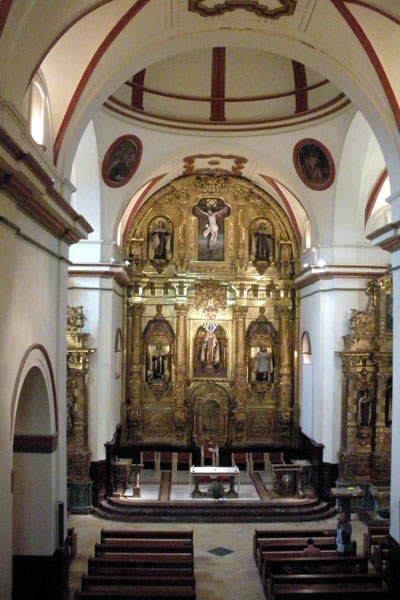

Patronage:
The Virgin of Carmen is one way in which the catholic church venerates the Virgin Mary, the mother of Jesus of Nazareth. According to the tradition, a group of hermits secluded themselves to live on mount Carmel in today’s Israel. After having been expelled by the muslims during the crusades, the hermits went to Europe, where they founded the Order of the Brothers of the Blessed Virgin Mary of Mount Carmel, known as the carmelite order. The order’s patron saint is the Virgin of Carmen, who, according to the tradition, appeared to the order’s prior general on 16th July 1251 and handed him over the habits they are supposed to wear and a scapular.
The scapular is an object made of two small pieces of cloth joined by two long strings worn around the neck, so that it hangs down on the chest and the back. The Virgin had promised to prevent everyone who wears a scapular like this during the entire life from the Purgatory and brings them into heaven. Therefore, it became the main attribute of the carmelites.
Description:
The 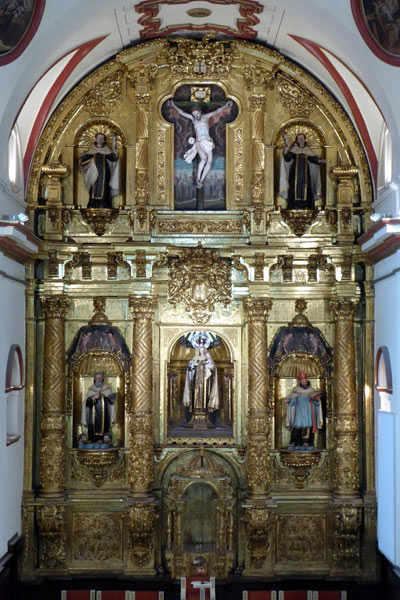

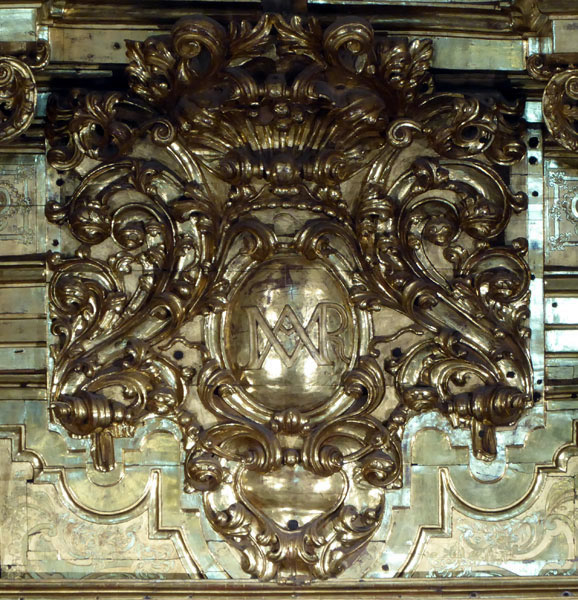
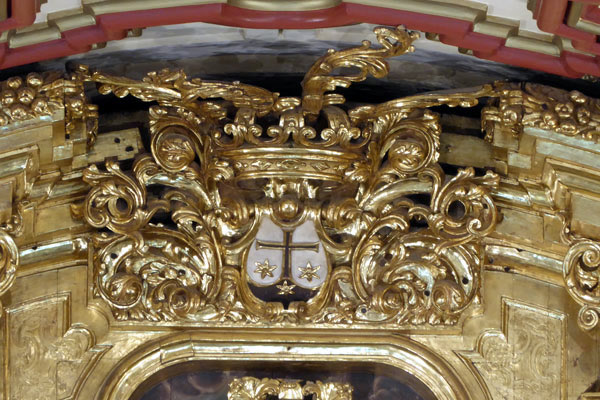
The main sculpture, the Virgin of Carmen, is located in the central heart of the altarpiece accompanied by Saint Elijah and Saint Cyril of Alexandria in the lateral sections. These two saints are depicted in much-decorated alcoves above which appear small angels or 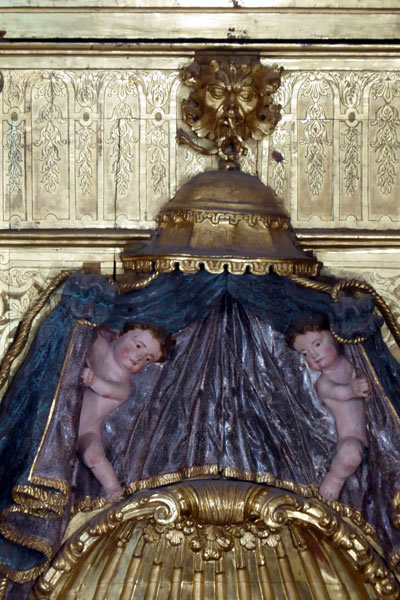
It is an excellent baroque work with highly decorative elements, also known as churrigueresque, such as the corinthian capital 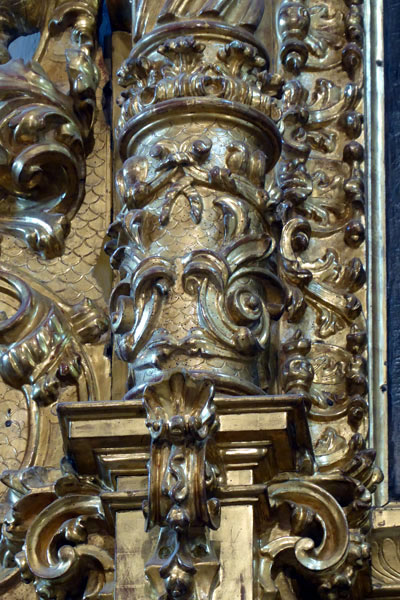

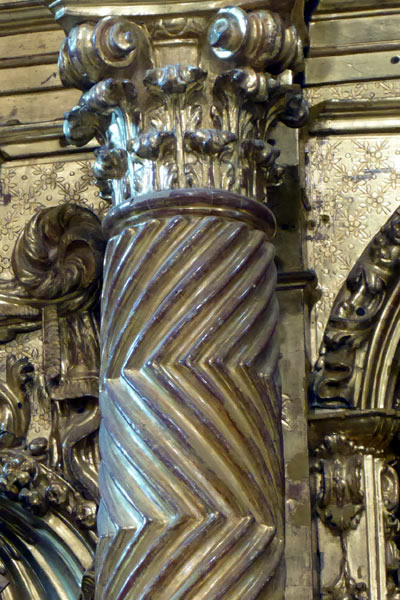
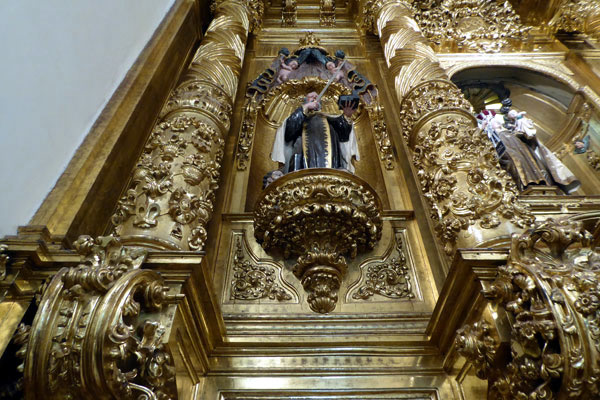
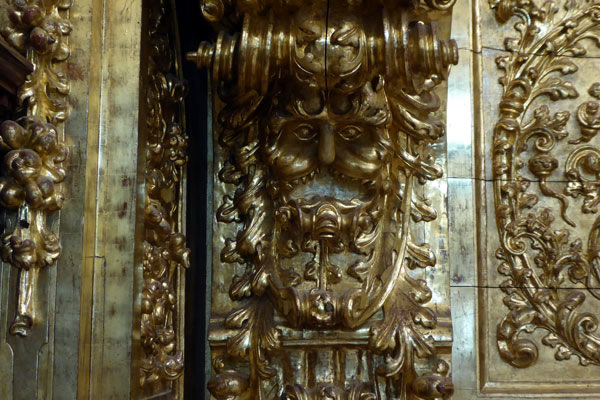
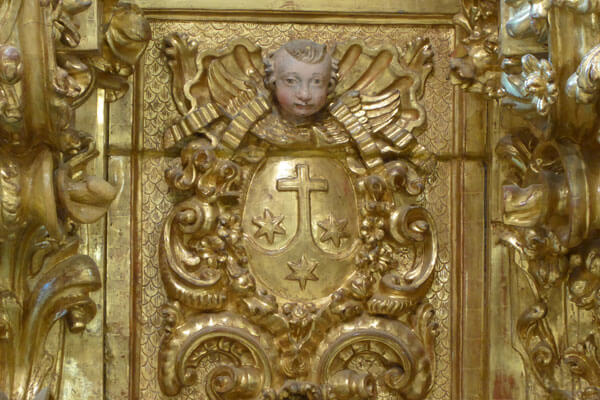
The 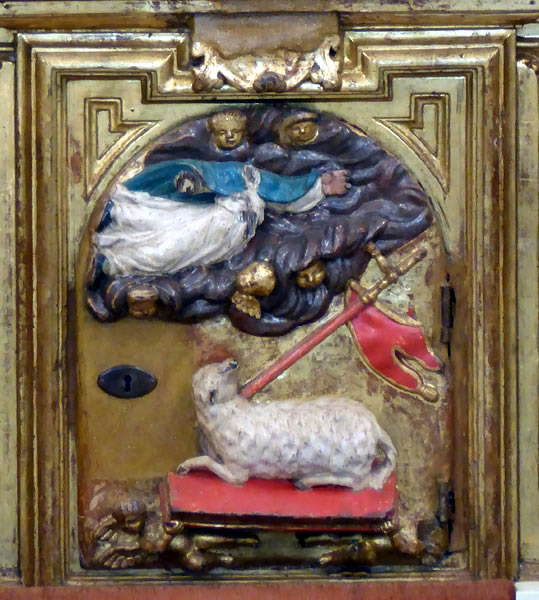
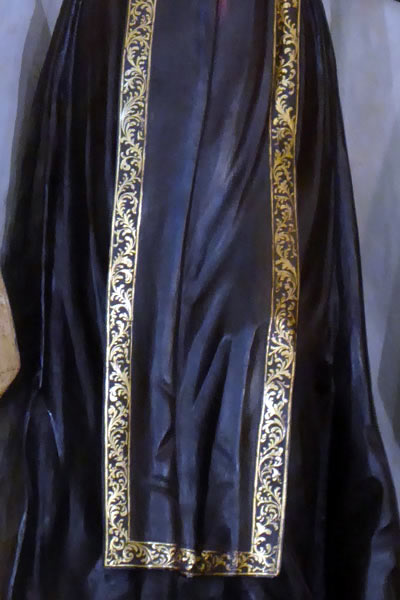
History:
The main altarpiece of the Monastery of the Discalced Carmelites in Markina was built in 1732; eight years after the construction of the church had been finished. The altarpiece was paid by the religious community and with financial aid from the local council. The architect Marcos de Santa Teresa, who was a member of the carmelite community, designed the altarpiece and Juan de Munar, who was from Cantabria and lived in Elorrio, was in charge of the sculptures.
The altarpiece was finished in 1773 with the painting of the polychromy made by José de Quintana from Tolosa.
Sculptures:
Body 1
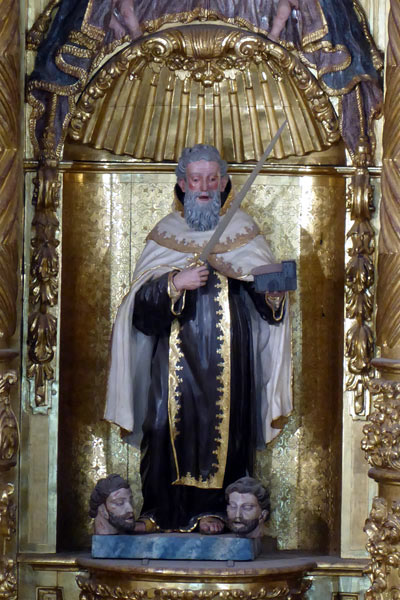
Elijah
According to the Bible, Elijah was one of the hebrew prophets who announced the birth of the Messiah. Once while he was preaching, he hid in the desert and was fed by ravens. He defended YHWH – the jewish name for god – from the faithful who believed in god Baal. Elijah defeated them and beheaded them on mount Carmel. Therefore, he was highly venerated by the first carmelites, who lived as hermits on mount Carmel, and is considered as the spiritual ideator of the order. Elijah is depicted as an old man with long beard dressed with the brown and white habit of the carmelite order.
He carries a small church in his left hand, which is a symbol for the first foundation of the order on mount Carmel, and a large sword in his right one with which he beheaded the soldiers of Baal, whose heads are depicted next to his feet. Elijah’s facial expression stands out, with his mouth open as a symbol of his ability to express the words inspired by God as a prophet.
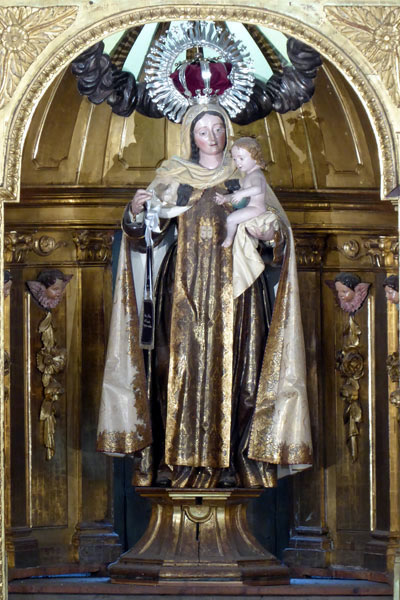
Virgin of Carmen
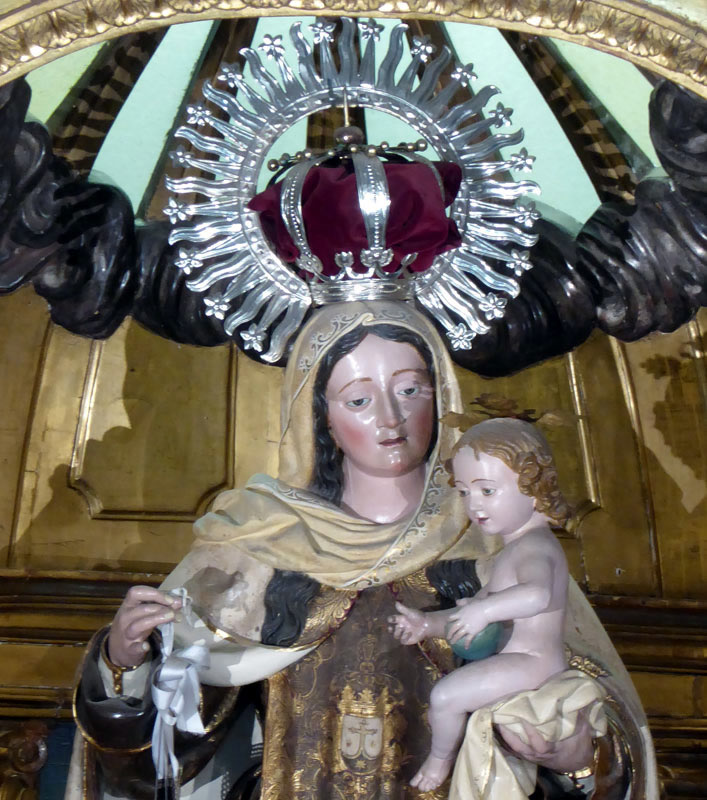
Our Lady of mount Carmel, also known as Virgin of Carmen is the patron saint of the carmelites. Therefore, she is dressed with the brown and white habit and carries in her right hand a scapular, just as, according to the tradition, she appeared to the prior general in 1251. Mary is depicted as Mother of God and crowned as Queen of Heaven, carrying the Christ Child in her arms.
The beautiful white, brown and golden clothes and the carving stand out. To underline her divinity, the picture is located in a golden alcove and decorated with reliefs, heads of angels and with clouds.
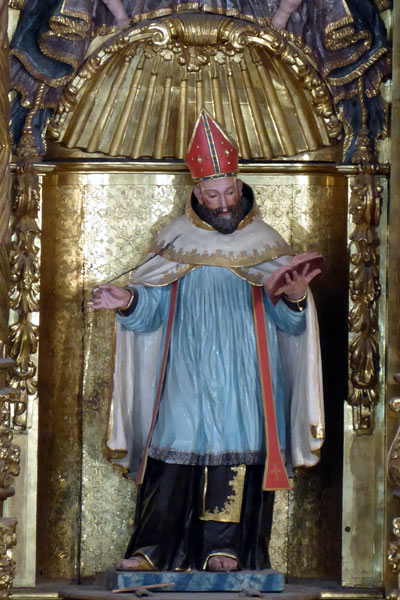
Saint Cyril of Alexandria
Cyril was a theologian from the first years of christianity and in 412 was appointed bishop of Alexandria in Egypt. At this time, the bishop of this diocese was named patriarch. Cyril was one of the first who defended the idea that Mary was the Mother of God. Therefore, he is highly venerated by the carmelites.
He is depicted as patriarch dressed with the mitre – the high and pointed hat, which bishops use in solemn masses – but also with the brown tunic and the white coat of the carmelites to emphasise the great devotion of the carmelite order to this saint. He carries a book and a feather in his hands in allusion to his writings about theology, which are of great importance for the catholic church.
Attic
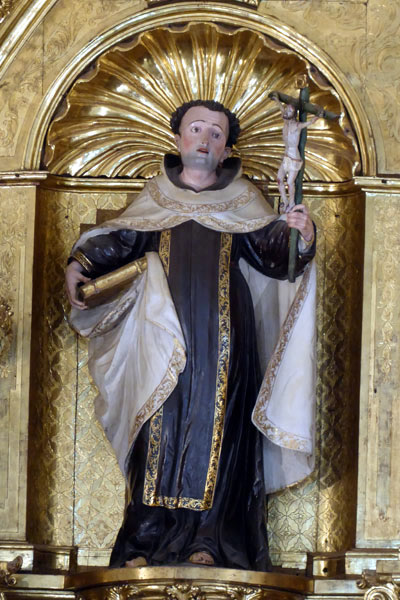
Saint John of the Cross
John of the Cross was a carmelite monk from Spain, who together with Teresa of Ávila reformed the order and founded the branch of the discalced carmelites. He was also author of important theological books and mystic poems. He is dressed with the carmelite habit and carries in his left hand a crucifix as symbol for his piety and a book in his right hand as allusion to his religious writings.
His facial expression and the carving of his clothes stand out.
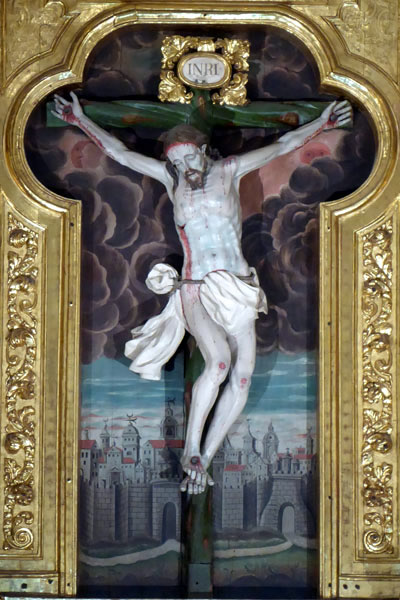
Crucified Christ
A picture of great expressiveness on the top of the altarpiece. The sculpture of Christ is carved in wood and depicts the dead Jesus nailed on the cross. The realistic anatomy stands out, emphasised by a polychrome, contrasting with the blood of the wounds on the feet, hands and torso. The sculpture of Christ is carved in wood and depicts the dead Jesus nailed to the cross. He is dressed with a carved loincloth, which seems to move in the wind.
In the background is a painting of the town of Jerusalem with the sky covered by thunderheads just as it is described in the gospels that on the day of the crucifixion darkness came over the land from noon until three in the afternoon.
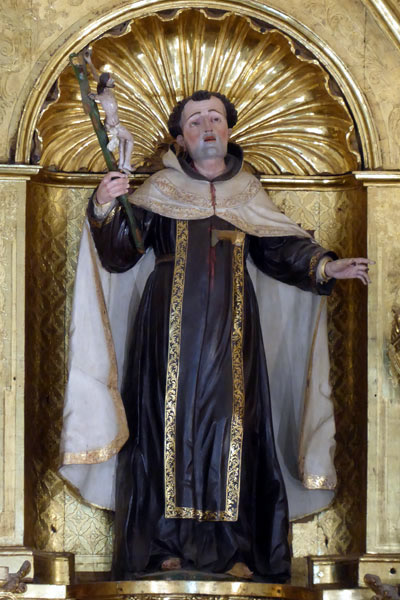
Saint Angelus of Jerusalem
Angelus was born in Jerusalem and was one of the first monks who went to mount Carmel (in today’s Israel). In 1226, he travelled to Rome to ask pope Honorius III. to approve the order’s rule. Therefore, he is considered as one of the founders of the carmelites, is dressed with the brown and white habit, and carries a crucifix in his right hand as symbol for his piety.
His facial expression and the carving of his clothes stand out.