
Collection of altarpieces
Altarpiece of Teresa of Ávila
- Town: Markina-Xemein
- Church: Church of Our Lady of Carmen – Monastery of Discalced Carmelites friars
- Location: Crossing, Epistle Side (on the right side of the Church)
- Artist: Marcos de Santa Teresa (architect and planner), Juan de Munar (sculptor) and Juan Manuel Salgado (guilder)
- Patron: Carmelite Community and Council of Markina
- Chronology: 1736
- Style: Baroque
An altarpiece to all saints of the carmelite order with the name Teresa
Interactive altarpiece: click on the pictures to get more information.
Church:
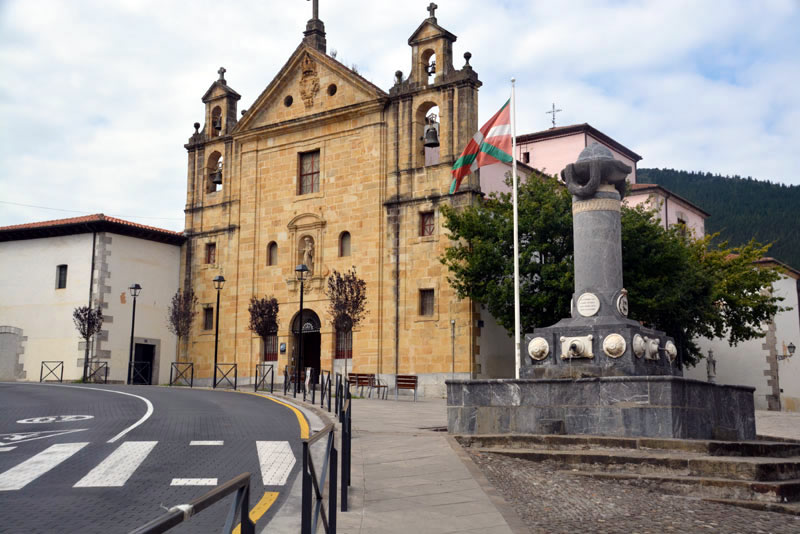
The Monastery of the Discalced Carmelites is located in the old town of Markina-Xemein and was founded in 1691 by the Abbot of Ziortza, Igancio de Munibe y Axpe. However, the construction was only finished in 1724, more than 30 years after the foundation of the monastery.
It is a fine example of a baroque carmelite church, with a simple façade flanked by two bell gables and, 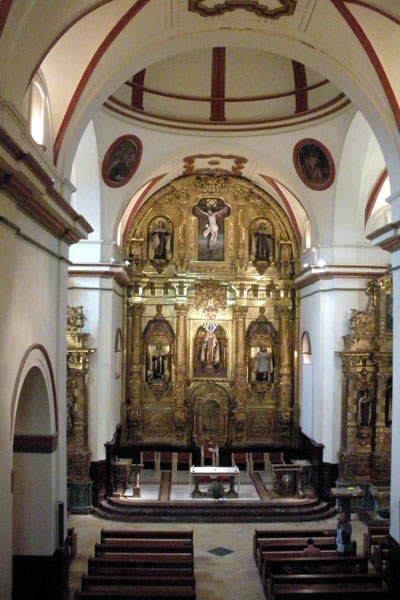
Patronage:
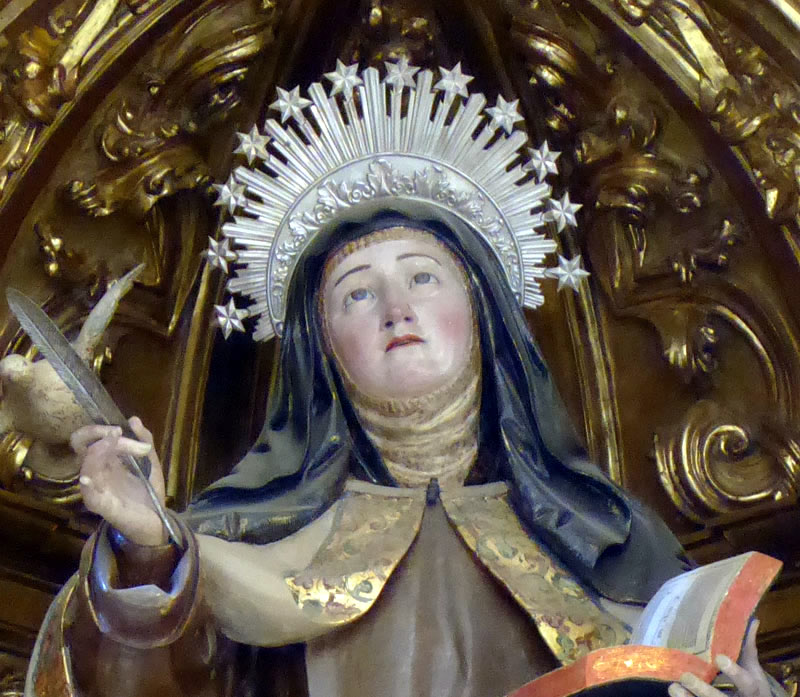
Teresa of Ávila, also known as Teresa of Jesus, reformed the order of the discalced carmelites in 1515. She founded her first convent in her birthplace and Saint Joseph became the order’s patron saint. As author of many religious works, she is depicted writing and accompanied by the Holy Spirit to indicate that God directly inspired her writings.
In 1970, pope Paul VI made her the first woman to be awarded the title Doctor of the Church.
Description:
The 
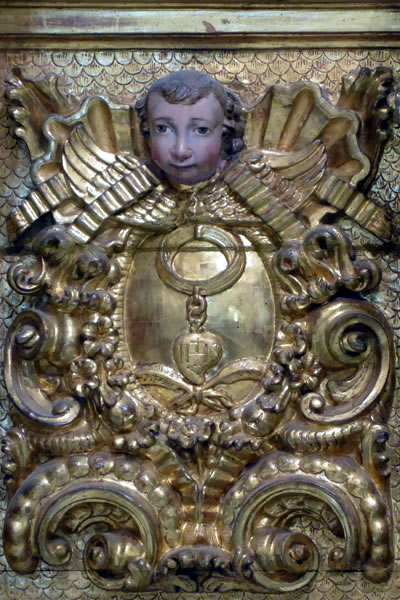
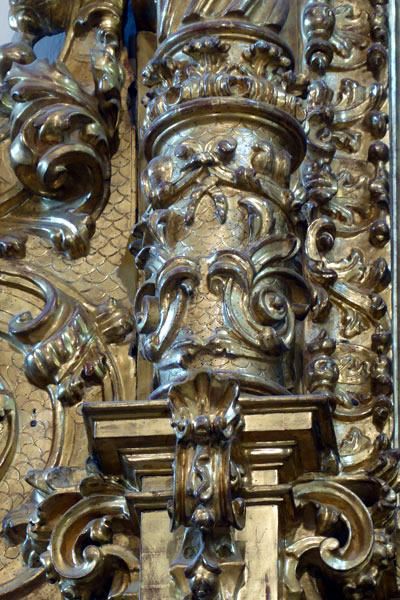
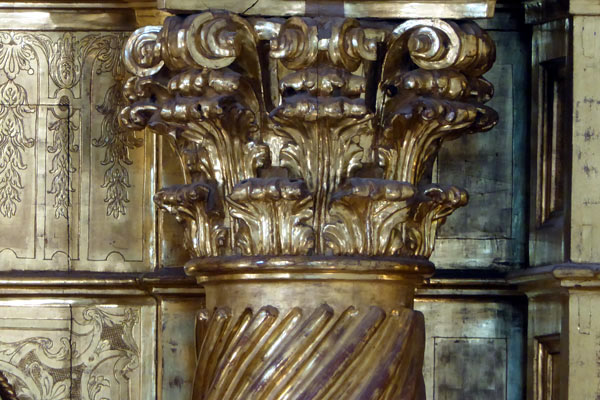
It is a highly decorated baroque piece of furniture, with elements such as corinthian capital columns, decorated with 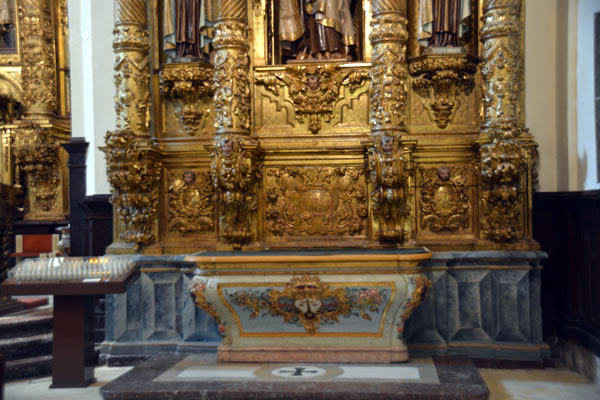
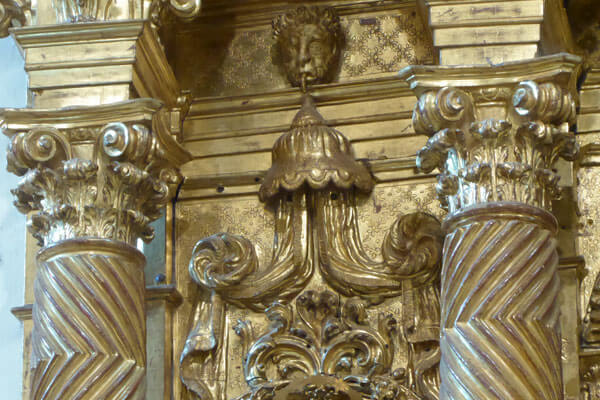
The attic, for its part, is highlighted by large 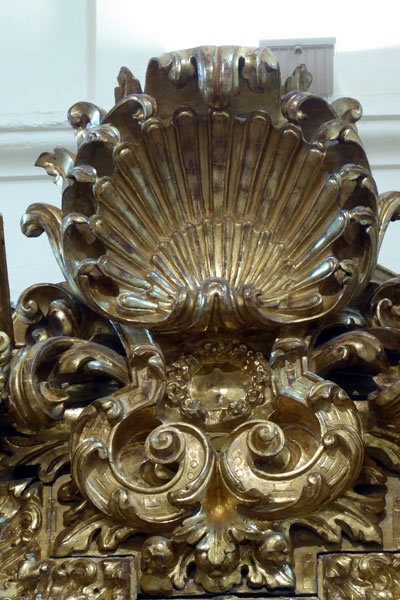
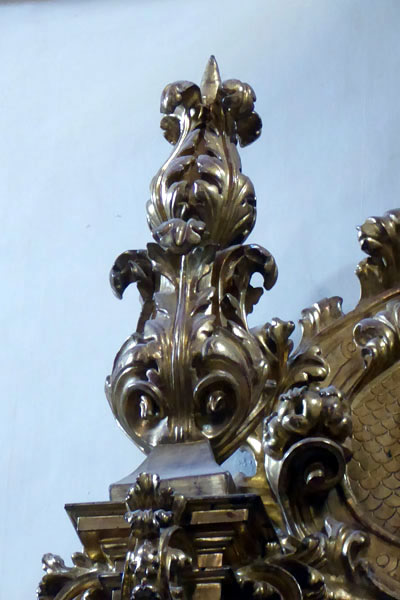
History:
The altarpiece of Saint Teresa was ordered by the carmelites of Markina in 1736 and paid thanks to the financial aid from the local council. The architect Marcos de Santa Teresa, who was a member of the carmelite community, designed the altarpiece and Juan de Munar, who was from Cantabria and lived in Elorrio, was in charge of the sculpture of Saint Teresa of Ávila.
The painting of the polychromy was finished in 1773 by Juan Manuel Salgado, a guilder from Guipúzcoa. In the 20th century, the lateral sculptures were added.
Sculptures:
Body 1
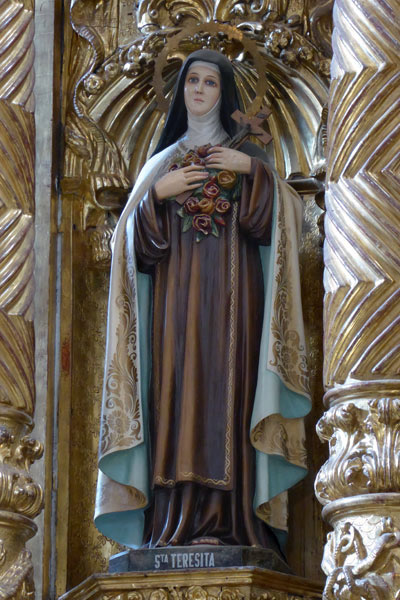
Saint Therese of Lisieux
This sculpture from the 20th century shows Therese of Lisieux, a woman who attracted attention with her writings about theology. She was a member of the discalced carmelites and is a role model for vocations, as she wanted to become nun from a young age. She overcame all obstacles until she joined the carmelites in 1888, when she was only 15 years old.
She is an example for mysticism, charity, good death and selflessness, as she cared for the sick nuns in the congregation. Therese was canonised in 1925.
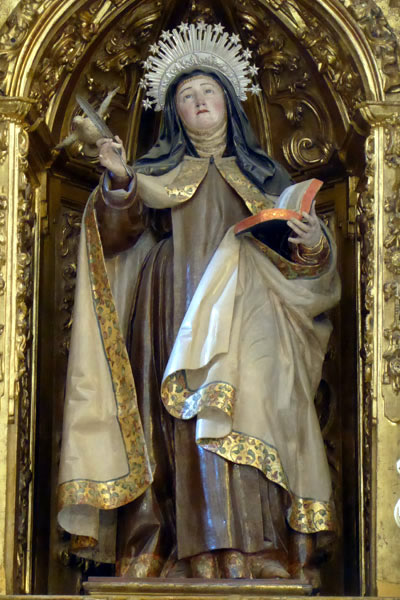
Saint Teresa of Ávila
Teresa is dressed with the carmelite habit, and carries a book and a feather, while the Holy Spirit is flying as a dove to her.
The Holy Spirit accompanies her to indicate that her writings, which are of great importance, are considered by the catholic church to be directly inspired by God.
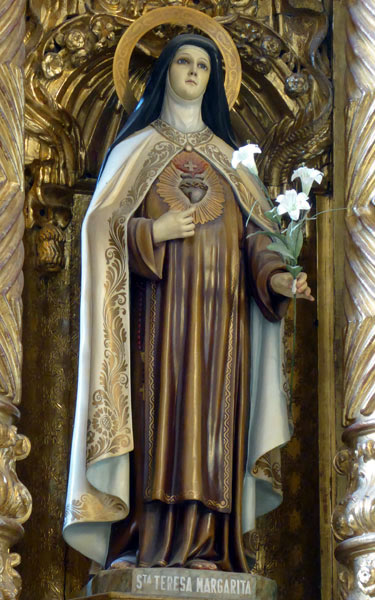
Saint Teresa Margaret of the Sacred Heart
This sculpture from the 20th century depicts the Italian Carmelite nun Teresa Margaret Redi, also known as Teresa Margaret of the Sacred Heart. The Sacred Heart of Jesus appears on her habit.
She lived a contemplative life, died in 1770 and was canonised in 1934.
Attic
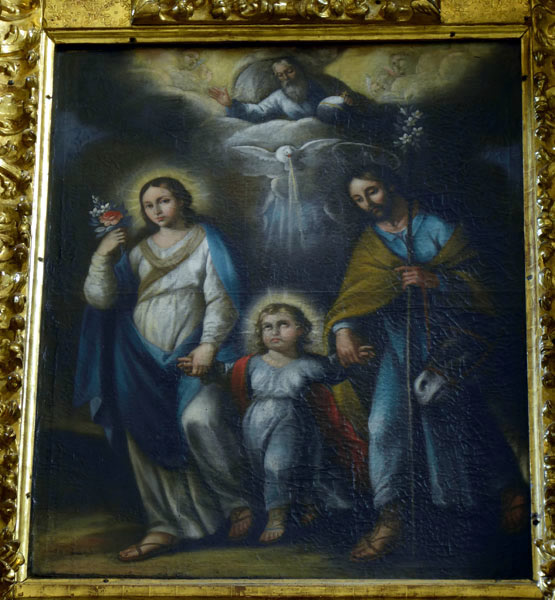
Escape to Egypt
According to the Gospels, an angel warned Joseph that king Herod confused the birth of the Messiah with the birth of a future monarch of the Jews. The king commanded to kill all boys in Bethlehem under the age of two years, because he was afraid that one of them would dethrone him. Mary and Joseph decided to flee from Nazareth to save Jesus from the so-called massacre of the innocents. During the escape, Joseph leads a donkey on a chain just as in accordance with the tradition.
In this painting, Jesus, Mary and Joseph are depicted as the Holy Family, being the ideal example for all christian families. They are blessed by God the Father, who appears between the clouds and sends a dove representing the Holy Spirit.