
Collection of altarpieces
Altarpiece of Saint Joseph
- Town: Markina-Xemein
- Church: Church of Our Lady of Carmen – Monastery of the Discalced Carmelites friars
- Location: Crossing, Gospel Side (on the left side of the Church)
- Artist: Marcos de Santa Teresa (architect and planner), Juan de Munar (sculptor) and Manuel Fernández de la Vega (guilder)
- Patron: Carmelite Community and Council of Markina
- Chronology: 18th century (1736)
- Style: Baroque
An altarpiece that glorifies the devotion to Saint Joseph
Interactive altarpiece: click on the pictures to get more information.
Church:
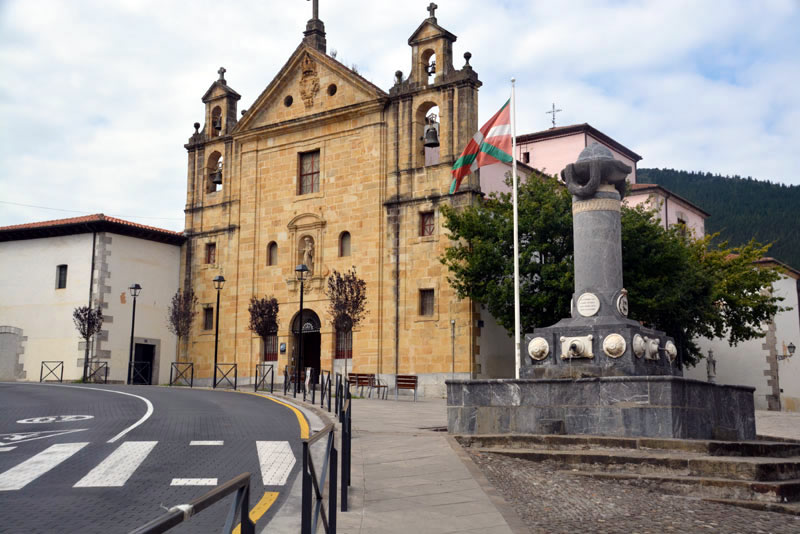
The Monastery of the Discalced Carmelites is located in the old town of Markina-Xemein and was founded in 1691 by the Abbot of Ziortza, Igancio de Munibe y Axpe. However, the construction was only finished in 1724, more than 30 years after the foundation of the monastery.
It is a fine example of a baroque carmelite church, with a simple façade flanked by two bell gables and, 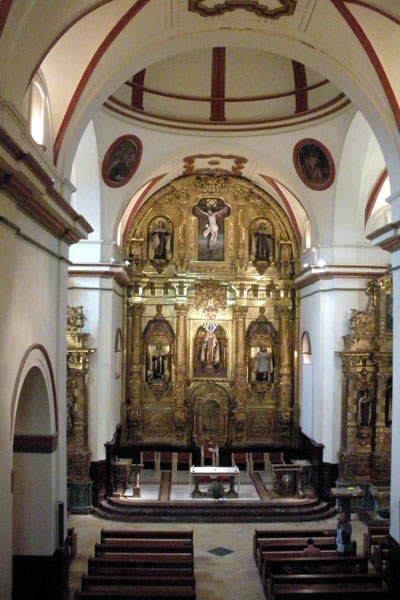

Patronage:
Joseph is the husband of Mary and the adoptive father of Jesus of Nazareth. According to the gospel of Matthew, he was an artisan – later, the tradition concretised his profession as carpenter. He was of humble status, although he belonged to the lineage of king David. In the first years of christianity, he was not considered very important. However, later theologians like Bernard of Clairvaux, Thomas Aquinas and Teresa of Ávila in particular started to venerate him. Since 1621, he has been the patron saint of the carmelite order.
Description:
The 
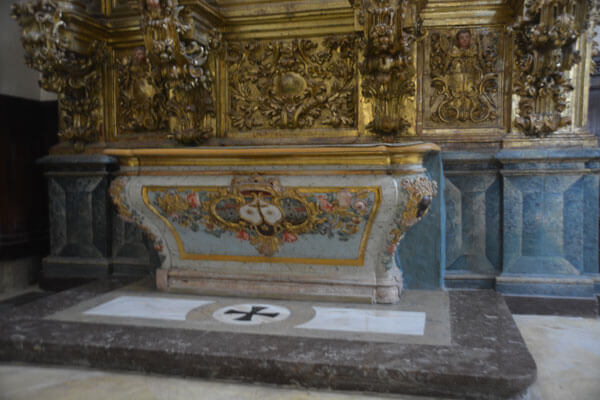

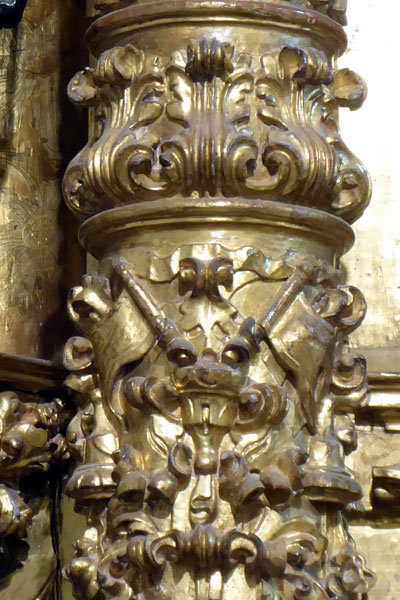
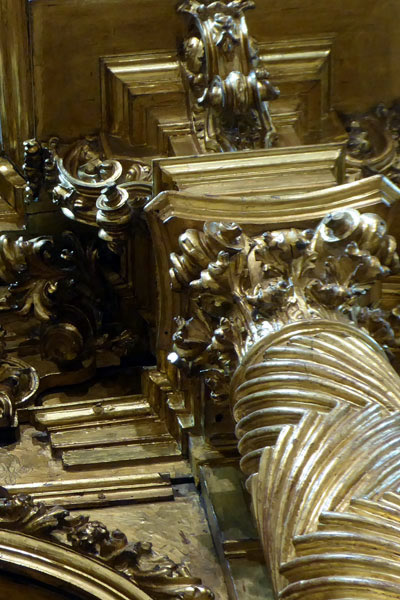
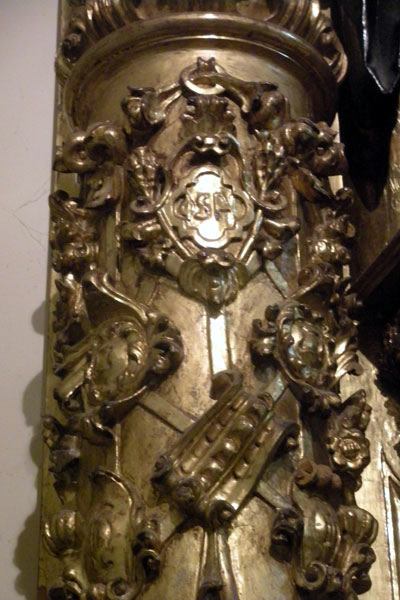
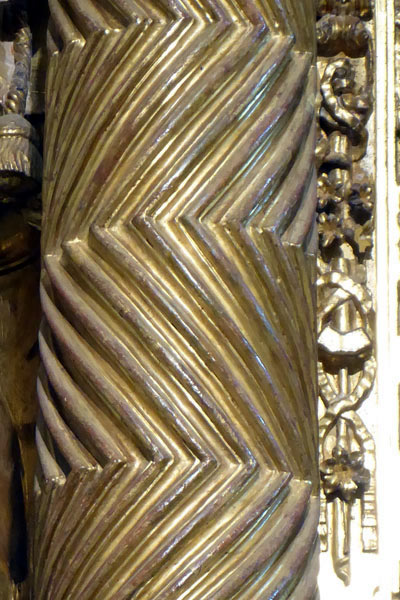


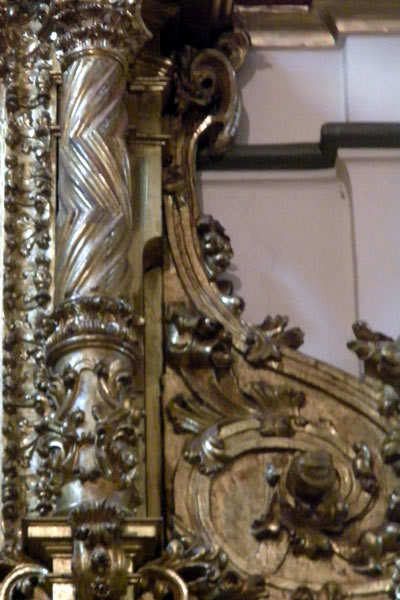
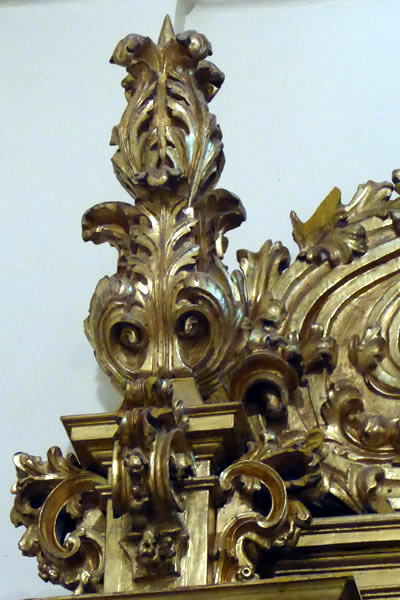
The polychromy, which is very carefully executed, focuses on the figures, highlighting the 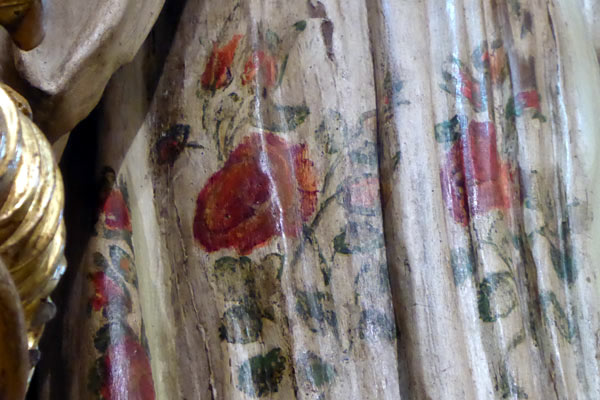
History:
The altarpiece of Saint Joseph was ordered by the carmelites of Markina in 1736 and paid thanks to the financial aid from the local council. The architect Marcos de Santa Teresa, who was a member of the carmelite community, designed the altarpiece and Juan de Munar, who was from Cantabria and lived in Elorrio, was in charge of the sculptures.
The painting of the polychromy was finished in 1760 by Manuel Fernández de la Vega, a guilder from Cantabria. It was paid with private donations from two residents of the town, Bruno de Ubilla and Teresa de Barroeta.
Sculptures:
Cuerpo 1
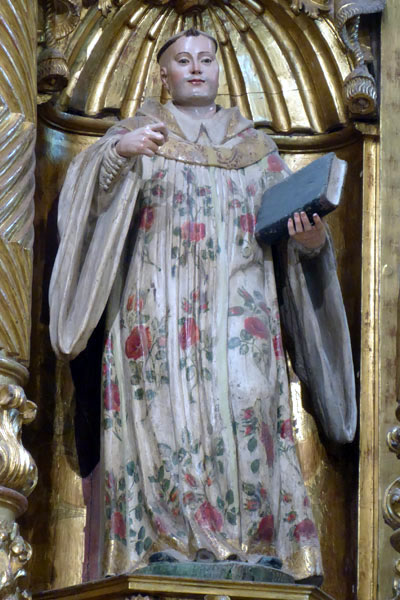
Saint Bernard of Clairvaux
Bernard was a cistercian monk at Clairvaux Abbey in France, which was very important for the religious and political life in Europe around the year 1000.
He gave four famous homilies or speeches about Saint Joseph – the Saint’s prudence and fidelity in particular. Therefore, Saint Bernard appears in this altarpiece next to Joseph, the patron saint of the carmelites.
Bernard is depicted with a book in his left hand and dressed as a cistercians monk with a richly decorated white habit and a shaved head. The sculpture was built by Juan de Munar.
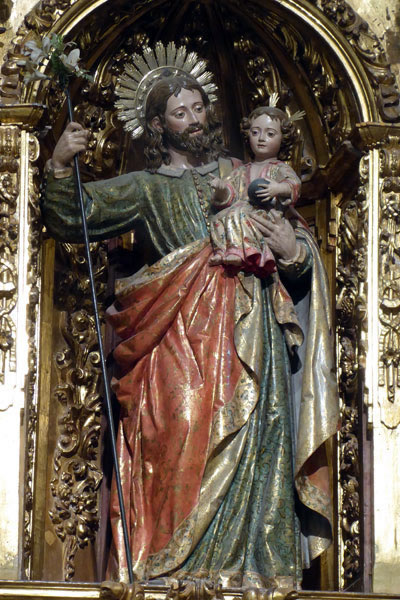
Saint Joseph
Saint Joseph is the husband of Mary and the adoptive father of Jesus of Nazareth. The reformer of the carmelite order, Teresa of Ávila, sparked the veneration of Joseph. That is why he is the order’s patron saint.
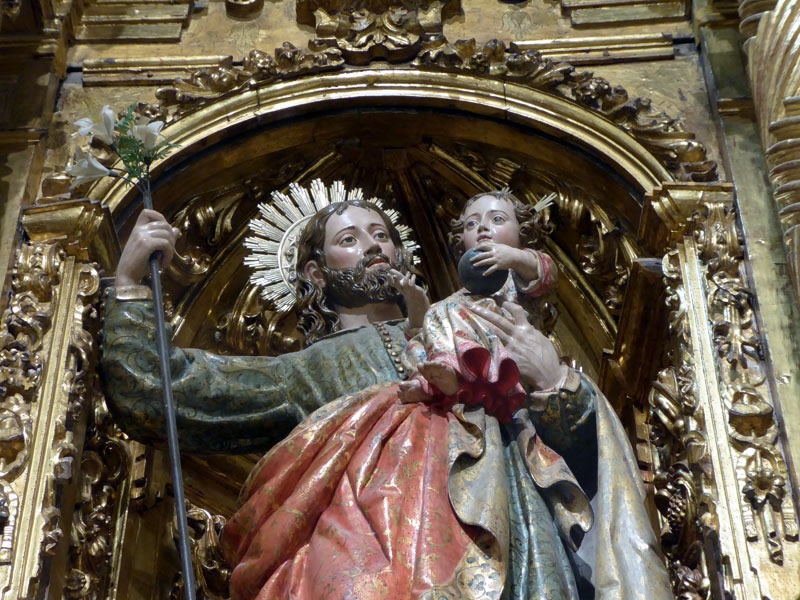
Saint Joseph with the Christ Child in his arms is looking at the child. This emphasises the relationship between the adoptive father and the son. Joseph carries a flourishing stick, as allusion to the miracle that made the priests recognise him as the suitable husband for the Virgin Mary.
The sculpture is put in a much-decorated alcove in the central heart of the altarpiece.
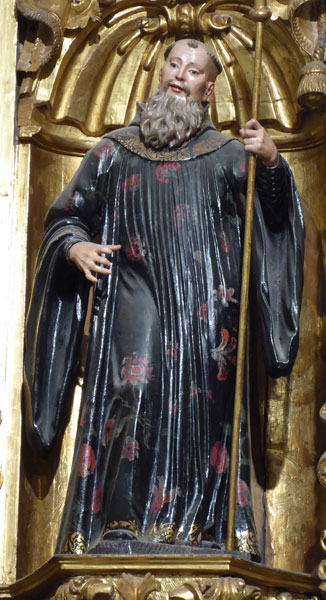
Saint Benedict of Nursia
Benedict of Nursia was an Italian monk who lived around the year 500. He founded the first order of monks in the West: the Benedictines.
Benedict’s work inspired Teresa of Ávila when she reformed the carmelite order. Therefore, he appears in this altarpiece next to Saint Joseph, the patron saint of the carmelites.
Benedict of Nursia is depicted as an old man with long beard holding a walking stick in his hand. As abbot of the benediction congregation, he is dressed with the black habit of his order. The sculpture was built by Juan de Munar.
Attic
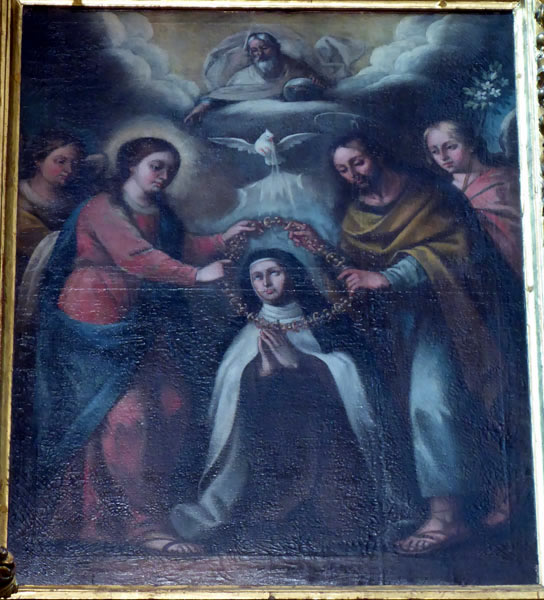
Saint Teresa of Ávila receives the collar
The painting shows an occurrence in the life of Teresa of Ávila which she described in one of her writings, the book of life. According to the Saint, she had a vision on 15th August 1561 that the Virgin Mary and Saint Joseph put a golden collar on her neck, while they told her that her work of founding new monasteries for the discalced carmelites would be successful. This vision was important for the carmelites and they decided to have Saint Joseph as their patron saint.
The mystic character of the vision of Teresa of Ávila in this painting is highlighted by the open heaven and the apparition of God the Father between clouds. God is depicted as an old man holding the globe in his hand and sending a dove – the Holy Spirit – to earth.
Next to the protagonists appear two angels. One is holding a flourishing stick, which symbolises Joseph as the husband of Mary. This painting is a copy of a work by Adrian Collaert from around 1600.