
Altarpiece of Saint John the Baptist (Molinar, Gordexola)
- Church: Beheading of Saint John the Baptist Church (Molinar, Gordexola)
- Location: High Altar
- Artist: Antonio de Alloytiz (architect and sculptor) and Fernando de Fontagud (painter of the polychromy)
- Patron: Parish
- Chronology: 17th century (1655-1657)
- Style: Baroque
A monumental baroque altarpiece constructed with the effort of the entire village
Interactive altarpiece, klick on the pictures to get more information.
Church:
The beheading of Saint John the Baptist Church is located in Molinar, the most populous district of the Gordexola municipality. The Church began to be reconstructed at around 1515 and over the years the chapels, chancel, belfry and sacristy were added. The entire work had not been finished before the 19th century. Therefore, the church contains elements in different styles: gothic vault, 

Patronage:
According to the gospels, John the Baptist carried out his work in the beginnings of christianity, in the region of the Jordan river. He baptised those who searched for the conversion – therefore he is called the Baptist. Among the people he baptised was Jesus of Nazareth. He did not only preach, but also denounced king Herod Antipas publicly for incest, as the king had married his own sister-in-law, Herodias. It was her daughter, Salome, who asked for the head of the Baptist in a silver charger after having danced for Herod. He fulfilled her wish and John was beheaded in the prison of Machaerus on the bank of the Dead Sea.
Description:
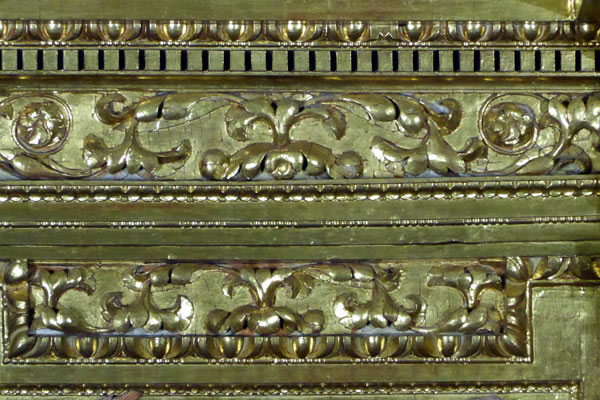
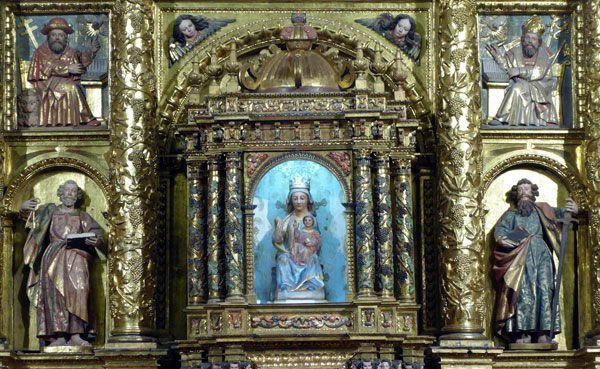
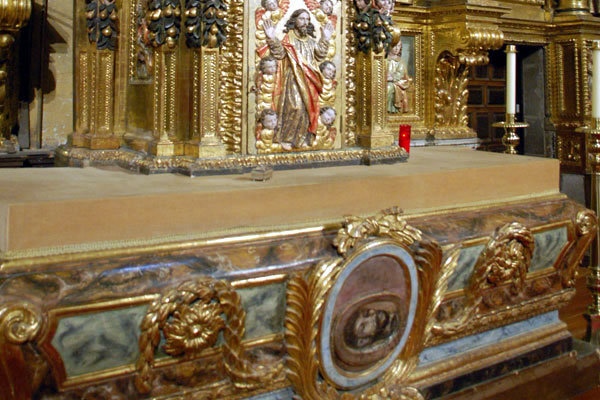
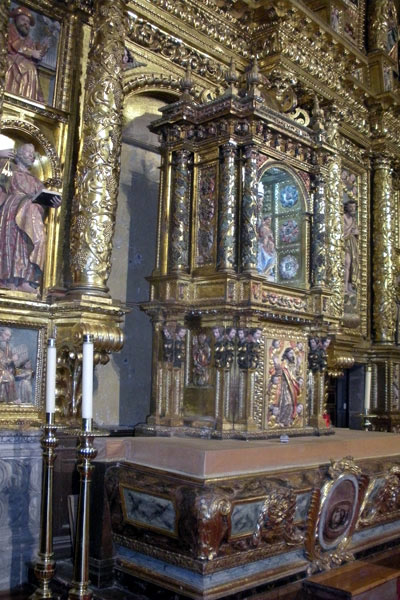
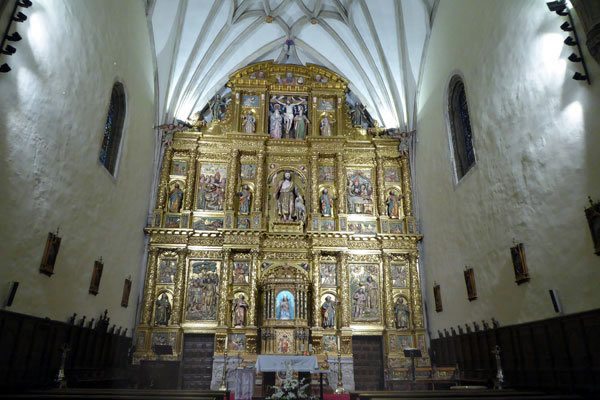
The altarpiece of the Beheading of Saint John the Baptist is located in the main altar of the church and occupies the entire wall. It is a monumental façade altarpiece and consists of a pedestal with reliefs, two body parts with the main scenes and sculptures, and the attic with the scene of mount Golgotha. It is divided vertically into three aisles, the central one being wider than the side aisles, and four entrecalles with sculptures of apostles. The aisles and entrecalles are separated by columns 


History:
The main altarpiece of Saint John the Baptist was built with the financial aid from the parish, the municipal council and mainly from private donations, many of them came from the american colonies. Many people from Gordexola built up a fortune and hold important offices in the Americas. In 1655, an order was placed with Antonio de Alloytiz from Bilbao, who was one of the most important baroque artists in Biscay. He was in charge of both the architecture and the sculptures. His work is influenced by the most important altar makers of that time – above all by Gregorio Fernández. He built many of the most significant altarpieces and processional shrines at that time. In 1657, the carving and assembly of the altarpiece was finished. However, the altarpiece was painted almost 100 years later, in 1753. Fernando de Fontagud, a gilder from Meruelo (Cantabria), carried out the polychromy.
Sculptures:
Pedestal
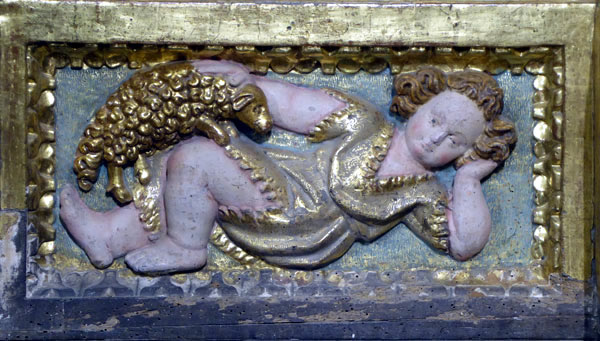
Saint John as a sleeping child
This relief shows John the Baptist as a child. However, there are two elements, which characterise him as adult: the camel skin robe and the lamb – the symbol for Christ. John is petting the lamb, while he is sleeping supporting his had with one hand.
The sculpture is in a lying position well adapted to the free space. It is similar to the sculpture of the sleeping Christ Child, which is also part of this altarpiece. This highlights the relationship between John the Baptist and Jesus of Nazareth – they were cousins.
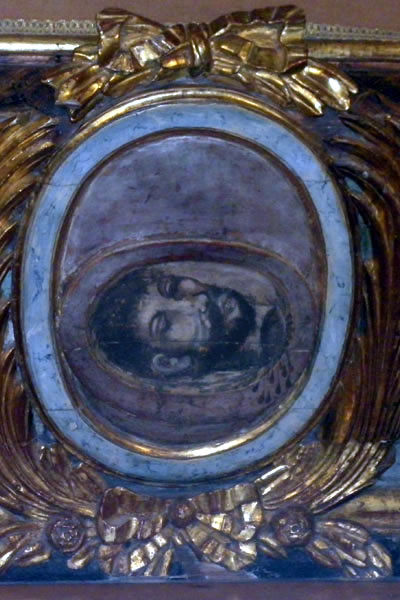
Saint John the Baptist beheaded
According to the Bible, after Saint John the Baptist had been beheaded, in accordance with the order of king Herod Antipas, his head was handed over on a plate to Salome, just as she had asked for.
The painting is adapted to the central medal of the altar, which is richly decorated with carvings of bow ties and gilded palm leaves, the symbol for John’s victory over the death.
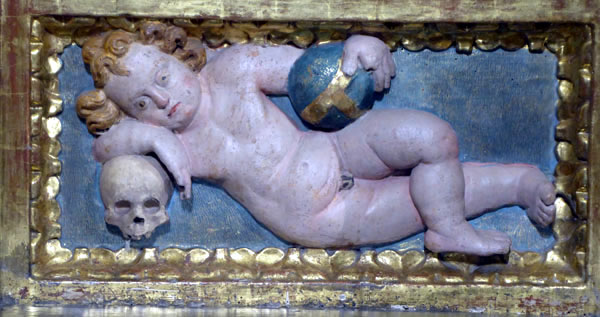
The sleeping Christ Child
The nude Christ Child is lying on a skull, which announces his death, while he is holding a blue globe in his left hand, the symbol for his divine power. This shows the dual nature of Christ as human and God.
It is similar to the sculpture of Saint John the Baptist as a sleeping child, which is also part of this altarpiece. This highlights the relationship between John the Baptist and Jesus of Nazareth – they were cousins.
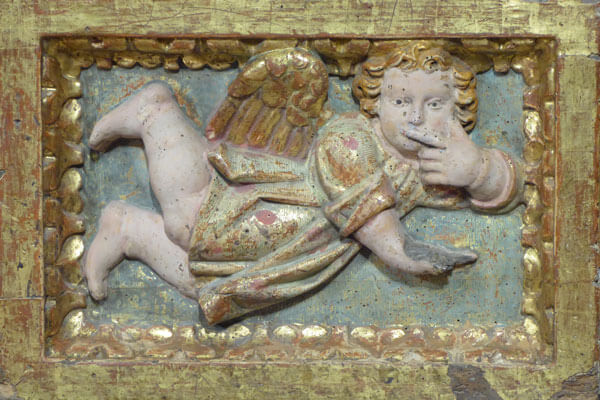
Angels
Four infant Angels surround the pictures of the sleeping children Jesus and John.
The angels wear short tunics and their gestures are very expressive, as they put one finger on their lips to ask for silence.
Body 1
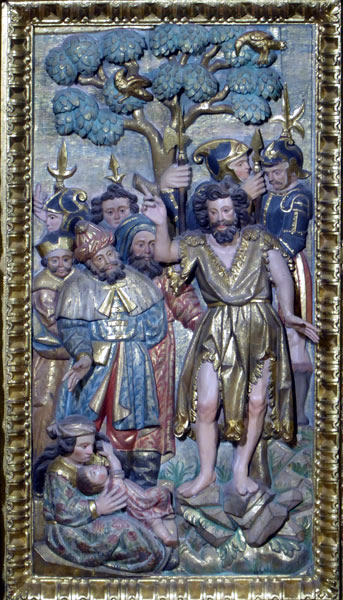
The Preaching of John the Baptist
According to the gospels, John the Baptist preached in the Judaean desert announcing that the Saviour would come soon. Therefore, he is depicted with scruffy hair and beard and dressed with a camel skin robe. He raises his right hand and a large crowd, who is listening to his preaching, surrounds him.
It is a very expressive scene with many details such as the birds picking the leaves in the tree or the woman in the foreground with the child in her arms, who is playing with her long hair.
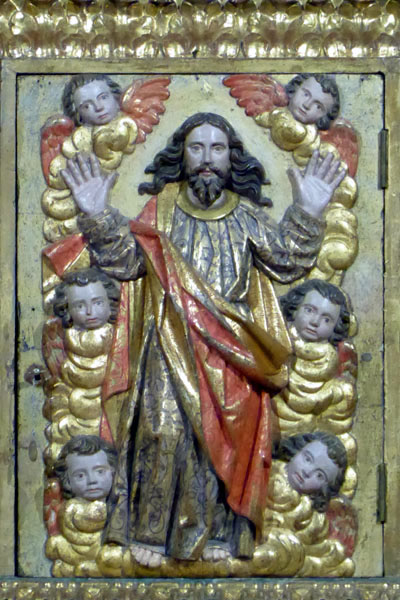
The Saviour
This relief is located in the door of the tabernacle over the altar. Jesus the Risen Christ already in the Glory is surrounded by clouds and Angels.
He is dressed with red and golden clothes and raises his arms to show his victory over the death and therefore the salvation of humankind from the sin.
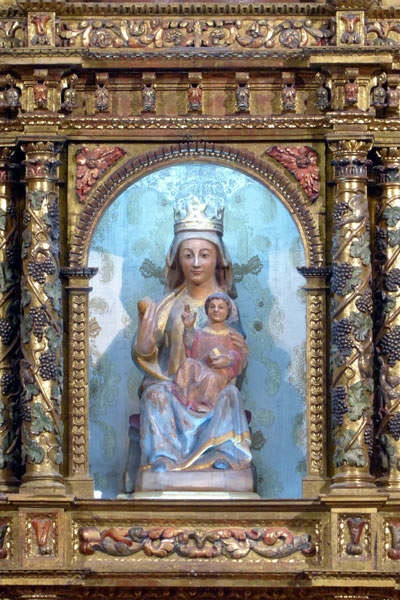
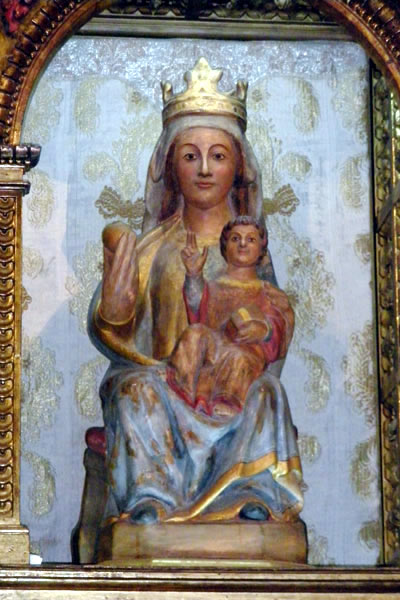
Andra Mari de Isasi
This sculpture is from a hermit, which is dedicated to the Virgin Mary, in the district of Isasi. It is the oldest picture of the altarpiece and was built in the 14th century. However, it was repainted several times. It shows Mary sitting with the Child in her lap. In the Basque country, it is known as Andra Mari (“Lady Mary”). Mary wears a crown and holds a fruit in her right hand. The Child raises one hand for the blessing and carries a book in the other hand.
This highlights Mary as Mother of the Saviour and her role in the salvation of humankind from the sin.
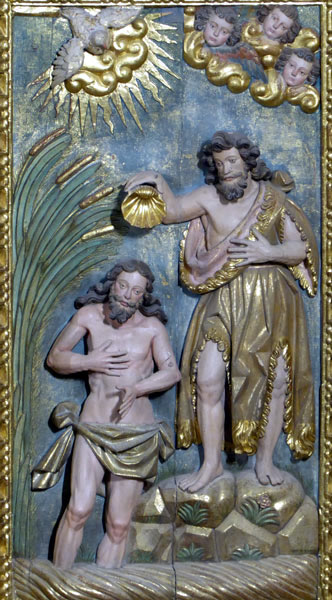
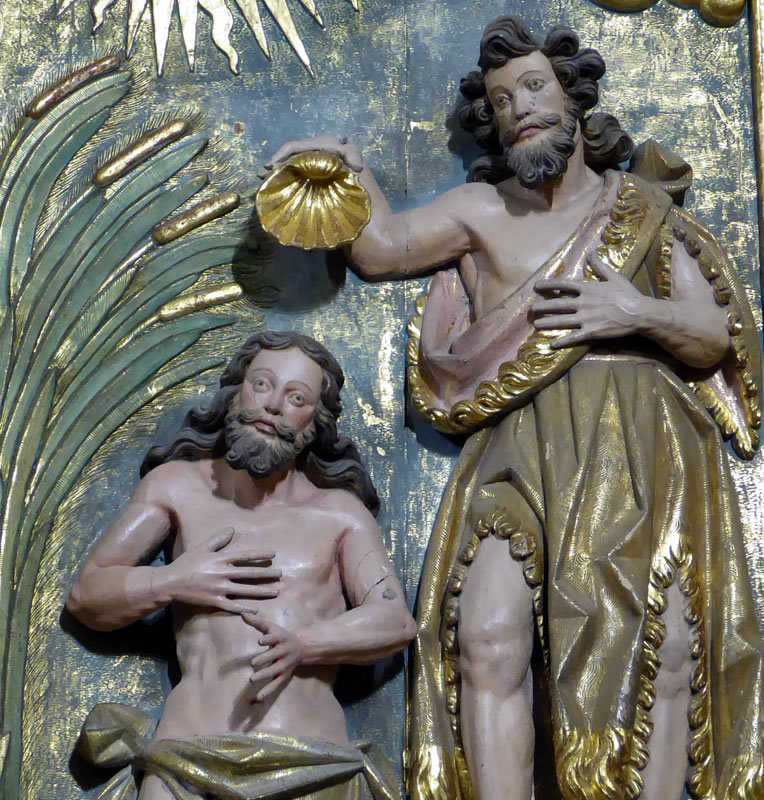
Baptism of Christ
According to the gospels, one day when the Baptist was preaching on the bank of the Jordan River, Jesus of Nazareth came and asked John to baptise him. In this moment, the heavens tore open and the Holy Spirit descends on Jesus like a dove, and the voice of God came from heaven saying, “You are my beloved Son”. The relief depicts this moment. John is standing on a rock and dressed with a camel skin robe holding a shell in his right hand with which he is baptising Jesus in the Jordan river. The Holy Spirit depicted like a dove in heaven shows that Jesus is the Son of God and some angels are watching the scene sitting between clouds.
It is a very expressive scene full of realistic details such as the reed grass over the head of Jesus.
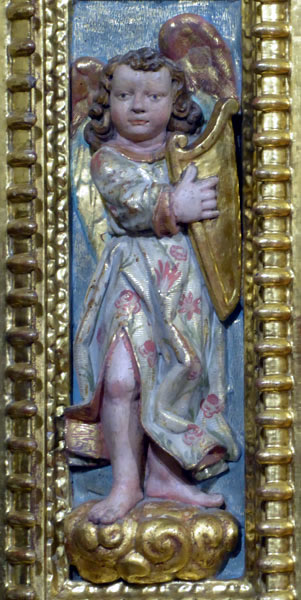
Musical Angels
An angel playing a harp.
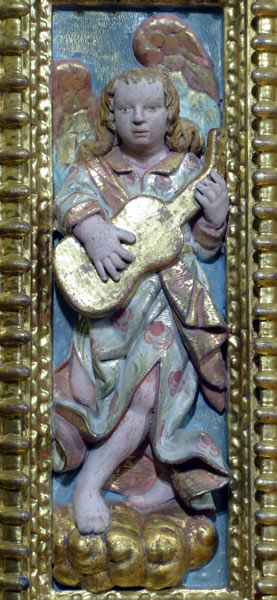
Musical Angels
An angel playing a stringed instrument.
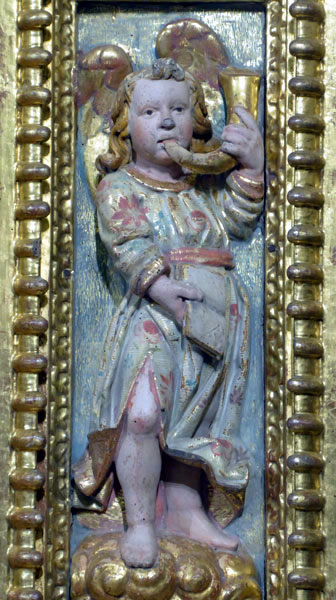
Musical Angels
An angel playing a horn.
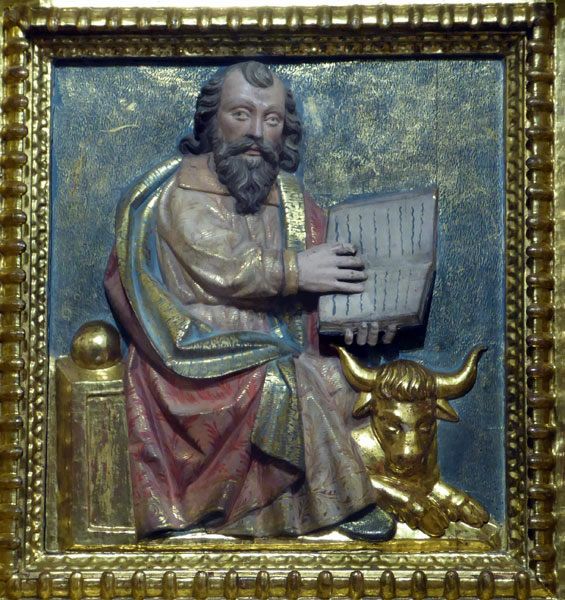
Saint Luke
Luke is the author of one of the four gospels in the Bible which the catholic church considers as directly inspired by God. Each evangelist has a symbol: Luke’s symbol is the ox, which in this relief is lying under the evangelist’s coat.
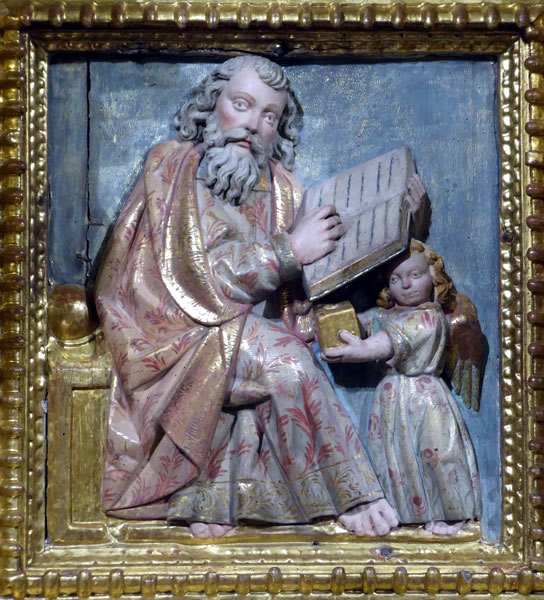
Saint Matthew
Matthew is the author of one of the four Gospels in the Bible which the Catholic Church considers as directly inspired by God. Each Evangelist has a symbol: Matthew’s symbol is the man, who is often depicted with wings, as he were an angel. In this relief, the man accompanies the Saint holding an inkpot.
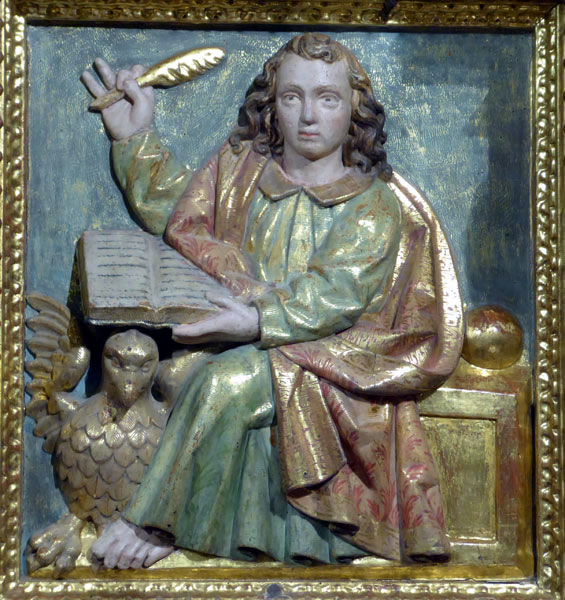
Saint John the Evangelist
John is the author of one of the four gospels in the Bible, which the catholic church considers as directly inspired by God.
Each evangelist has an own symbol: the one for John is an eagle, which accompanies the saint in this relief.
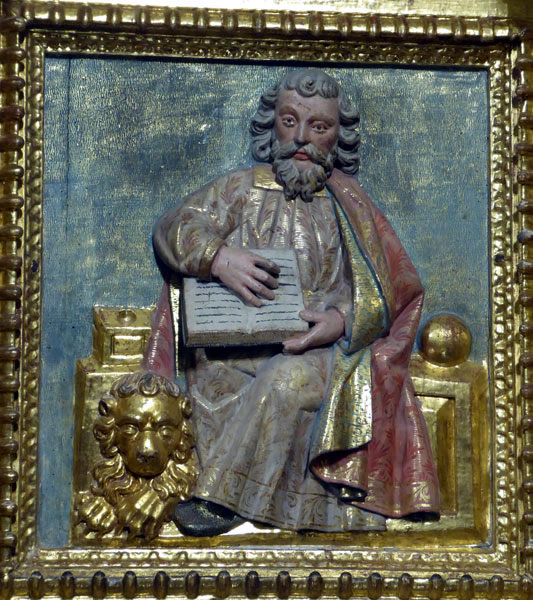
Saint Mark
Mark is the author of one of the four gospels in the Bible, which the catholic church considers as directly inspired by God.
Each evangelist has an own symbol: the one for Mark is a lion, which in this relief is depicted next to his feet.
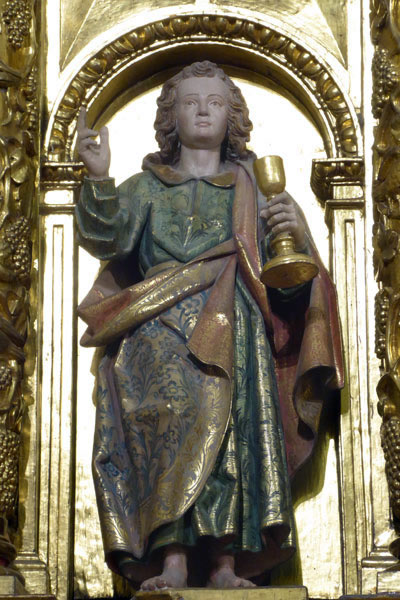
Saint John
John was one of the twelve Apostles who accompanied Jesus of Nazareth. In this altarpiece he appears also in his role as evangelist. However, this sculpture depicts him as a young man without beard carrying a chalice in his left hand while he is blessing with his right one. This alludes to his most famous miracle. He once was offered a chalice filled with poison and after having blessed it, he could drink from the chalice without suffering any damage.
The careful polychromy of the clothes, which are decorated with plant elements, stand out.
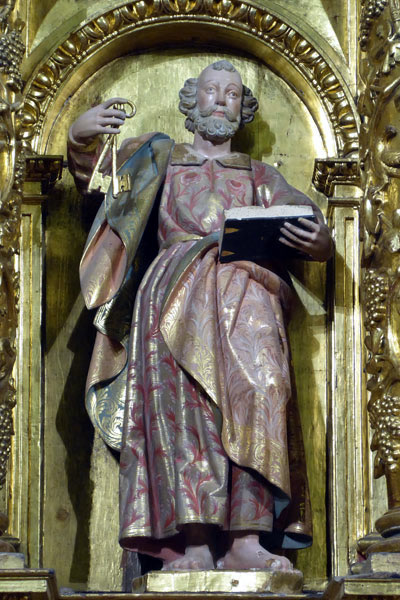
Saint Peter
According to the gospels, Peter and his brother Andrew were the first apostles who were called by Jesus of Nazareth. Peter is considered the first pope of the catholic church, as Jesus appointed him as his successor.
Peter is holding a book in his left hand and the keys of the Kingdom of Heaven in his right one. The richly painted clothes attract attention.
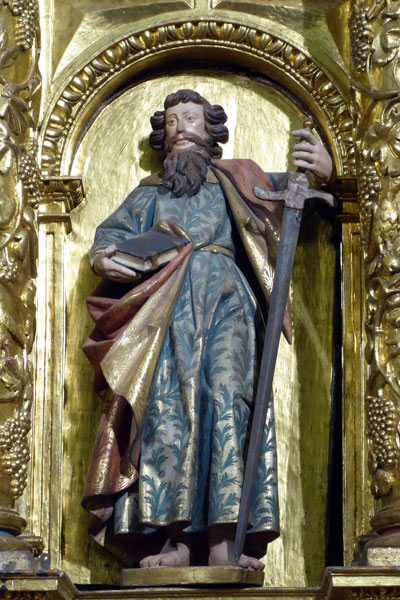
Saint Paul
Paul was one of the first missionaries of christianity, the religion to which he himself converted after Christ had appeared to him. In this picture, he is portrayed with a large sword, the symbol for his death by beheading, and the book, a reference to the text of the Acts of the Apostles and his fourteen Pauline epistles that are part of the Bible.
The polychromy of his tunic and robe stands out.
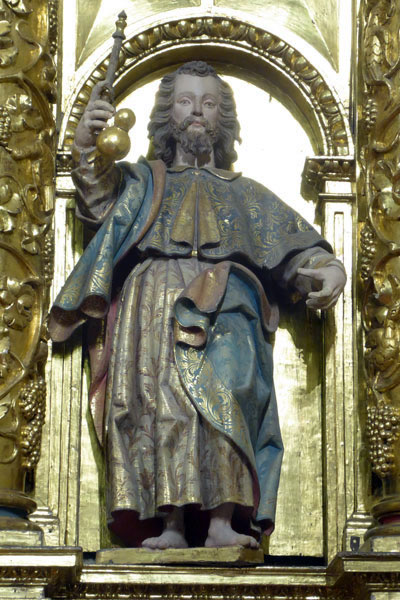
Saint James the Great
Saint James, son of Zebedee, was one of the twelve apostles who accompanied Jesus of Nazareth. He is known as Saint James the Great to distinguish him from the other apostle Saint James the Less, son of Alphaeus. According to a medieval tradition, James the Greater is buried in Iria Flavia (Compostela). This was the origin for the pilgrimage to his grave and for the Camino de Santiago.
Saint James is depicted like a pilgrim. In his right hand, he carries a walking stick with the pumpkin, which he used as water bottle. The clothes are decorated with golden plant elements.
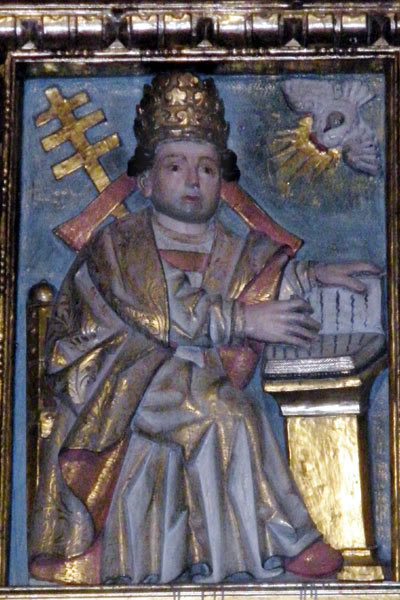
Saint Gregory the Great
Gregory was a pope from the sixth century. He is dressed with precious clothes, such as a red coat and red shoes, the tiara – a hat consisting of three crowns, which indicates his authority as pope, bishop and king – and the ferula – a stick forming a cross. He was author of many theological books and is considered as one of the Fathers of the Catholic Church.
Gregory reading a book is accompanied by the Holy Spirit, which is depicted as a dove, to indicate that God directly inspires him.
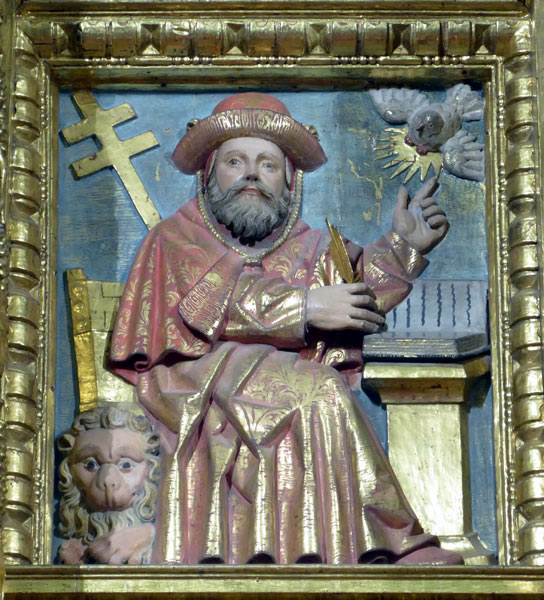
Saint Jerome
Jerome was a studious christian from the fourth century and translated the Bible to Latin. Therefore, he is considered as one of the Fathers of the Catholic Church. He is writing and accompanied by the Holy Spirit, which is depicted as a dove, to indicate that God directly inspires him. Jerome became secretary of pope Damasus IV. Therefore, he is dressed like a cardinal with a red robe and a cardinal’s hat. The golden polychromy of the robe stands out.
According to the legend, he was always accompanied by a lion, which has followed Jerome like a tame dog since the saint had pulled out a splinter of its paw.
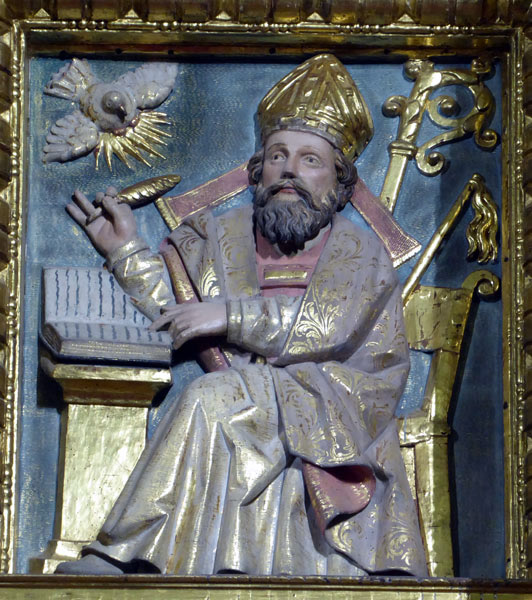
Saint Ambrose
Ambrose was bishop of Milan in the fourth century. Therefore, he is depicted with the mitre – a hat used by bishops in solemn celebrations – and a crosier. As author of many theological books, he is considered as one of the Fathers of the Catholic Church and depicted writing. He is accompanied by the Holy Spirit, which is depicted as a dove, to indicate that God directly inspires him.
The polychromy of the coat and the gold used for the crosier and for the mitre stand out.
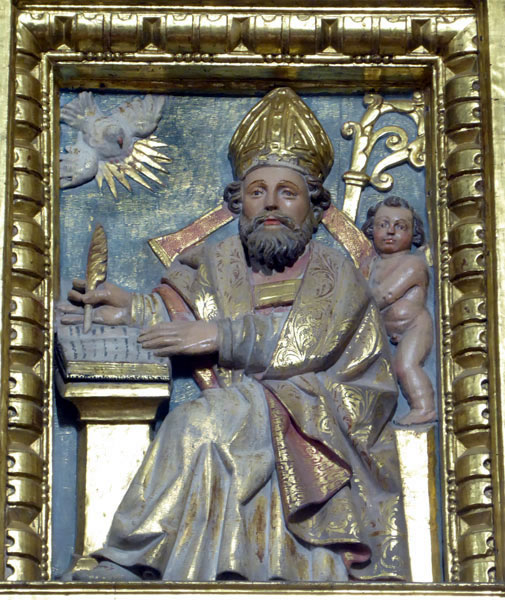
Saint Augustine
Augustine was a philosopher from the fourth century, who, after having converted to christianity, became bishop of Hippo (today’s Algeria). Augustine is dressed like a bishop with a richly ornamented coat and crowned with a so-called mitre – a hat used by bishops in solemn celebrations – and a crosier. As author of many theological books, he is considered one of the Fathers of the Catholic Church and is depicted writing. He is accompanied by the Holy Spirit, which is depicted as a dove, to indicate that God directly inspires him.
Next to him is a naked child as allusion to a legend that one day the saint was meditating at the seaside about the Most Holy Trinity. He saw a child playing, constantly filling a hole in the sand with water, wanting to drain the sea. When the saint told him that this task would be impossible, the child replied: “It is more difficult for you to understand the mystery of the Most Holy Trinity.”
Body 2
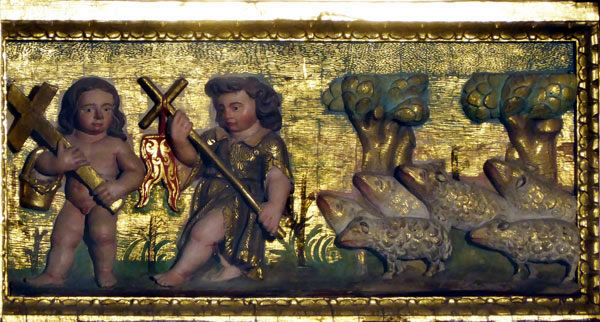
Saint John and Jesus as children, tending sheep
John and Jesus are depicted as children tending sheep. The picture symbolises the herd of God, which consists of all christians forming the church. The two children can be identified by the elements they are holding in their hands. Jesus carries a cross and a basket with nails in allusion to his crucifixion. John is dressed with a camel skin robe and carries a stick, which is shaped to a cross and decorated with a red and golden standard; elements that anticipate his preaching in the dessert.
It is a very expressive scene with many details, such as the sheep and the trees forming a beautiful landscape.
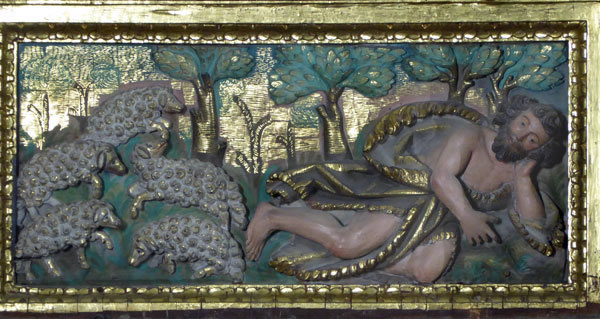
Saint John the Baptist meditating
Dressed with a camel skin robe, John the Baptist is laying under a tree next to a group of sheep. The picture symbolises the herd of God, which consists of all christians forming the church.
The landscape stands out.
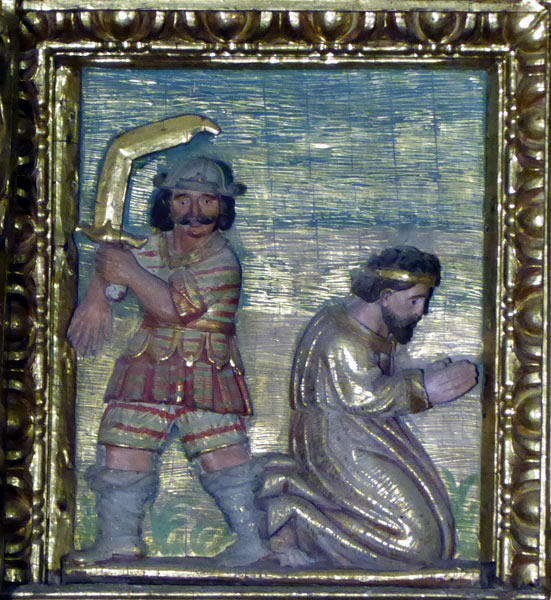
Beheading of the Baptist
The relief shows the moment when a soldier, who is standing behind John the Baptist, raises the sword to behead him. The soldier executes the order of king Herod Antipas, after the king’s stepdaughter Salome and his wife Herodias had insisted on John the Baptist to be killed.
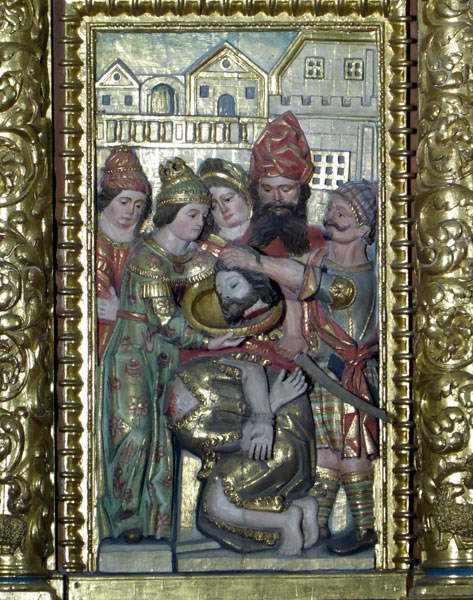
The head of the Baptist handed over to Salome
According to the Bible, after John the Baptist had been beheaded, king Herod Antipas ordered the head of the Baptist to be handed over to Salome on a silver plate. The picture shows the moment, when a soldier hands the head of the Baptist over to Salome in front of many people watching the scene. The girl is dressed with a green dree. The beheaded body of John the Baptist, dressed with the camel skin robe and his hands still tied to the back, appears in the foreground of the picture. In the background appear the palace of Herod and the prison, where the saint had been jailed before his death.
The precious polychromy, which highlights the facial expression and the deathly pallor of the beheaded Baptist, attracts attention.
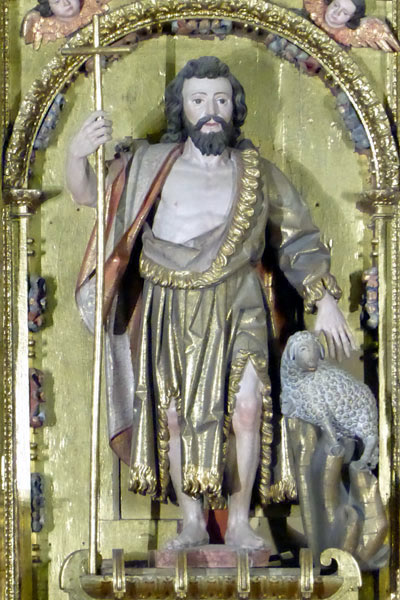
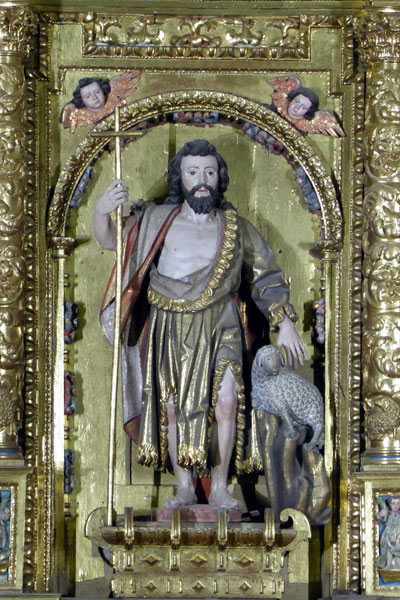
Saint John the Baptist
In the main picture of the altarpiece, John the Baptist is depicted with the lamb – the symbol for Jesus, whom he baptised and whose arrival as Messiah he announced -, with the camel skin robe, which he dressed during his preaching in the dessert, and the cross, which indicates that John was the precursor of Christ.
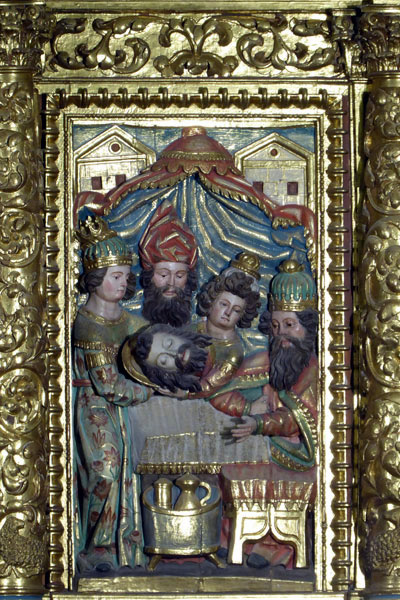
The presentation of the Baptist’s head to King Herod
Salome presents the head of John the Baptist to her mother, Herodias, and her stepfather, Herod Antipas, who are sitting at the table in the palace.
It is a scene painted with an exquisite polychromy and of many details such as the buildings in the background, the curtains in the dining room or the vessels under the table.
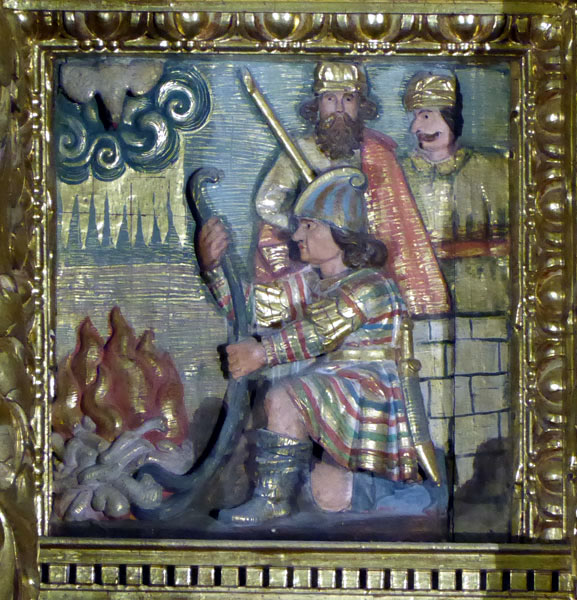
The cremation of the Baptist’s bones
According to an old christian tradition, after John the Baptist had died, Herod Antipas ordered John’s bones to be burned. A soldier puts the bones of the Baptist with large tongs in the fire, while the Holy Spirit, which is depicted as a dove, is coming down from heaven.
Two man are watching the scene. One of them is king Herod, who can be recognised as king by the crown and the sceptre.
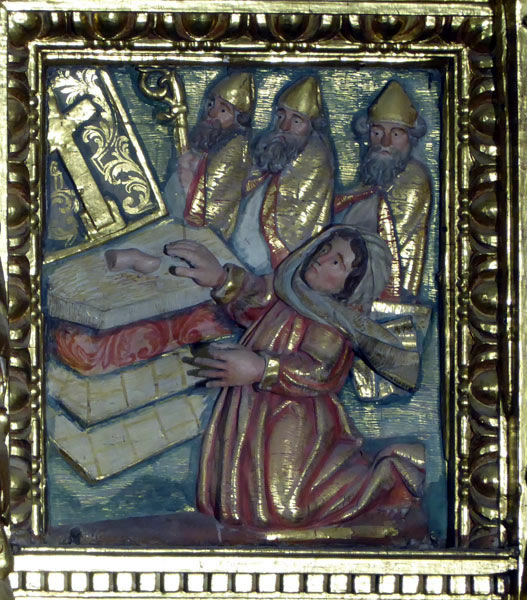
Adoration of the relics of the Baptist
According to the gospels of Matthew and Mark, after Herod Antipas had ordered John the Baptist to be beheaded and his head to be handed over to Salome, the disciples of John took his body and buried it. According to a medieval legend, his relics were miraculously found various centuries later and distributed all over the christian world.
The picture depicts a woman and three bishops looking at a finger of the Baptist to show their respect and to adore it.
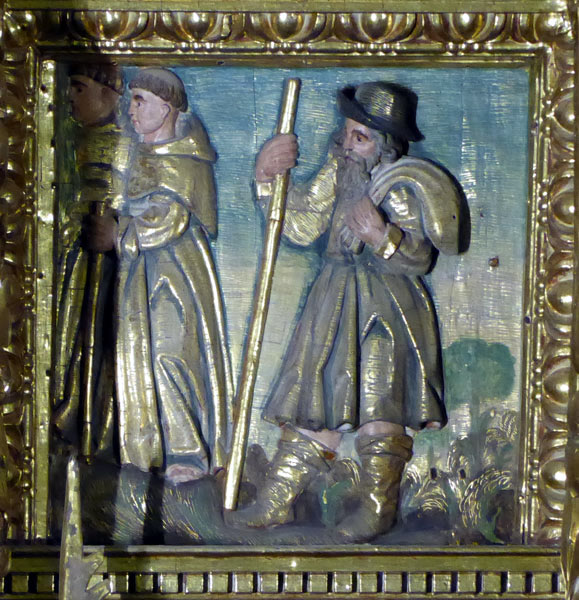
The translation of the relics of the Baptist to Constantinople
According to the medieval tradition, after the apparition of the Baptist’s mortal remains, some pilgrims brought them to Constantinople (today’s Istanbul).
A man, who is accompanied by a group of monks, carries the relics in a bag.
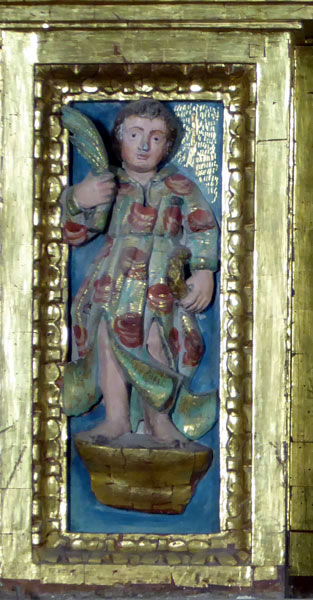
Angels
Eight angels, who are dressed with tunics, carry a palm leave and accompany the representations of the Virtues.
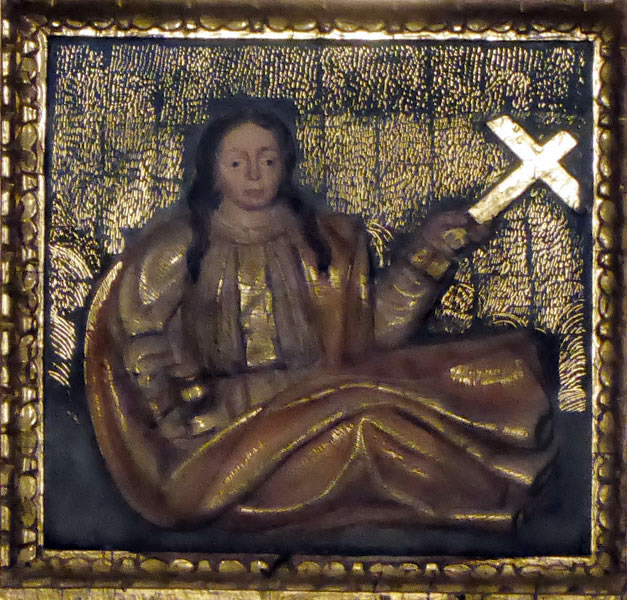
Faith
Faith is together with Hope and Charity one of the so-called theological virtues, as God directly infuses them. Faith is depicted as a woman, who is dressed with large clothes and carries a cross – the symbol for christianity.
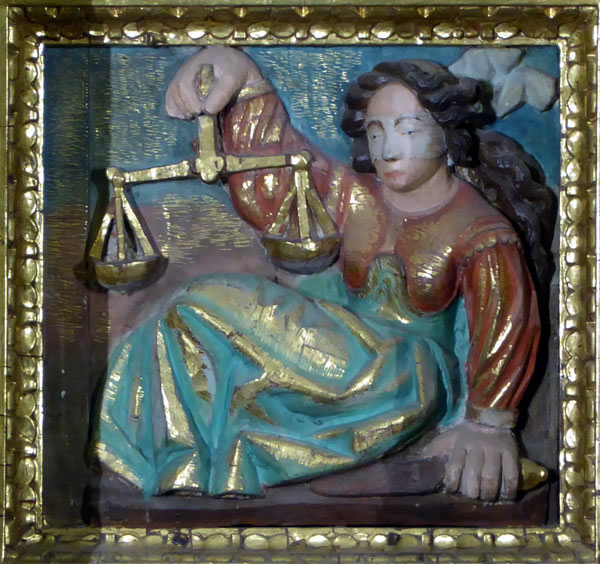
Justice
Justice is together with Fortitude, Prudence and Temperance one of the four cardinal virtues of the catholic religion. The aim is that people who live according to these virtues achieve honesty.
Justice is depicted as a woman, who carries a balance to measure the good and bad actions and a sword to punish those who commit a crime.
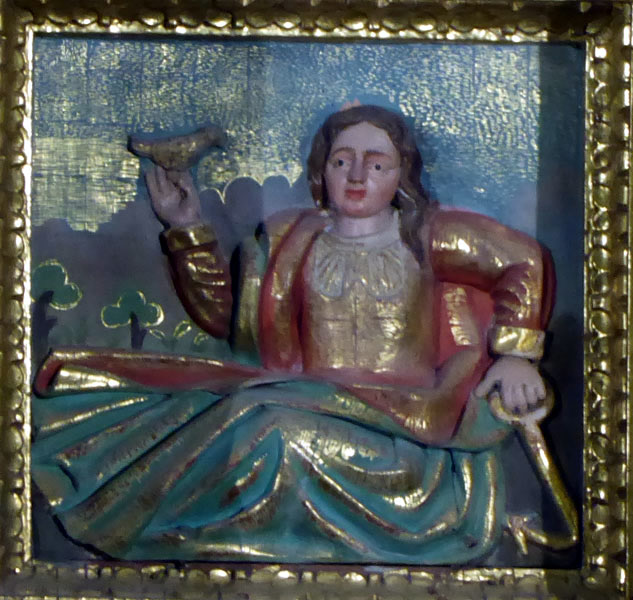
Hope
Hope is together with Faith and Charity one of the so-called theological virtues, as God directly infuses them. Hope is depicted as a woman dressed with large clothes, who holds a bird and an anchor, which symbolises the confidence for the salvation and the resurrection.
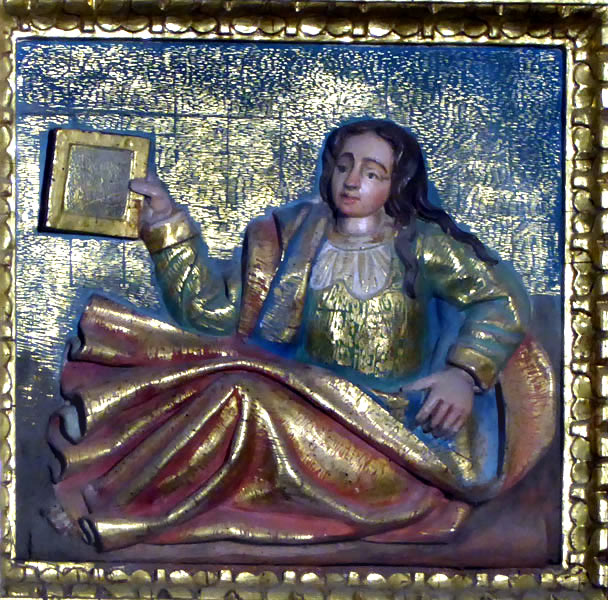
Prudence
Prudence is together with Fortitude, Justice and Temperance one of the four cardinal virtues of the catholic religion. The aim is that people who live according to these virtues achieve honesty.
Prudence is depicted as a woman holding a mirror, which symbolises the own consciousness before taking decisions.
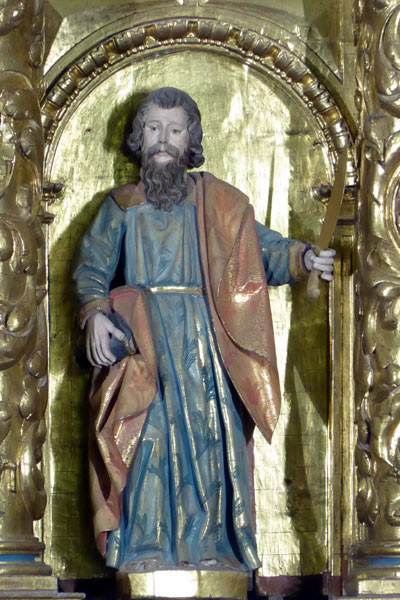
Saint Bartholomew
Bartholomew was one of the twelve apostles who followed Jesus of Nazareth. According to the tradition, Bartholomew was skinned. Therefore, he holds the knife with which his skin was torn off.
The beautiful polychromy of his clothes, which are decorated with plant elements, stands out.
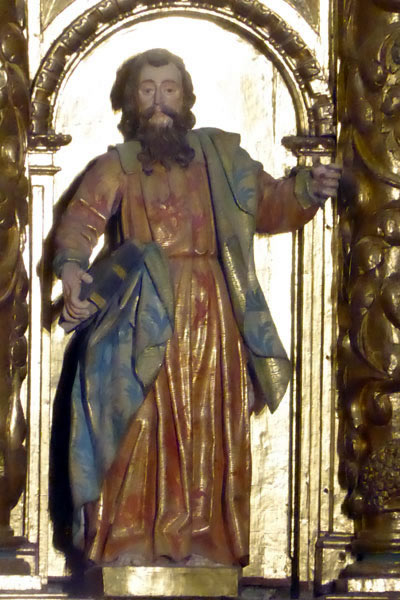
Apostle
One of the twelve apostles who followed Jesus of Nazareth.
As the object in his right hand disappeared, it is not possible to identify him.
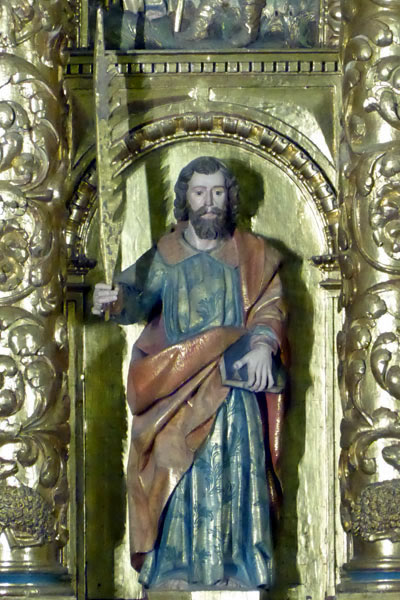
Saint Simon
Simon was one of the twelve apostles who followed Jesus of Nazareth. As, according to the tradition, Simon was sawn in two, he is depicted with a large sew in his hand, which resembles a palm leave – the symbol for the martyrs.
The polychromy of his clothes attracts attention.
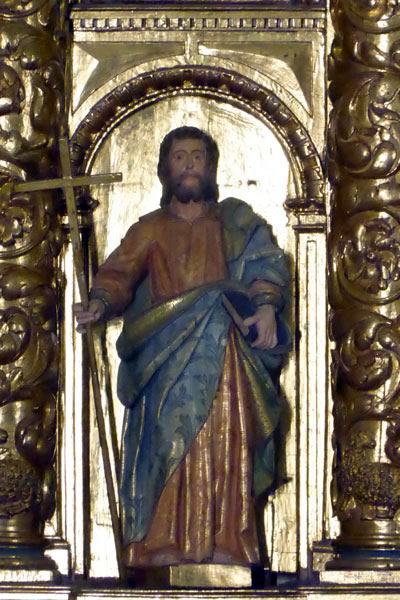
Apostle
One of the twelve apostles who followed Jesus of Nazareth.
He carries a latin cross in his left hand. This could be Philip, as, according to the tradition, he was tied up on a cross until he died.
Attic
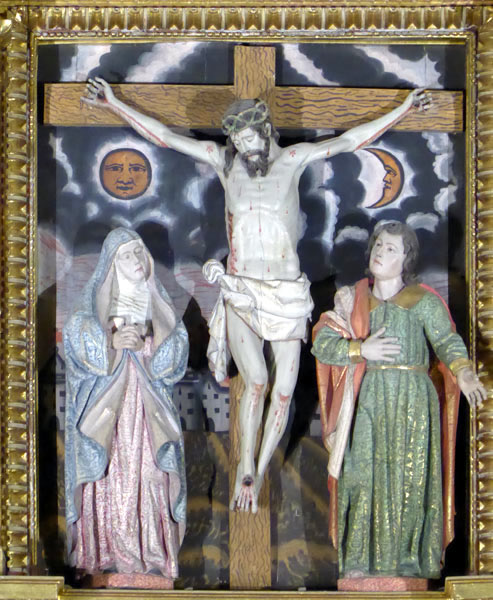
Golgotha
The crucified Christ is surrounded by his mother, Mary, and John, the disciple whom Jesus loved. Behind the sculptures appears a landscape with the town of Jerusalem, where Jesus was crucified.
Beside the cross appear the sun and the moon as allusion that, according to the gospels, on the day of the crucifixion darkness came over the land from noon until three in the afternoon. The facial expressions of the sculptures stand out: John and Mary are looking at the death body of Jesus, who inclined his head towards his mother.
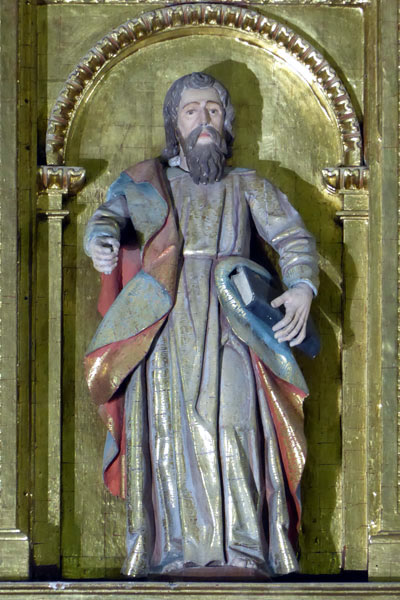
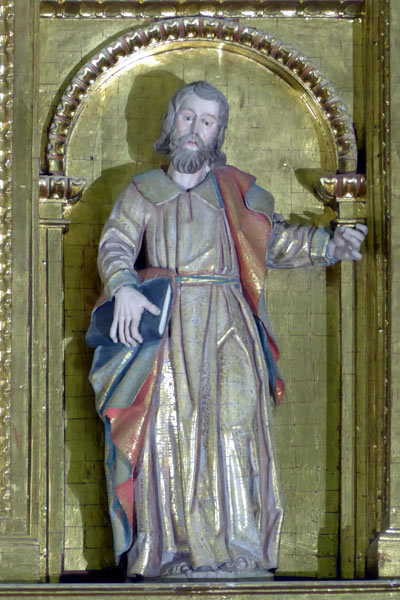
Apostle
One of the twelve apostles who followed Jesus of Nazareth.
As the object in his right hand disappeared, it is not possible to identify him.
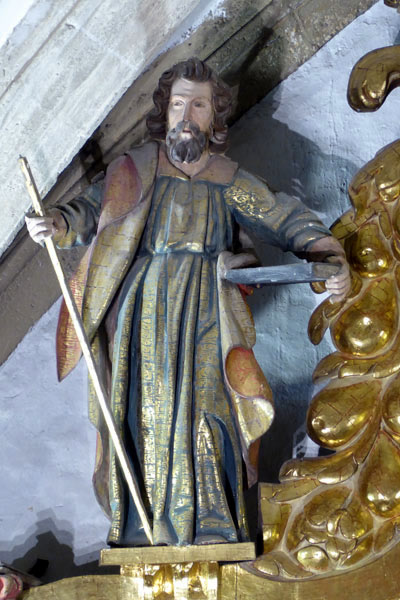
Apostle
One of the twelve apostles who followed Jesus of Nazareth.
As the object in his right hand disappeared, it is not possible to identify him.
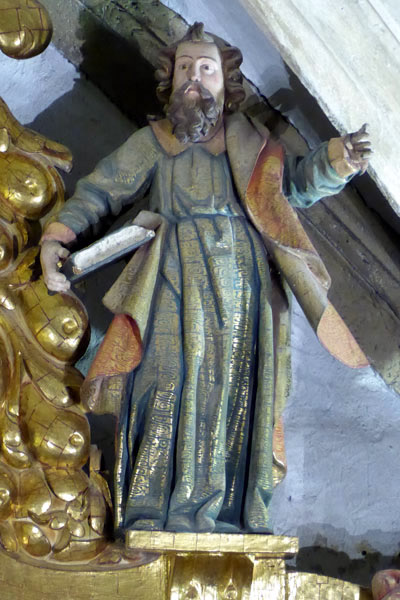
Apostle
One of the twelve apostles who followed Jesus of Nazareth.
He is carrying a lance in his left hand. This could be Thomas, as, according to the tradition, he was killed with a lance in India.
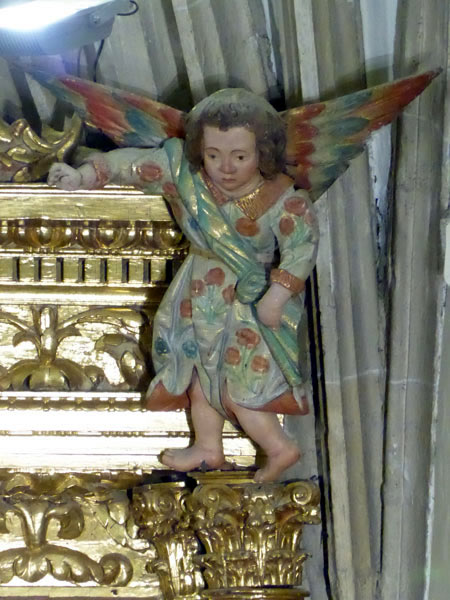
Apostle
One of the twelve apostles who followed Jesus of Nazareth.
As the object in his right hand disappeared, it is not possible to identify him.
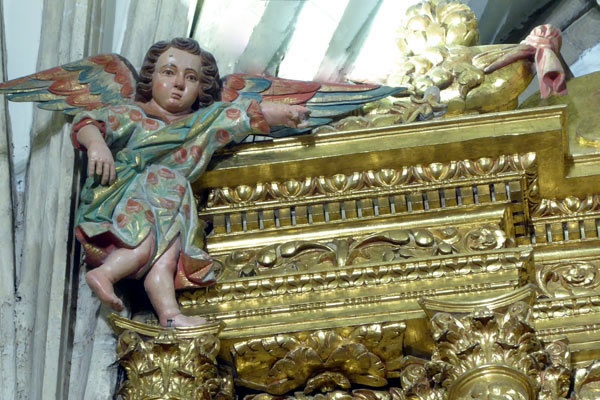
Angles
In the upper part of the altarpiece appear two angels – one on each side – with outstretched wings. They are leaning on the altarpiece putting their feet on the corinthian capitals.
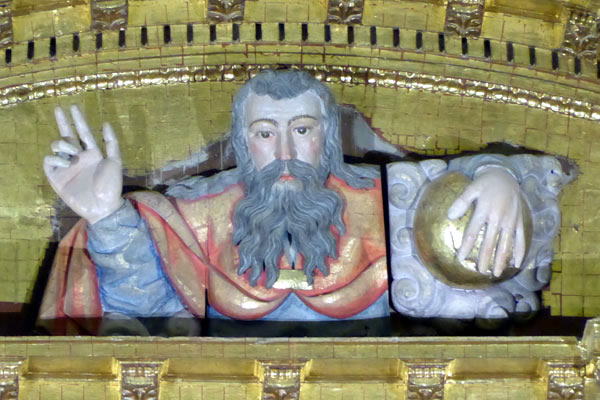
God the Father
God the Father is depicted as an old man with a long beard holding the globe in his left hand while he is blessing with his right one.
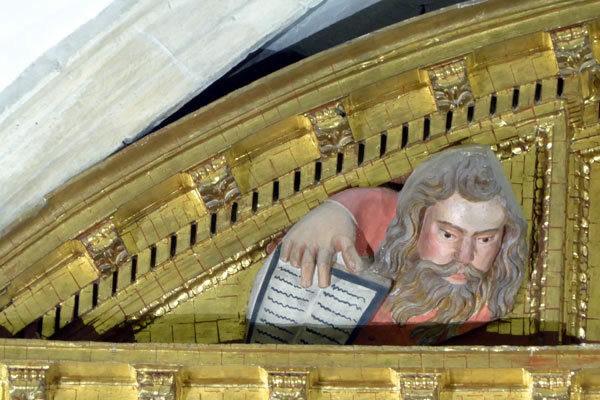
Moses
Moses is depicted as an old man holding a book in his hands. The book symbolises the ten commandments, which, according to the Bible, God handed over to Moses in form of two tablets of stone.
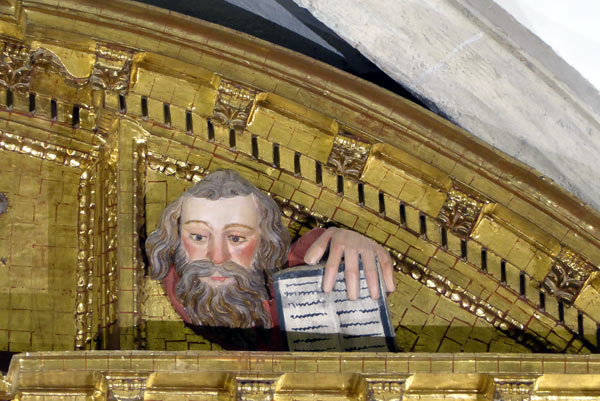
Elias
The prophet Elias is depicted as an old man holding a book.