
High Altarpiece of Saint Mary
- Town: Galdakao – Elexalde
- Church: Saint Mary Church
- Location: High Altar
- Patron: Parish and town council
- Chronology: 16th century (1530)
- Style: Renaissance
A pioneering Renaissance work on the northern way of the Camino de Santiago
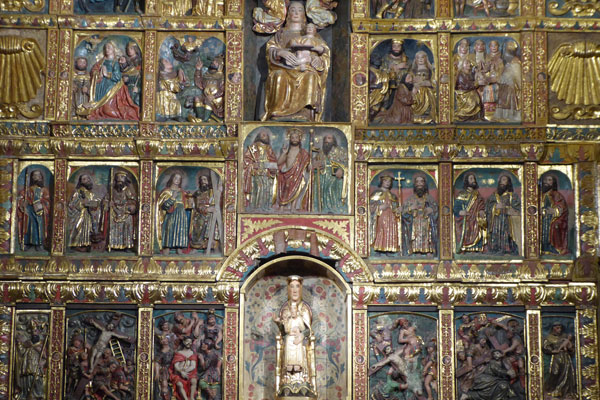
Interactive altarpiece: click on the pictures to get more information.
Church:
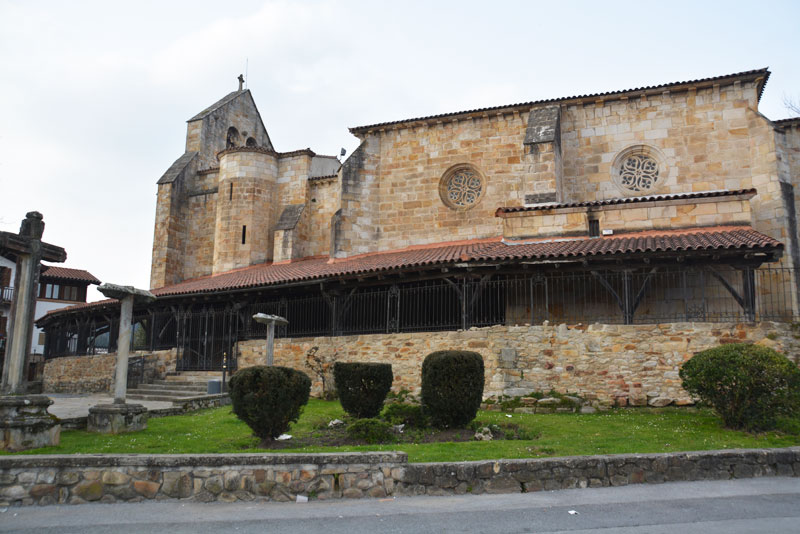
The Andra Mari Church dedicated to Saint Mary is located in Elexalde, the most important district in the Galdakao municipality, to which it gives its name (eleiz-alde means “next to the church” in basque). In the past, the “northern way” also called the “coastal way”, one of the byways of the Camino de Santiago, passed here. The construction of the church started in the 13th century; the southern porch is from this time, built in a romanic style with some elements of the transition to the gothic. In the 16th century, this first medieval church was enlarged, already in a renaissance style. The altarpiece of the main altar goes back to this epoch.
Patronage:
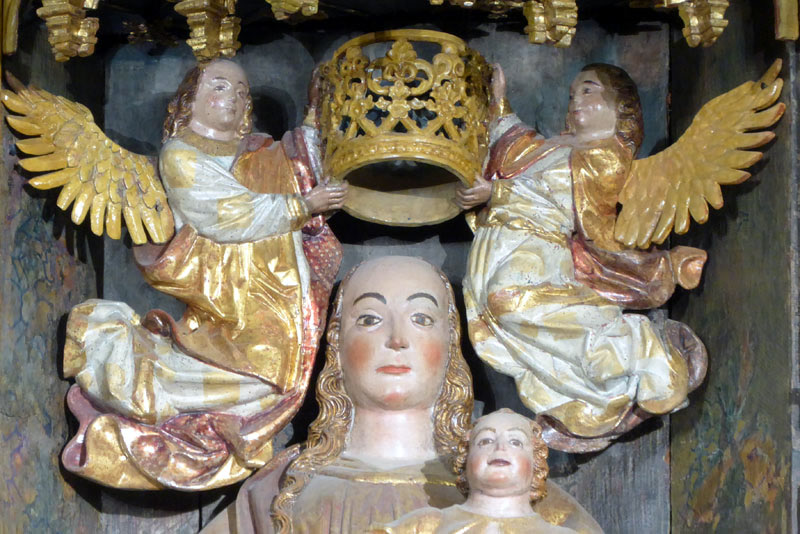
The church and the altarpiece are dedicated to the Virgin Mary, praising her as the Mother of God. The veneration of Mary as Mother of Jesus has already started with the beginning of christianity, as her role is mentioned in both the gospels and the acts of apostles. In the course of centuries, the picture of and the devotion to Mary developed, with her purity and virginity as the main aspect. The main picture of the altarpiece shows her sitting with the Child in her lap, while she is crowned by angles. This represents the double role of Mary as Mother of Christ and Queen of Heaven.
Description:
The 
History:
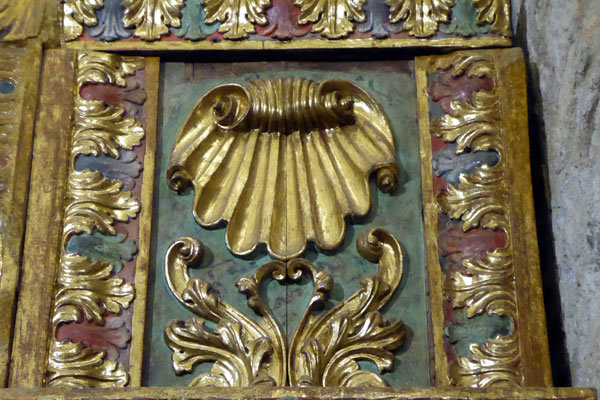
At around 1530, representatives from the parish of Elexalde decided to order a new altarpiece for the Church, which was recently enlarged. The council of the municipality provided some financial aids. Even though it is not clear who carried out the work, it is obvious that the artists were some of the best of this time and they had great knowledge and were up to date of the renaissance style in Europe. More than 100 years later, in 1660, the lower part of the altarpiece was added and probably the decoration with the shells, too.
Sculptures:
Andra Mari
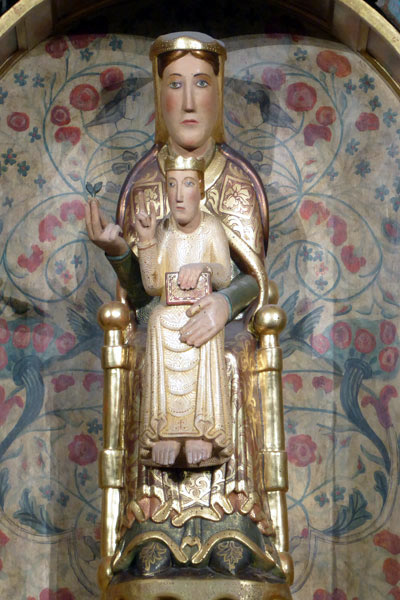
This sculpture is the oldest one of the altarpiece, more than 200 years older than the other pictures. However, it was certainly repainted in the 16th century, when it became part of this altarpiece. It was built at around 1300 and is one of few romanesque virgins who still exist in the Basque country. The sculpture shows Mary sitting with the Child in her lap. It is known as “The Virgin on the Throne” and in the Basque country as Andra Mari (Basque for: “Lady Mary”).
It is characterised by the rigidity of the protagonists and the lack of facial expression, which is something proper to the pictures of medieval times.
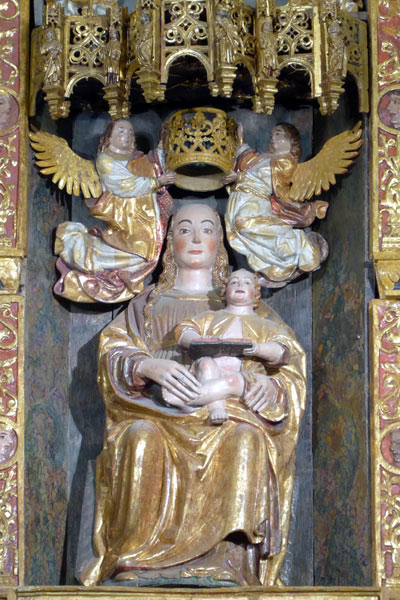
The Virgin Mary and the Child
Mary is sitting with the Child in her lap. To highlight the divine character of her son, he is holding an open book and reading it, despite his young age. Above them, two Angels are holding a precious crown symbolising Mary as Mother of God and Queen of Heaven.
The picture is located beneath a richly decorated gothic pavilion or baldachin with small figures.
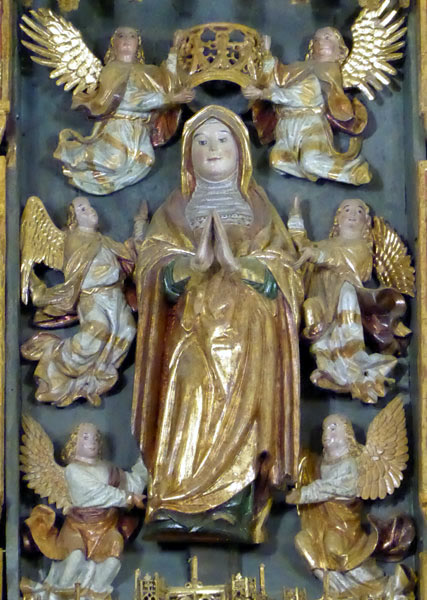
Assumption of Mary
According to the catholic tradition, at the end of her life Mary was taken to heaven and is – together with Jesus Christ – the only person whose body and soul is in Paradise without having to wait for the Last Judgement and the Resurrection of the dead. She is surrounded by angels, because they took up her body into the Glory.
Two angels carry the crown symbolising her as the Queen of Heaven, while Mary himself is occupying the centre of the picture, depicted with folded hands.
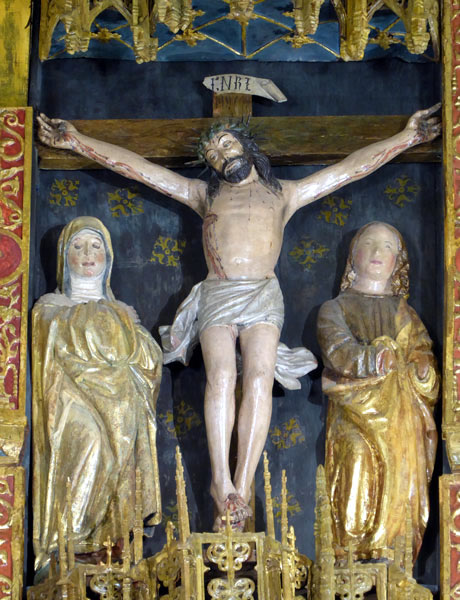
Golgotha
The altarpiece is crowned with a picture of the Golgotha. The crucified Christ is surrounded by his mother, Mary, and John, the disciple whom Jesus loved.
The polychromy, with which the sculpture of the crucified is painted, stands out and emphasises the anatomy of his body and the wounds of his torso, hands and feet.
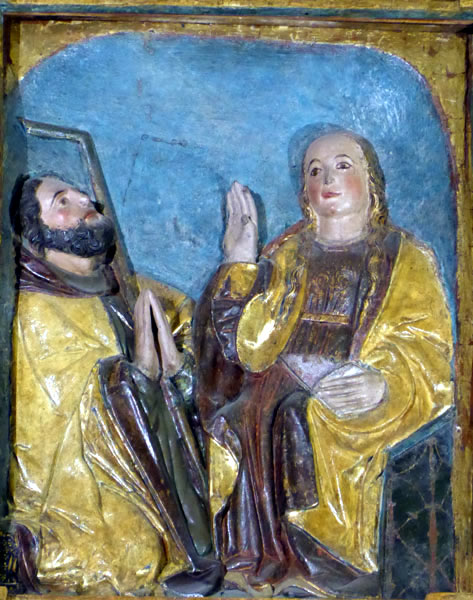
Saint Joseph and the Virgin Mary
The picture shows the moment when Mary, who is sitting, tells Joseph that she is pregnant with the Son of God.
Joseph kneels down, folds his hands and looks towards heaven accepting his role as adoptive father of Jesus.
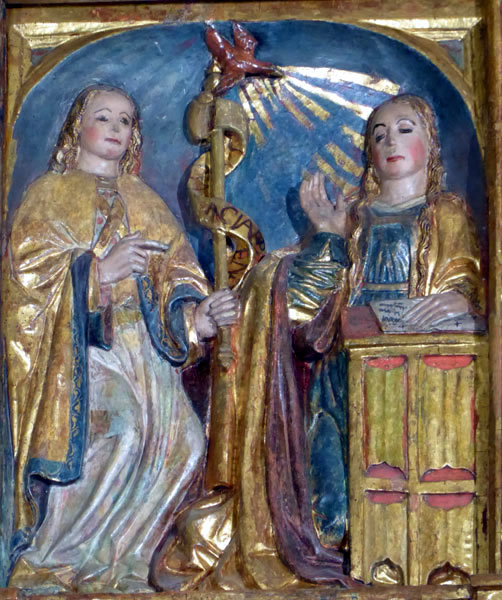
Annunciation
According to the gospels, the archangel Gabriel was sent by God to announce Mary that she will be the Mother of the Messiah. This symbolic moment is of great importance for christianity, as it shows the mystery of the Incarnation, which means, the moment when God becomes human to save humanity from sin.
This picture shows the moment when the archangel Gabriel appears to Mary, who is reading. Above them, the Holy Spirit is depicted as a dove in allusion to the miraculous and divine conception of Christ.
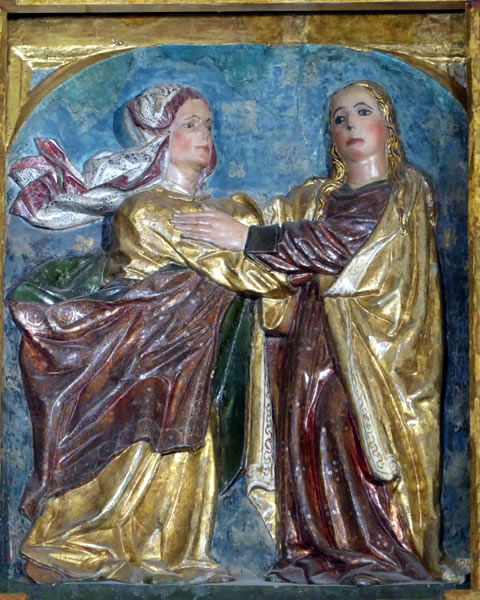
Mary visits Elisabeth
According to the gospel, Mary, who is pregnant with Jesus, is visiting her cousin Elisabeth, who is also pregnant with John the Baptist, to tell her that she will be the mother of God.
Both woman embrace each other. Elisabeth’s moving headscarf stands out which is emphasised by the polychromy.
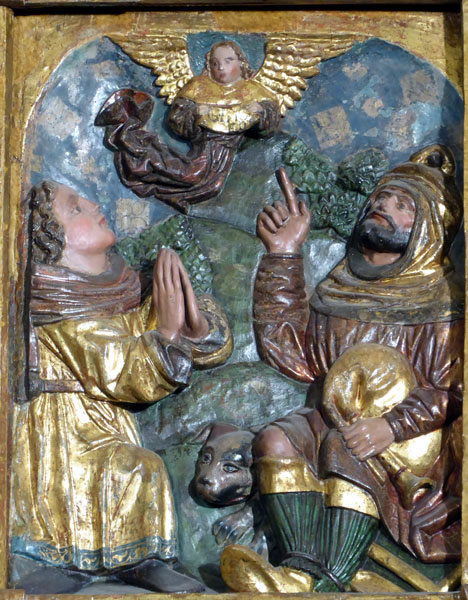
Annunciation to the shepherds
According to the gospels, shortly after Jesus had been born in Bethlehem, an Angel appeared to the shepherds, who were taking care of their herds nearby, to announce them the birth of the Messiah, the redeemer of humanity.
The shepherds are surprised by the apparition of the angel. One is pointing towards heaven and another one is kneeling down. This picture contains many details, such as the musical instrument, the dog, the landscape …
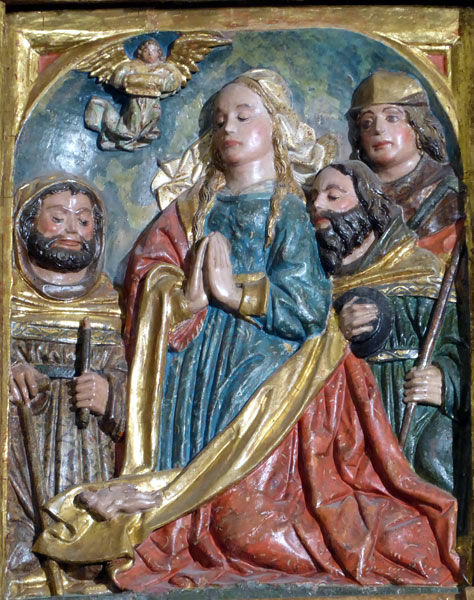
Adoration of the shepherds
According to the gospel, after an angel announced the shepherds that the Messiah had been born, they went to Bethlehem.
The Virgin is kneeling in front of the Child who is laying on her robe while the shepherds are coming. One of them kneels down and puts his hat down to show his respect. An Angel is watching the scene from heaven announcing that the Child is the Son of God.

Adoration of the Wise Men or Epiphany
According to the gospels, some Wise Men from the East came to visit Jesus in Bethlehem guided by a star from the sky. The gospels do not mention their names, nor the number or their backgrounds. However, the tradition tells that they were three, called Melchior, Caspar and Balthasar. Since the 14th century, the latter one has been depicted as a young black man.
It is told that they brought three gifts with them: gold the symbol for a king; incense for God; and myrrh, a very aromatic balm that was used to embalm the dead, mortal humans. Mary holds the Child, while the first wise man Melchior is kneeling in front of the Son of God. He puts his crown, symbolising him as king, on the ground. Caspar and Balthasar are watching the scene standing. The star, which guided the Wise Men, is shining in the sky.
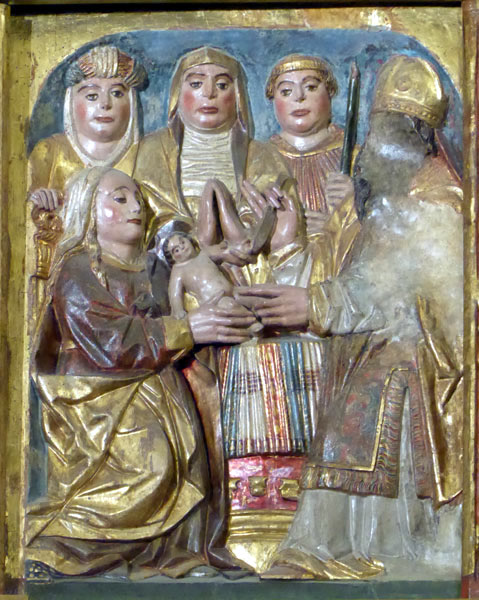
Circumcision of Jesus
According to the gospel of Luke, Jesus was born as a jew and circumcised on the eighth day after his birth, in accordance to the jewish tradition. All male children have to take part in this ceremony, in which they are also named.
Mary holds her son, while the priest raises the knife to circumcise the child. In the background of the scene are three people watching.
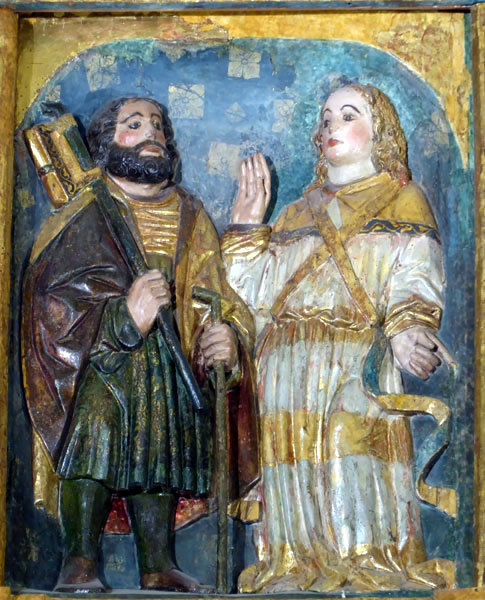
Dream of Saint Joseph
According to the gospel, after Mary had told Joseph that she is pregnant, he thought about abandoning his wife and breaking off with her, knowing that he was not the father of the child. Therefore, an angel appeared to him during this night telling him that the child was really the Son of God.
The relief shows this moment. The angel is moving is hands, while he is talking to Joseph who is listening carefully.
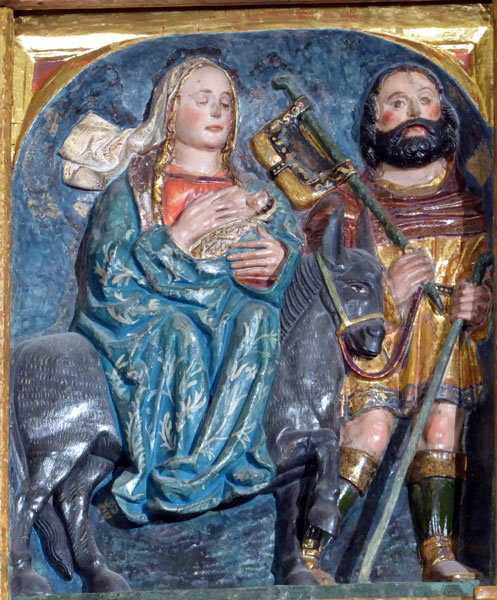
The Escape to Egypt
According to the gospels, an angel warned Joseph that king Herod, who confused the birth of the Messiah with the birth of a future king of the Jews, would command his soldiers to kill all boys in Bethlehem under the age of two years, because he was afraid that one of them would dethrone him. Mary and Joseph decided to flee to Egypt and stay there until the death of Herod in order to save Jesus. Mary is sitting on the back of a donkey holding Jesus in her arms, led by Joseph in front of them.
The clothes of Mary – a flower-decorated robe -, Joseph’s bag hanging on a stick and the donkey raising one of its hooves stand out.
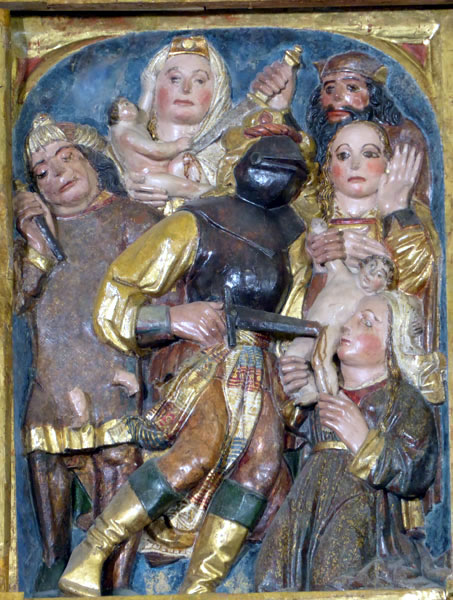
Massacre of the Innocents
According to the gospels, king Herod, who confused the birth of the Messiah with the birth of a future king of the jews, commanded to kill all boys in Bethlehem under the age of two years, because he was afraid that one of them would dethrone him.
The scene shows all the cruelty. A soldier dressed with armour and a closed helmet stabs the body of a naked boy with a sword, without listening to the pleas of the child’s mother.
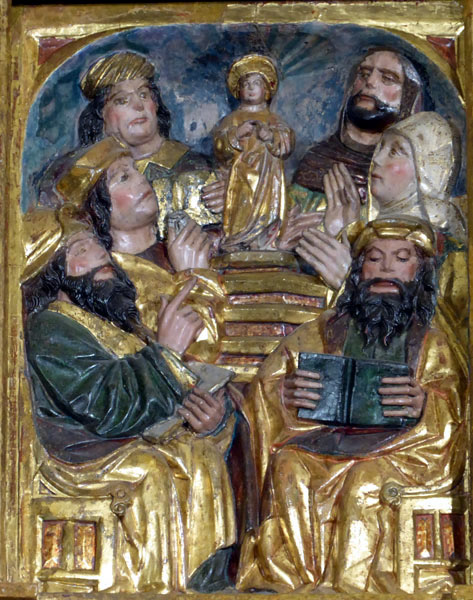
Christ among the Doctors
According to the gospels, at the age of 12 Jesus and his parents went to Jerusalem to celebrate the jewish feast Pesach/ Passover where the child got lost in the crowd. After having looked for the child for three days, the parents found him in the temple, where Jesus was discussing with the priests and theologians, who were impressed by his wisdom.
Jesus appears in the temple, surrounded by the teachers who ask him and check his answers in the books. On the right side of the picture are Joseph and Mary. Joseph is angry and furrows his brow while Mary opens her hand to express her feeling of relief that they found the lost son.

The Wedding at Cana
This scene depicts the first miracle of Jesus. According to the gospels, Jesus and his mother were invited to a wedding in Cana. During the festivity, the wine ran out and Mary asked Jesus to help them. He ordered the jars to be filled with water, which when became wine.
A servant lifts up one of the jars while another one is putting a vessel with the water now become wine on the table. Mary and one of the disciples – highly probably John the Evangelist, whose gospel tells about this wedding – accompany Jesus, who raises his right hand for the blessing. The details of the cloths, faces and objects make the picture seem real.
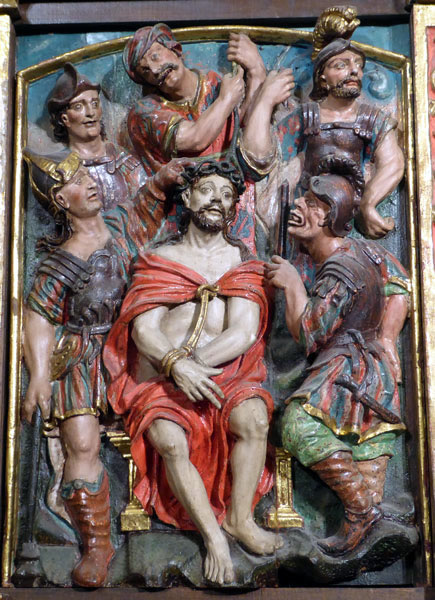
Crowning with thorns
According to the gospels, after having been judged, Jesus was hit and humiliated by the roman soldiers. They dressed him with a purple-red robe like an emperor and with a crown of thorns to laugh at him. The expression of the mockery of some soldiers is contrary to the serenity of the face of Jesus Christ.
The picture seems real, with many details on the clothes, the soldiers’ garments, helmets etc.
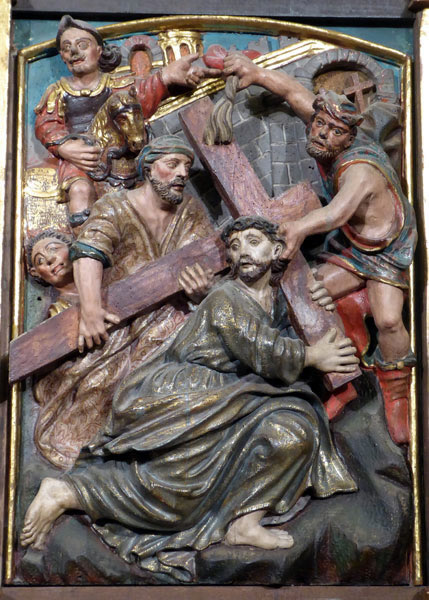
Jesus carrying the cross
According to the gospels, before his death, Jesus had to carry the cross through the streets of Jerusalem to mount Golgotha, where he was crucified. On the way, the soldiers depicted with expressive faces insulted him and teared out his hair. Simon of Cyrene, dressed with a beautiful tunic and turban, accompanied Jesus and helped him to carry the cross.
In the background is a soldier sitting on a horse next to the town wall of Jerusalem.
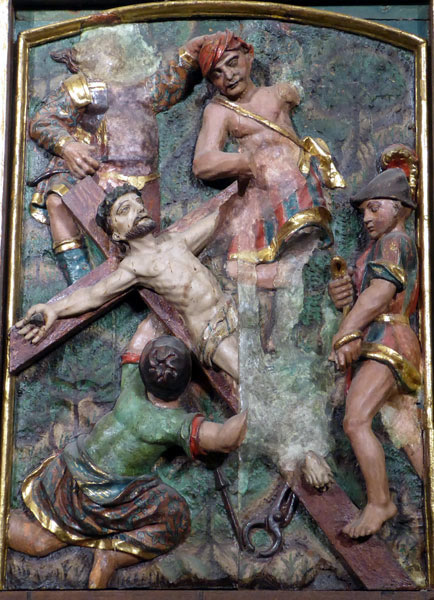
Christ nailed up to the cross
The moment when a group of soldiers nails up Jesus to the cross.
The scene seems very real and is full of details such as the clothes of the soldiers, the strings or the tongs.
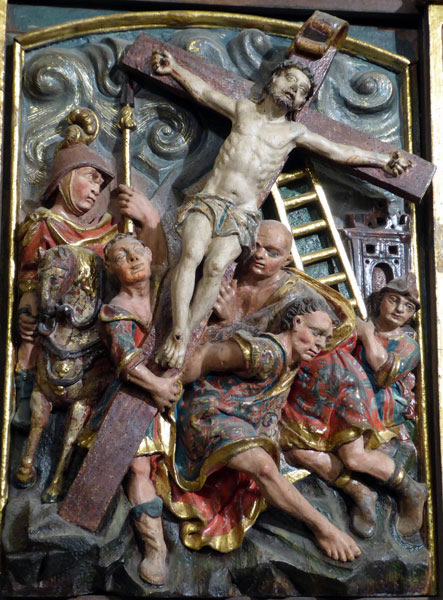
The soldiers lifting up the cross
The soldiers lift up the cross on which Jesus is nailed up. It is a complex scene of high tension and with many people. One of the soldiers is pushing up the cross with his sword and all the pain and effort is visible in his face.
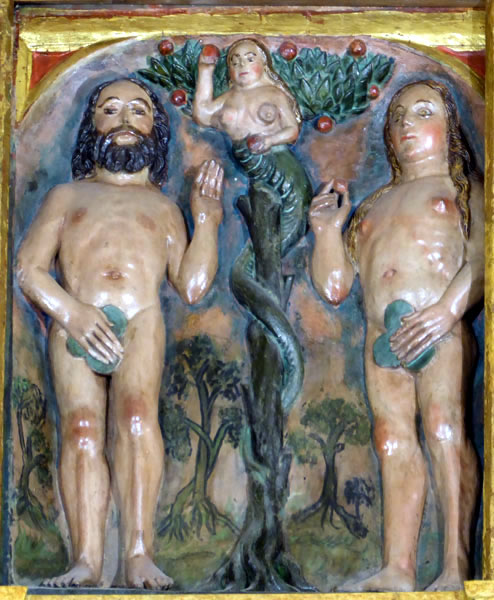
Adam and Eve in the Paradise
This picture combines two scenes from the first book of the Bible, the book of Genesis. The snake depicted with the body of a reptile and a woman’s torso and head is tempting Eve to eat the fruit from the tree of the knowledge of good and evil. Thus, the woman disobeyed God, who prohibited her to eat from this tree, which is known as the original sin. After having eaten the fruit, Adam and Eve realised they were naked. So they were embarrassed and covered themselves with fig leaves.
The details in the picture stand out, which is completed by a landscape of painted trees representing Paradise.
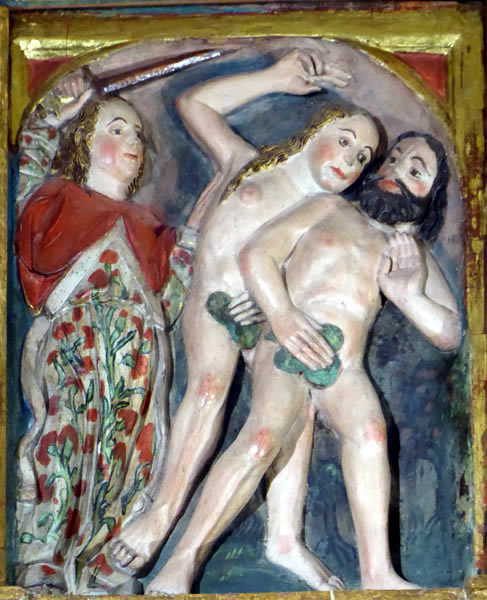
The expulsion from Paradise
According to the book of Genesis, the first book of the Bible, Adam and Eve were banned from Paradise, as they had eaten the fruit from the tree of the knowledge of good and evil. To prevent them from returning to Paradise, God sent an Angel with a sword of fire. The Angel is dressed with a beautiful tunic decorated with flowers raising a sword to push them away.
For Christians, this picture symbolises the distance of humanity from God due to the sin. Therefore, it is necessary to get the forgiveness of sins through the death of Jesus Christ on the cross.
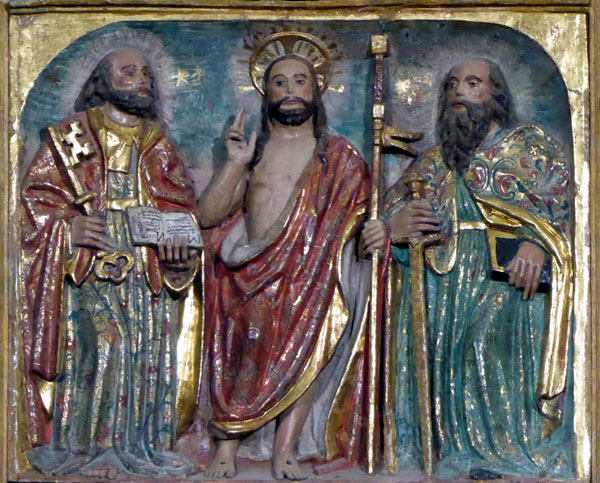
Christ between Saint Peter and Saint Paul
This picture depicts the risen Christ dressed with red and golden clothes showing the wounds of his torso and the marks of the nails in his hands and feet. He carries a standard, the symbol for his victory over the death. Beside him are Peter and Paul, the Princes of the Apostles, who can be recognised by the large key, Peter is the guard of the King of Heaven, and the sword, which symbolises Paul’s death by beheading.
The polychromy of the clothes stands out.
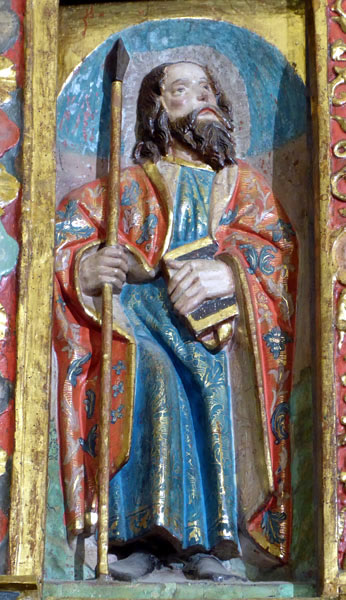
Saint Thomas
Thomas was one of the twelve apostles who accompanied Jesus of Nazareth. He is depicted as a middle-aged man with a beard carrying a lance. According to the tradition, he was killed with a lance in India.
The flower decoration of his tunic and robe stand out.
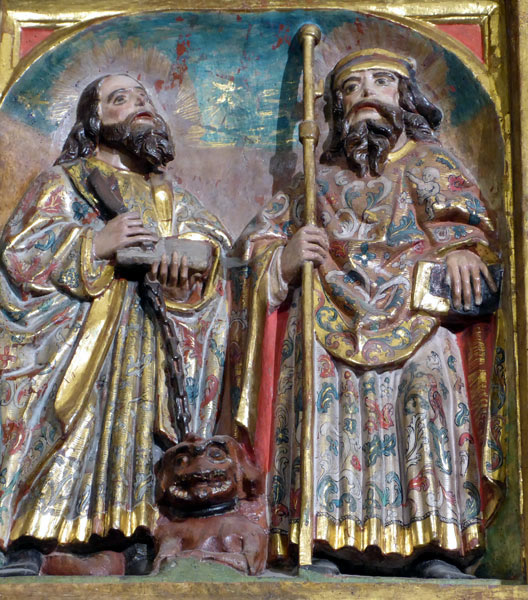
Saint Bartholomew and Saint James the Great
Bartholomew and James the Great were two of the twelve apostles who followed Jesus of Nazareth. Bartholomew holds a knife in his right hand and a chain with a demon in the left one. The demon is an allusion to his most famous miracle, as, according to the legend, he beat one. He suffered a martyrdom as they tore the skin off his body. Saint James the Great is dressed like a pilgrim with a walking stick or shepherd’s crook.
Both carry a book, which identifies them as Apostle. The polychromy of their clothes stands out.
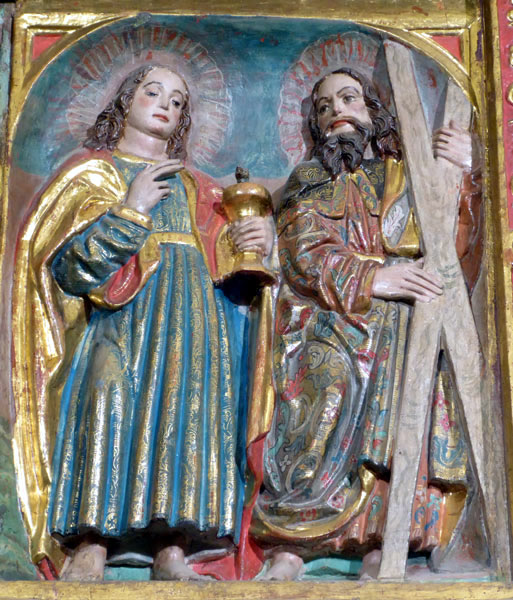
Saint John and Saint Andrew
Andrew and John were two of the twelve apostles who followed Jesus of Nazareth. John is depicted as a young man without beard, raising his right hand to bless the chalice in his left one, from which a snake is emerging. This is an allusion to his most famous miracle, as, according to the legend, he was forced to drink poisoned wine. But, after John had blessed the chalice, a snake emerged from it and the saint could drink the wine without dying. Andrew carries the Saint Andrew’s cross, which resembles the one he was tied to during his martyrdom.
The colours of the clothes and the facial expressions stand out.

Saint Philip and Saint Simon
Simon and Philip were two of the twelve apostles who followed Jesus of Nazareth. Philip carries a stick forming a cross, as, according to the tradition, he was tied to a cross and stoned to death. Simon holds a large saw, because the legend tells that he was saw in two.
The beautiful and colourful clothes decorated with plant elements stand out.
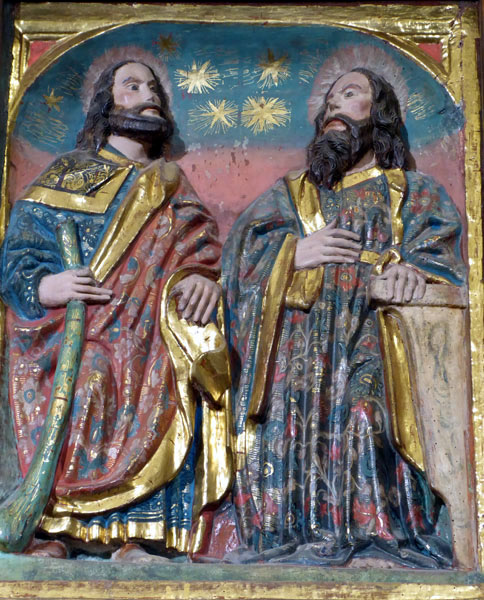
Saint James the Less and Saint Matthew
James the Less and Matthew were two of the twelve apostles who followed Jesus of Nazareth. The left one, who is holding a large club is certainly James the Less, as according to the tradition, he was martyred with a deathblow from a club on his head.
Matthew is leaning on a table and carrying a book as allusion to his gospel. According to the christians, he is one of the four authors of the gospels, which are part of the Bible and considered by the catholic church as directly inspired from God.
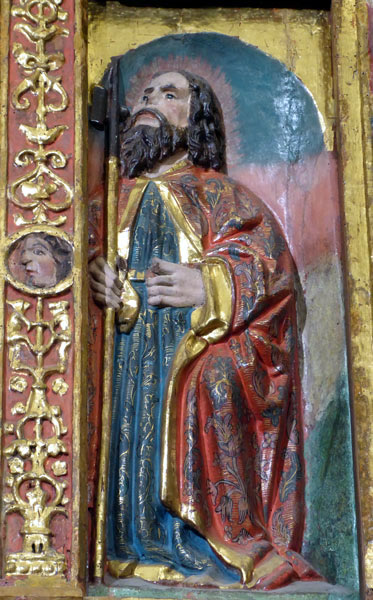
Saint Jude Thaddaeus
This relief depicts one of the twelve apostles who followed Jesus of Nazareth. He is a middle-aged man with beard carrying a large axe. The person is highly probably either Jude Thaddaeus or Matthias, as they were martyred with this tool.
The saint is beautifully dressed with a plant-decorated tunic and robe.
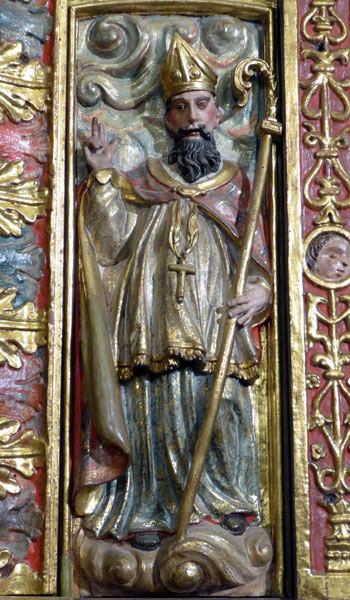
Saint Blaise
According to the tradition, Blaise was a doctor from Sivas (today’s Turkey), who converted to christianity and retired from society to live as a hermit in a cave of mount Erciyes.
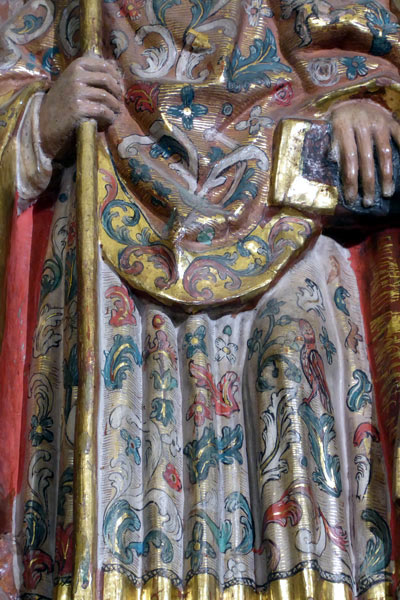
As he was known for being a pious man, the christians in the region appointed him as their bishop. Therefore, he is portrayed with a mitre (the high and pointed hat used by bishops in solemn masses) and he holds in his left hand a crozier, while he is raising his hand for the blessing.
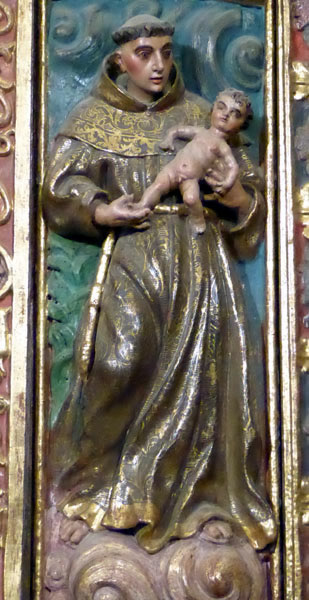
Saint Anthony of Padua
Anthony of Padua was a franciscan monk, who preached against the greed of creditors who received excessive interest for their deals. According to the legend, he was so pious that even the Christ Child came to attend his prayer.
Anthony of Padua is dressed like a franciscan with the brown habit and a shaved head, like a tonsure carrying the Christ Child in his arms.