
Altarpiece of the Virgin of Carmen
Collection of altarpieces
- Town: Bilbao
- Church: Saint John the Baptist and Saint John the Evangelist Church
- Location: Chapel the Virgin of Carmen
- Artists: Juan de Echevarría and Santiago de Castaños (architects)
- Patron: donations from private persons and from the Council of Bilbao
- Chronology: 17th century (1683)
- Style: Baroque
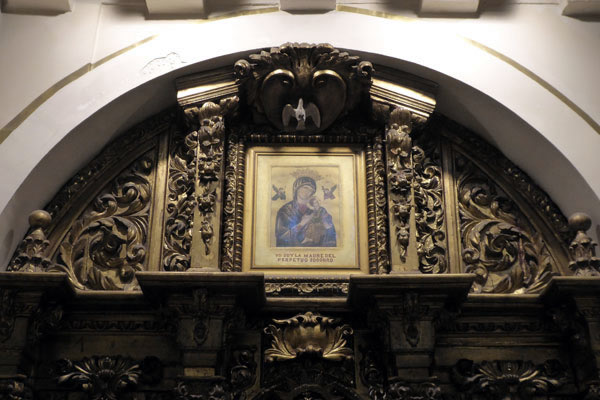
The picture of the Virgin of Carmen substituted the picture of Saint Ignatius of Loyola after the expulsion of the jesuits
Interactive altarpiece: click on the pictures to get more information.
Church:
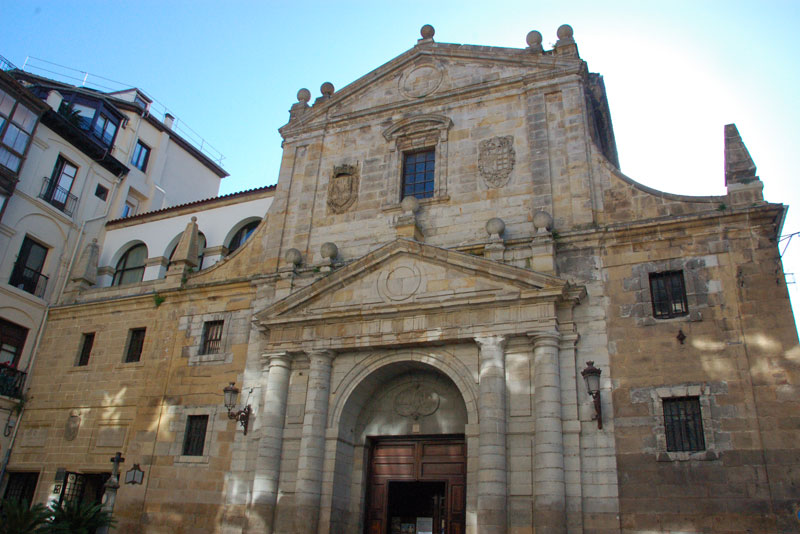
The Saint John the Baptist and Saint John the Evangelist church is located in the historic centre (Casco Viejo) of Bilbao, in the street “Calle de la Cruz”. It was founded by the Jesuits in 1617 as a cchurch for the Saint Andrews college, which was located outside of the city wall, in a place which had not been part of the seven original streets of Bilbao.
As it is common for the jesuit churches, its ground plan forms a rectangle with chapels on both sides of the central nave.
Today, the cloister and the premises of the college are used by the Euskal Museoa – the Basque Museum.

Patronage:
The Virgin of Carmen is one way in which the catholic church venerates the Virgin Mary, the mother of Jesus of Nazareth. According to the tradition, a group of hermits secluded themselves to live on mount Carmel in today’s Israel. After having been expelled by the muslims during the crusades, the hermits went to Europe, where they founded the order of the brothers of the Blessed Virgin Mary of Mount Carmel, known as the carmelite order.
The order’s patron saint is the Virgin of Carmen, who, according to the tradition, appeared to the order’s prior general on 16th July 1251 and handed him over the habits they are supposed to wear and a scapular.
The scapular is an object made of two small pieces of cloth joined by two long strings worn around the neck, so that it hangs down on the chest and the back. The Virgin had promised to prevent everyone who wears a scapular like this during the entire life from the Purgatory and brings them into heaven. Therefore, it became the main attribute of the carmelites.
Description:
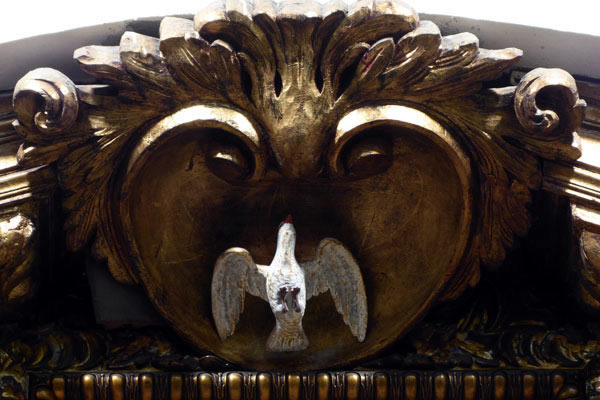
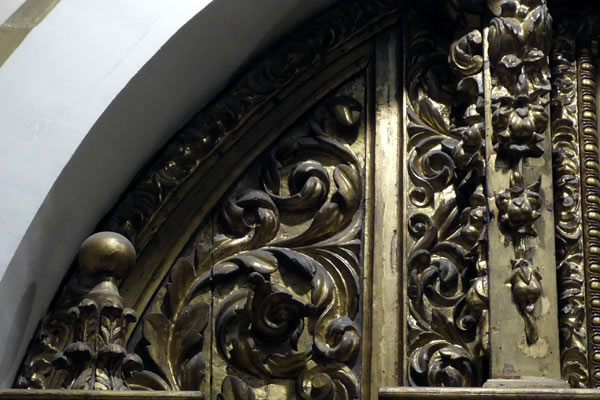
The single body 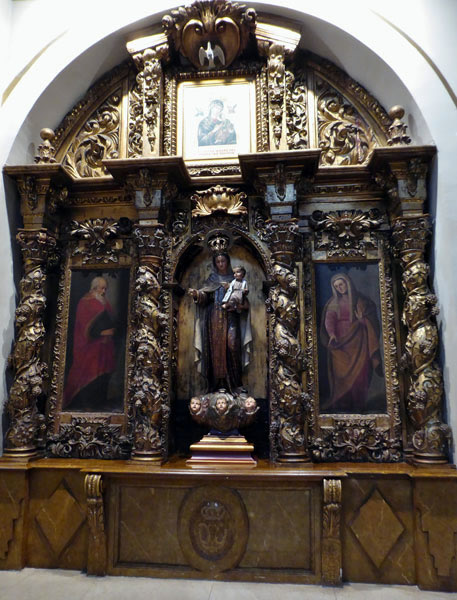
It is made of 
It has a plinth or bench with an attached 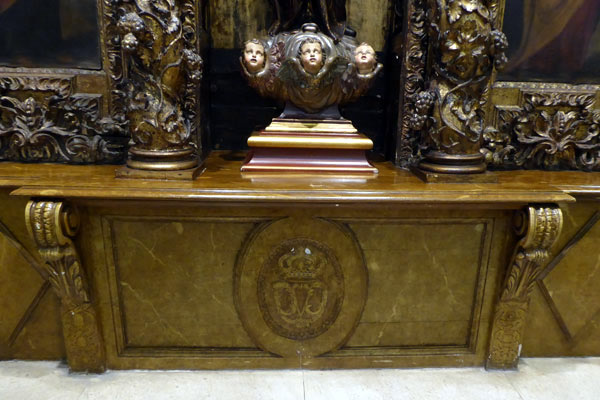

History:
In 1683, the director of the jesuits Saint Andrews college (today Saint John the Baptist and Saint John the Evangelist church) ordered this altarpiece, which originally was dedicated to Saint Ignatius of Loyola, the founder of the Society of Jesus. The works cost 300 pesos and were made by Santiago de Castaños, an architect from Bilbao, in accordance with the construction plan of another architect, Juan de Echevarría.
In 1770, the main picture was hang out, at a time when this church no longer belonged to the jesuits and became one of the parish churches in Bilbao.
A few years later, the patronage of the altarpiece changed and it is dedicated to the Virgin of Carmen.
Sculptures:
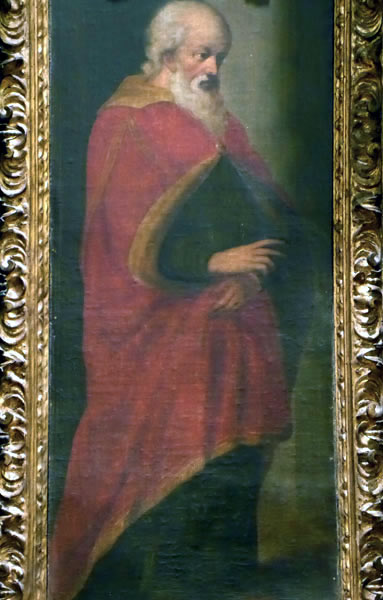
Saint Joachim
According to the tradition, Joachim was the father of the Virgin Mary and therefore the grandfather of Jesus of Nazareth.
In this picture, he is depicted as an old man with a long white beard, wearing a green tunic and a precious red robe on his shoulders.
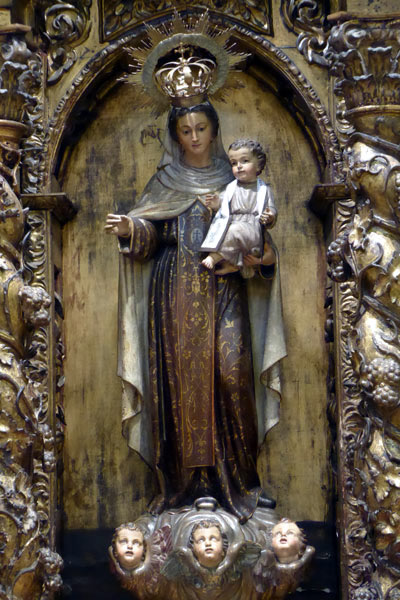
Virgin of Carmen
This picture of the 19th century shows the Virgin Mary staying on a cloud-shaped pedestal decorated with heads of angels turning towards and looking at her. She wears a crown on her head and holds the Christ Child in her left arm.
In her right hand, she had a scapular, which has disappeared. The scapular and the habit of the carmelites are identifying features for the sculpture of the Virgin of Carmen.
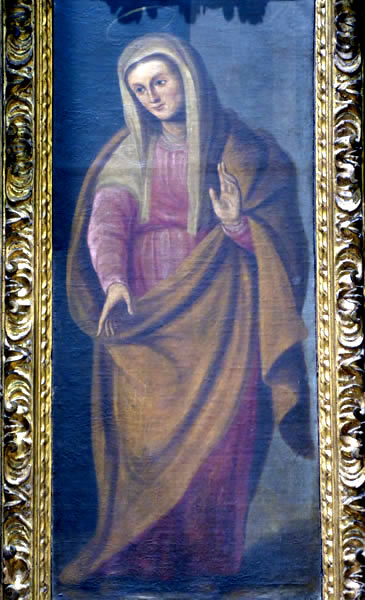
Saint Anne
According to the tradition, Anne was the mother of the Virgin Mary and therefore the grandmother of Jesus of Nazareth.
In this picture, she is depicted as a middle-aged woman. Her hair is covered with a veil and she wears an ochre robe on her shoulders, which is contrary to the red tunic beneath.