
Altarpiece of Saint John the Baptist
Collection of altarpieces
- Town: Bilbao
- Church: Saint John the Baptist and Saint John the Evangelist Church
- Location: High Altar
- Patron: Jesuit Saint Andrews College and donations from private persons and from institutions
- Chronology: 17th century (1683-1689)
- Style: Baroque
A perfect altarpiece in the Churrigueresque style for a church founded by the Society of Jesus
Interactive altarpiece: click on the pictures to get more information.
Church:
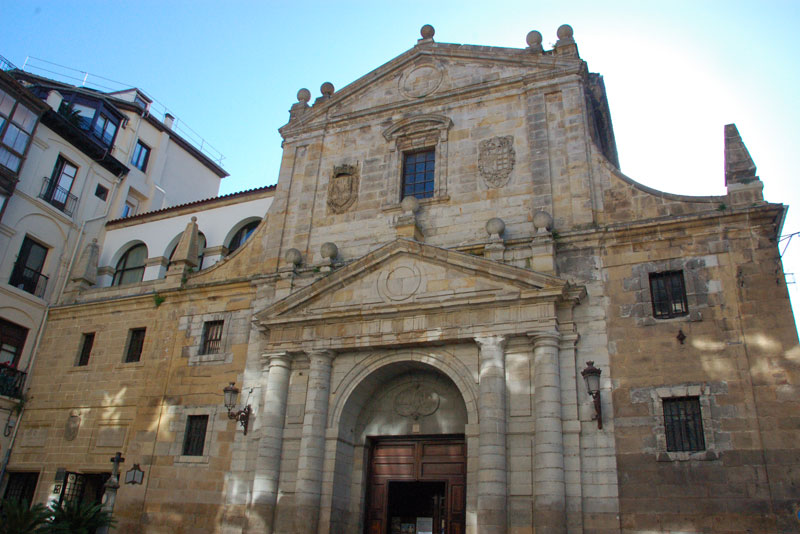
The Saint John the Baptist and Saint John the Evangelist church is located in the historic centre (Casco Viejo) of Bilbao, in the street “Calle de la Cruz”. It was founded by the Jesuits in 1617 as a church for the Saint Andrews college, which was located outside of the city wall, in a place which had not been part of the seven original streets of Bilbao.
As it is common for the jesuit churches, its ground plan forms a rectangle with chapels on both sides of the central nave. Today, the cloister and the premises of the college are used by the Euskal Museoa – the Basque Museum.
Patronage:
According to the gospel, John the Baptist was sanctified in the womb of his mother Elizabeth during the visit of her cousin, the Virgin Mary, who was pregnant with Jesus at this time. John is called “precursor of Christ” and the christian tradition describes him as the last prophet who announced the arrival of the Messiah.
John the Baptist carried out his work in the beginnings of christianity, in the region of the Jordan river. He baptised those who searched for the conversion – therefore he is called the Baptist. Among the people he baptised was Jesus of Nazareth.
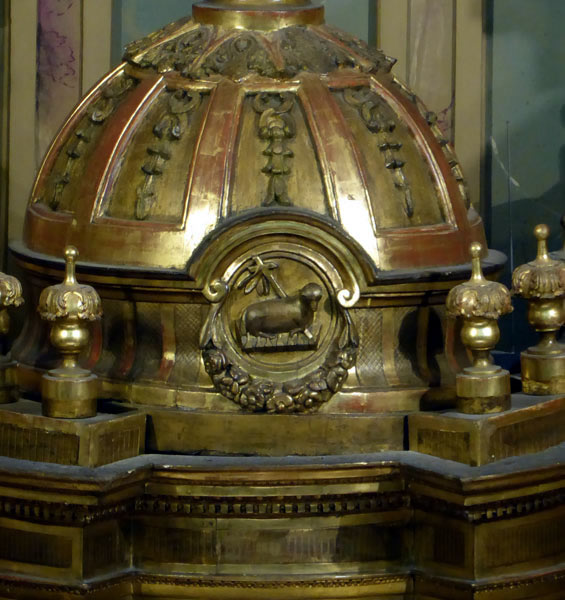
The gospel describes him as a hermit who lived in the desert and covered himself with a camel-skin robe. He is commonly portrayed as a man with scruffy hair and beard wearing a camel-skin robe and being accompanied by a lamb, the symbol for Jesus of Nazareth and his sacrifice on the cross.
Description:
The 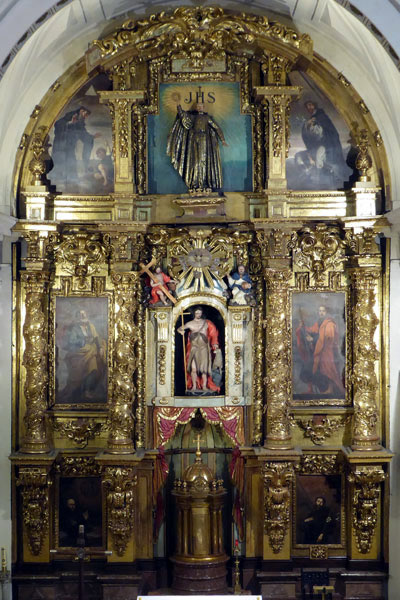
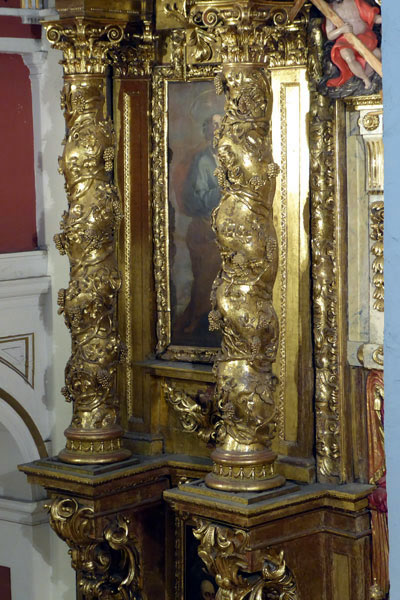
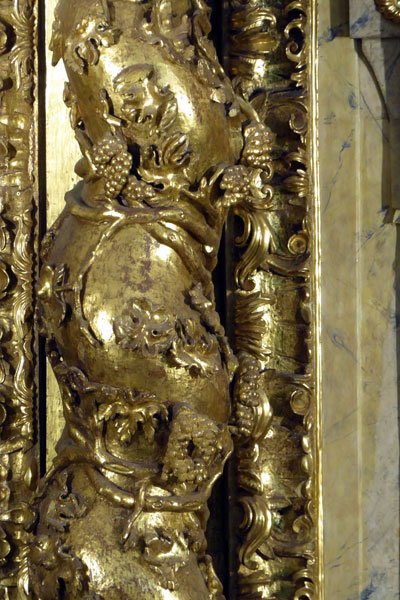
It is a single-piece altarpiece with a high bench and a main 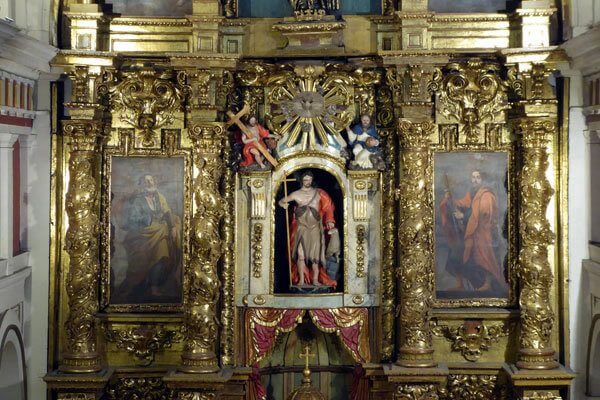
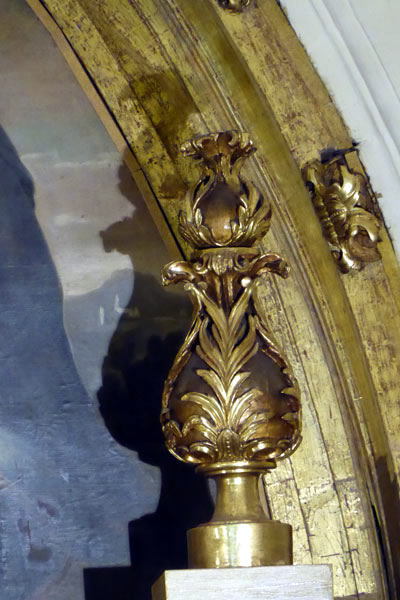
The sculptures in the central section alternate with the paintings on the laterals, in accordance with a common construction plan for baroque altarpieces. The 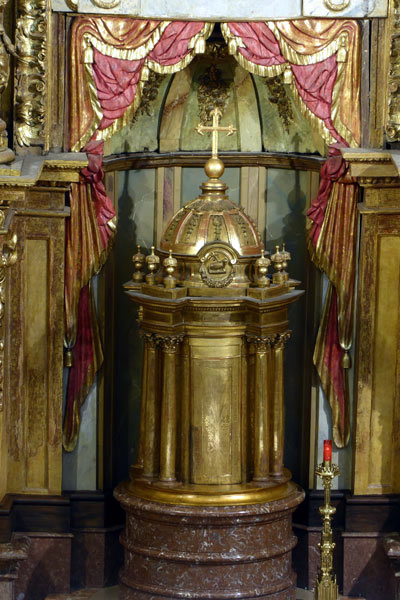
In general, the 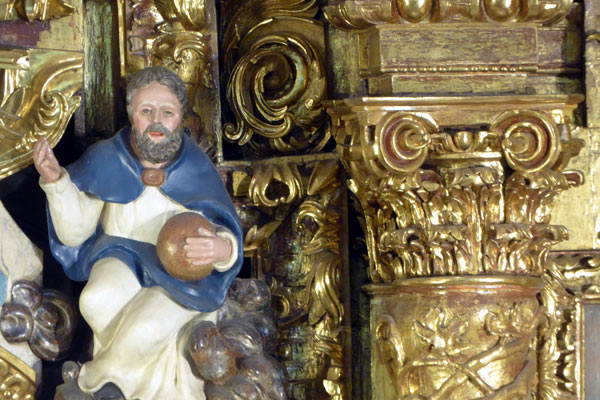
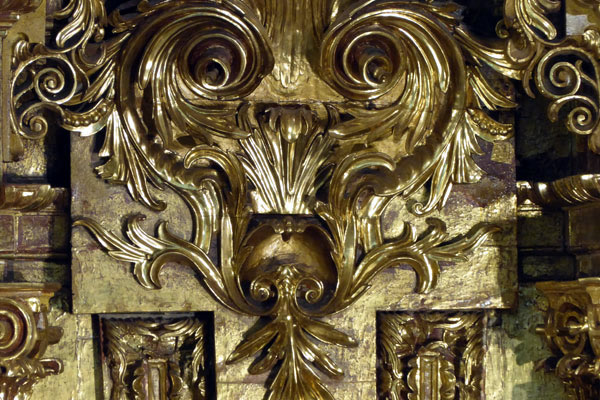
History:
In 1683, the director of the Jesuit Saint Andrews college, which this church belonged to, ordered the construction of this altarpiece.
The confraternity of Vera Cruz collected for six years the donations given by private people and by institutions, in particular the council of Bilbao, to finance the construction of the altarpiece.
Sculptures:
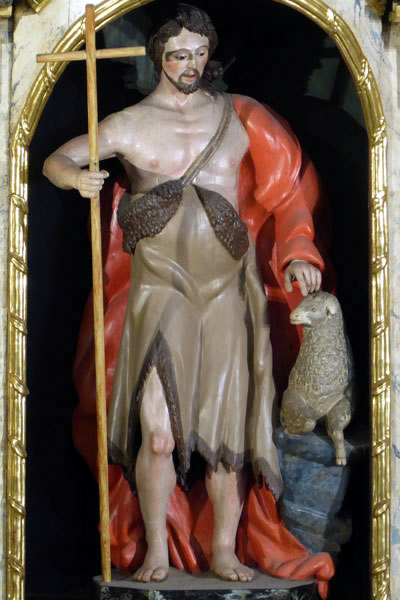
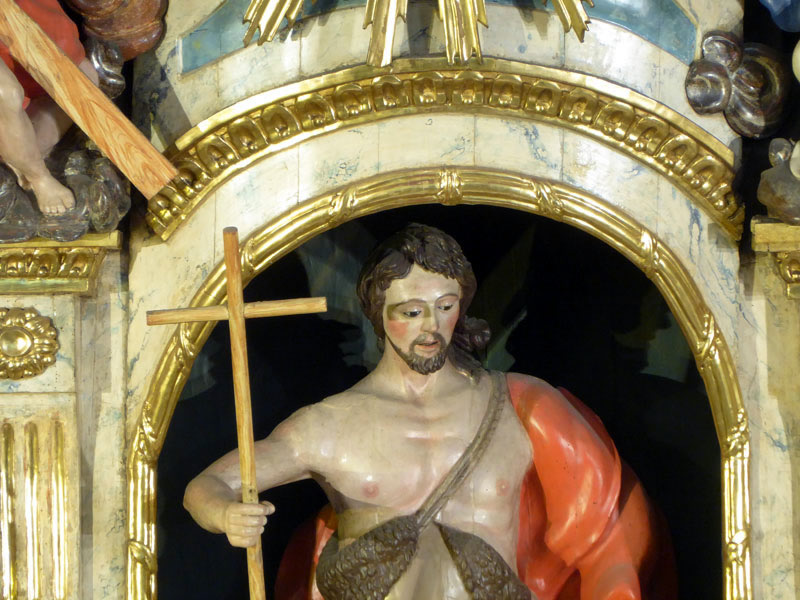
Saint John the Baptist
A sculpture of John the Baptist, who wears a camel-skin robe. He carries a cross in his right hand and a lamb accompanies him. These two symbols characterise him as the precursor of Christ, because for the christians he is the last prophet who announced the arrival of the Messiah.
The carving was made later than the other pictures of the altarpiece, around 1780, and is ascribed to the cantabrian sculptor Manuel de Acebo.
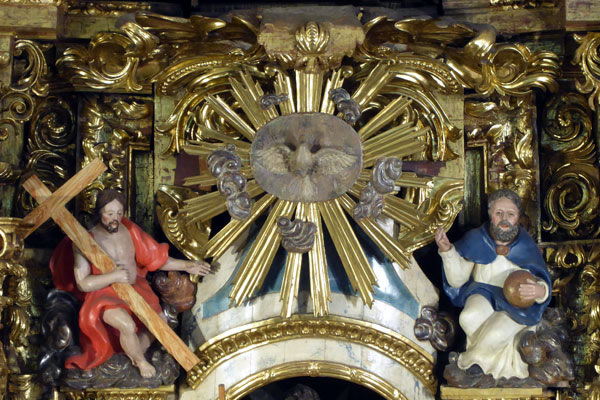
Most Holy Trinity
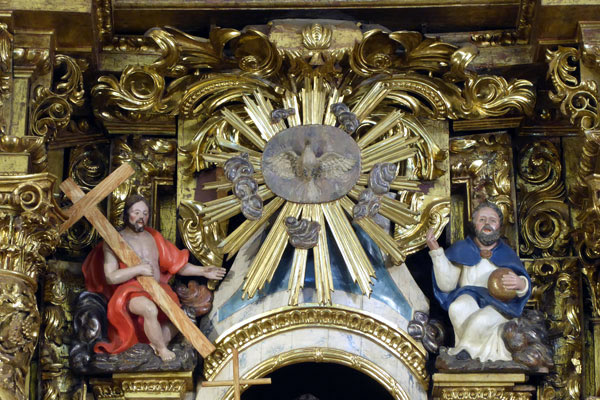
A picture of the Most Holy Trinity. The Trinity is the symbolic way to portray the God of the christians, who exists in three persons: the Father, the Son and the Holy Spirit.
God the Father on the right side is depicted as an old man holding the globe in his left hand, while he is raising the right hand for the blessing. The Son on the left side represents the Risen Christ wearing a red coat and carrying a large cross. Between them is the Holy Spirit, symbolized by a white dove, which is surrounded by golden lightning bolts.
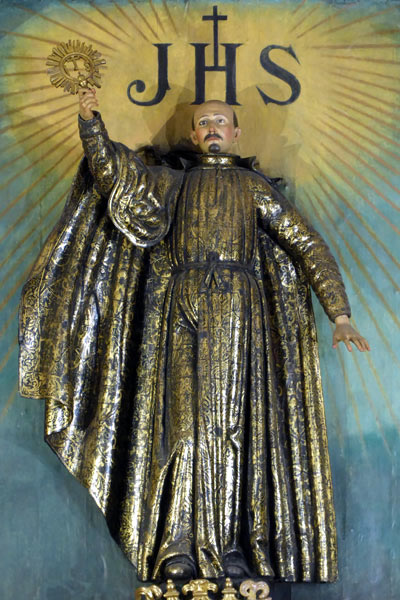
Saint Francis Borgia
Francis Borgia was a spanish noble man from the 16th century who became the equerry of Isabella of Portugal, the wife of emperor Charles I. of Spain.
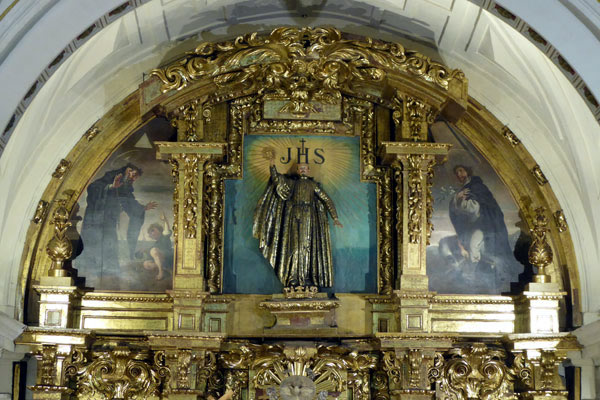
When the empress passed away, Francis organised the funeral procession and was in charge of uncovering the coffin before putting it into the grave: Seeing the rotted face of this young and beautiful woman, he was deeply impressed and decided to become a jesuit. He became the superior general of the Society of Jesus. During his life, he promoted the jesuits missions and colleges. Therefore, he is portrayed in the upper part of this altarpiece, which once was the main one in the church of the Saint Andrew college.
He is depicted wearing a precious black habit with gold filigree decoration and preaching. In his right hand, Francis holds an ostensory with the letters IHS, which is the proper sign of the jesuits and appears again on the painted background of the altarpiece.
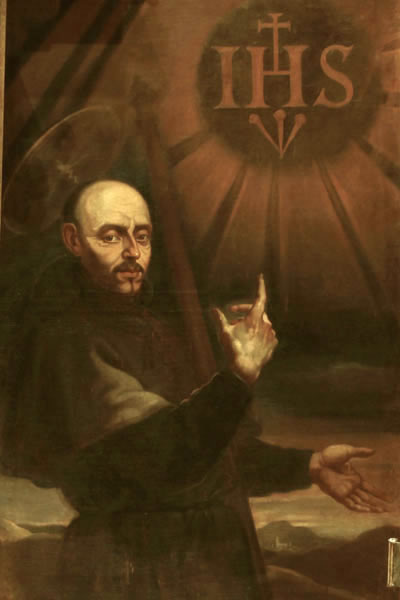
Saint Ignatius of Loyola
In 1534, Ignatius of Loyola founded the Society of Jesus, the so-called jesuits. In this painting, he points at the letters IHS – allusion to the name of Jesus – with the nails of the crucifixion of Christ beneath them.
In the background appears a landscape with a church between mountains, which certainly is the basilica of Loyola in the Saint’s place of birth.
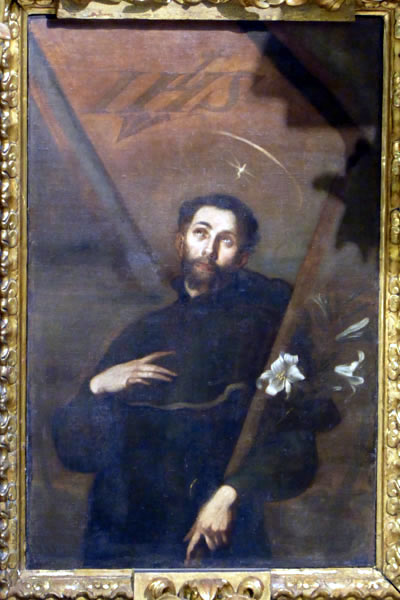
Saint Francis Xavier
A painting of Francis Xavier, one of the most important jesuit saints and a close assistant of Ignatius of Loyola, the founder of the Society of Jesus. During his life, he stood out as a missionary, especially in Japan and India.
The Saint turns his eyes towards heaven on which the letters IHS appear – symbol for the name of Jesus – with the nails of the crucifixion of Christ beneath them. In his left hand, he carries white lilies and a walking stick, which symbolises him as a missionary.
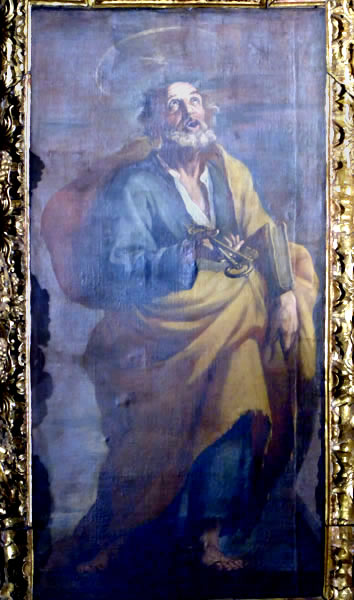
Saint Peter
According to the gospels, Peter was one of the twelve apostles called by Jesus of Nazareth. Jesus nominated him as his successor, therefore Peter is considered as the first pope of the catholic church. This painting is a copy of a baroque picture from the painter José de Ribera. Peter holds the keys, the symbol of the Kingdom of Heaven, and the book, which shows him as apostle.
The monumentality and expressiveness of Peter stand out.
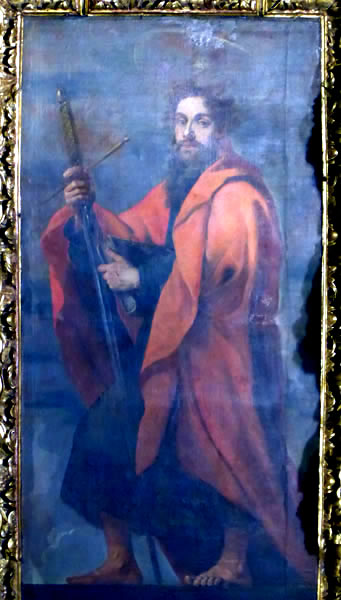
Saint Paul
Paul was one of the first missionaries of christianity, the religion to which he himself converted after Christ had appeared to him. This painting is a copy of a baroque picture from the painter José de Ribera. Paul is portrayed with the sword, the symbol for his death by beheading, and the book, a reference to the text of the Acts of the apostles and his fourteen Pauline epistles that are part of the Bible.
The monumentality and expressiveness of Paul, stand out. He looks directly to the observer, which is something proper to the baroque style.
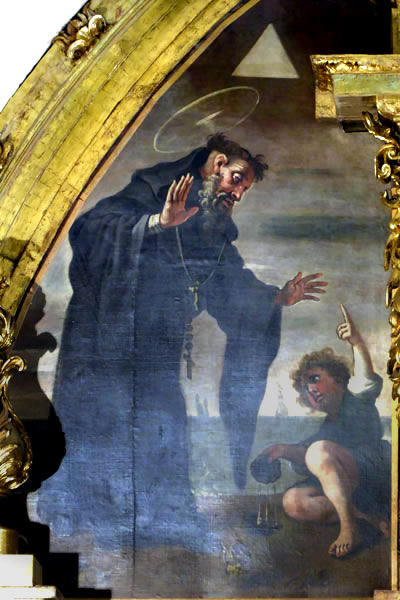
Saint Augustine
Augustine was a philosopher from the fourth century who converted to christianity and became bishop of the town of Hippo (today’s Algeria). He was author of many works of theology and is therefore considered as one of the fathers of the catholic church.
This painting shows the medieval legend according to which the saint was meditating at the seaside about the Most Holy Trinity. He saw a child playing, constantly filling a hole in the sand with water, wanting to drain the sea. When the saint told him that this task would be impossible, the child replied: “It is more difficult for you to understand the mystery of the Most Holy Trinity.”
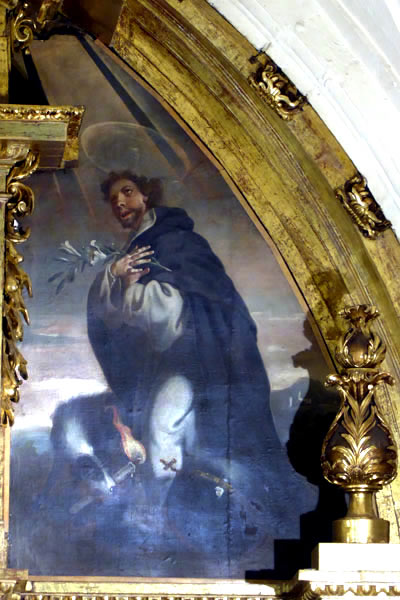
Saint Dominic de Guzmán
A painting showing Dominic de Guzmán, the founder of the dominican order. The Saint is kneeling as if he were praying and carries some lilies, the symbol of perfect chastity, which he observed throughout his entire life.
A black and white dog (the colours of the dominican habit) with a burning torch in his mouth accompanies the Saint. The torch represents the eagerness with which the dominican order defended the affairs of the catholic church and that they deserved the nickname “Domini canes”, which means, “dogs of the lord”.
Next to his feet is a large globe crowned with a cross, which symbolises the triumph of christianity in the world to which the dominicans had contributed as an order of preachers.