
Altarpiece of Saint Aloysius Gonzaga
Collection of altarpieces
- Town: Bilbao
- Church: Saint John the Baptist and Saint John the Evangelist Church
- Location: Chapel of Saint Aloysius Gonzaga
- Patron: donations from private persons and from institutions
- Chronology: 17th century (1694)
- Style: Baroque
An altarpiece dedicated to the youth and the purity
Interactive altarpiece: click on the pictures to get more information.
Church:
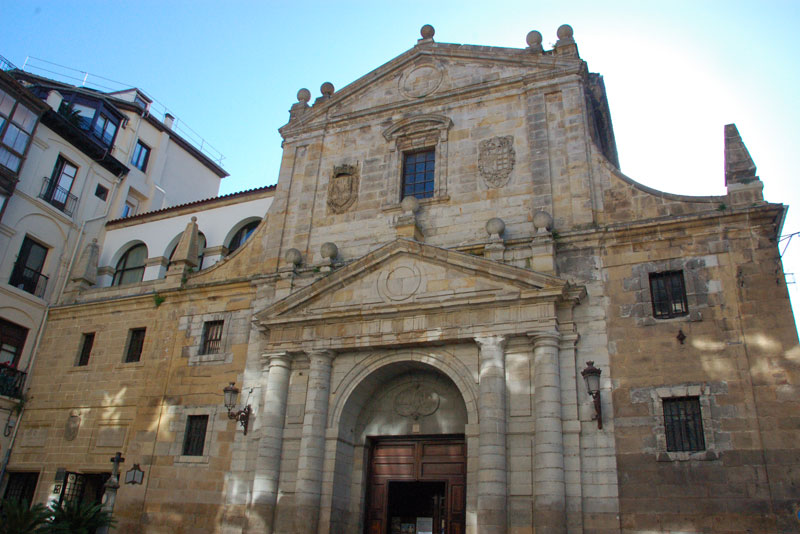
The Saint John the Baptist and Saint John the Evangelist church is located in the historic centre (Casco Viejo) of Bilbao, in the street “Calle de la Cruz”. It was founded by the jesuits in 1617 as a church for the Saint Andrews college, which was located outside of the city wall, in a place which had not been part of the seven original streets of Bilbao.
As it is common for the jesuit churches, its ground plan forms a rectangle with chapels on both sides of the central nave.
Today, the cloister and the premises of the college are used by the Euskal Museoa – the Basque Museum.
Patronage:
Aloysius Gonzaga was an Italian noble who rejected his heritage, position and property to become a jesuit.
During the plague epidemic, which ruined Rome in 1591, he cared for the sick people. He himself became infected with this disease and died at the age of only 23 years.
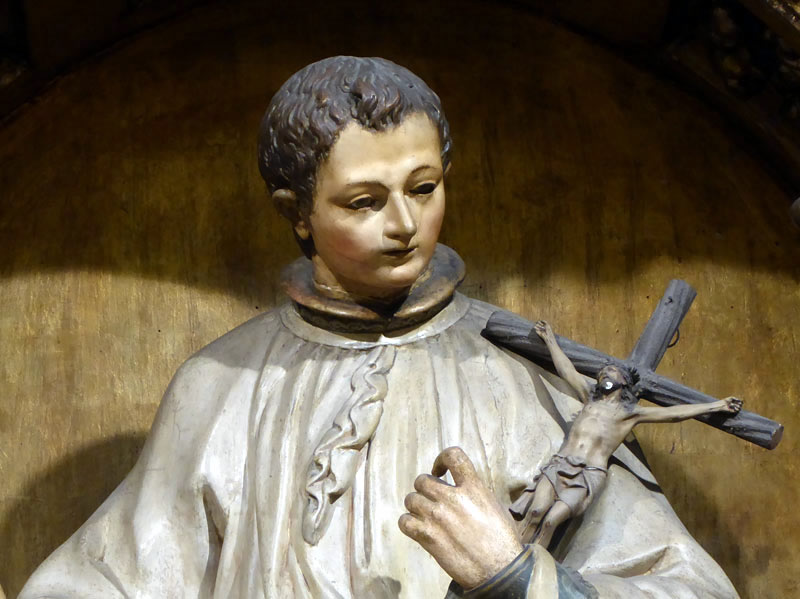
He is commonly portrayed wearing the jesuit habit and holding a crucifix at which he is looking in prayer.
Description:
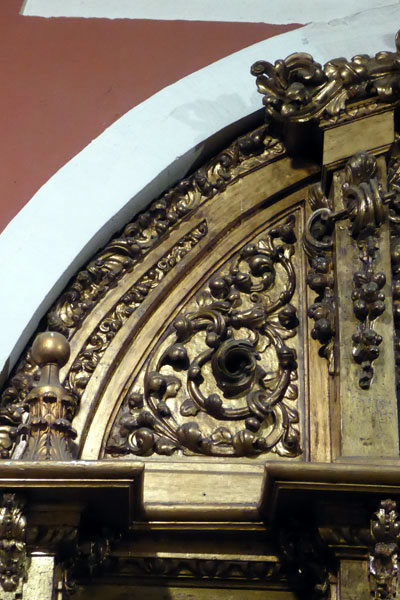
The single body 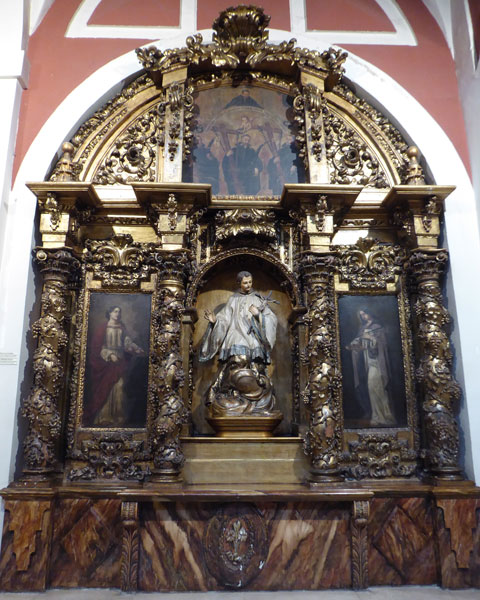
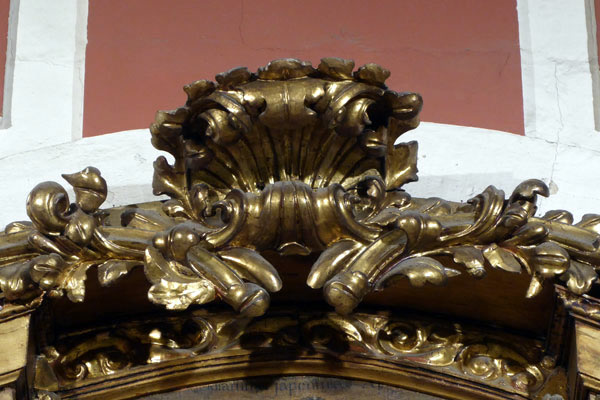
On the lower part is the 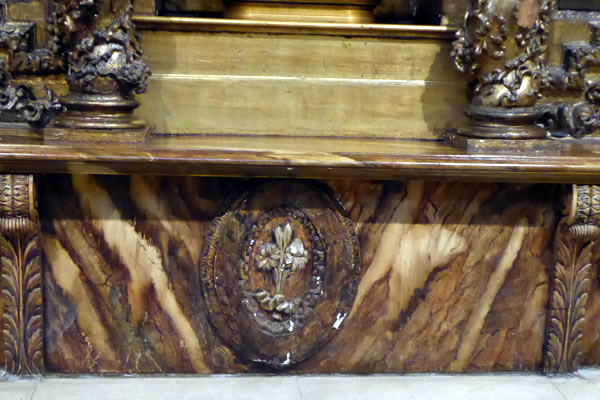
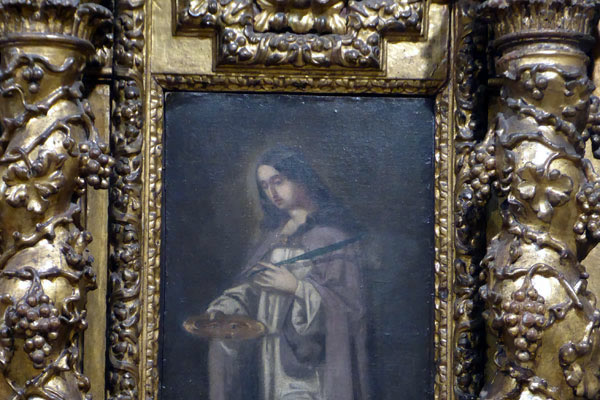
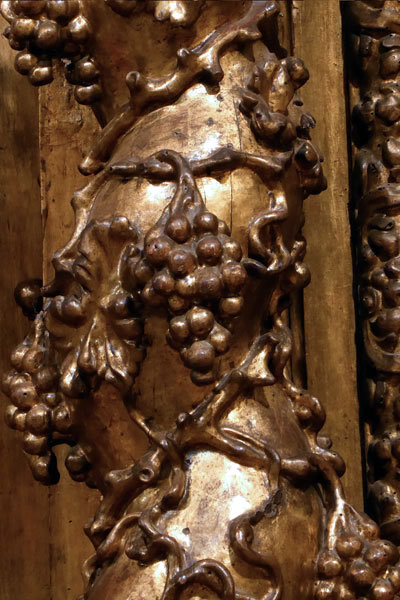
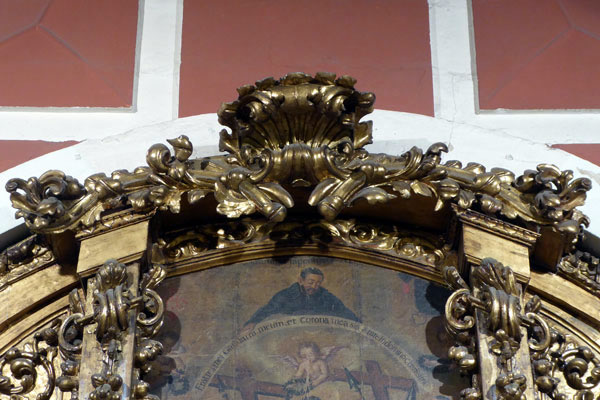
History:
In 1694, the director of the Jesuits Saint Andrews college (today Saint John the Baptist and Saint John the Evangelist church) ordered this altarpiece.
It was paid with donations from private persons and from institutions, in particular the council of Bilbao.
Sculptures:
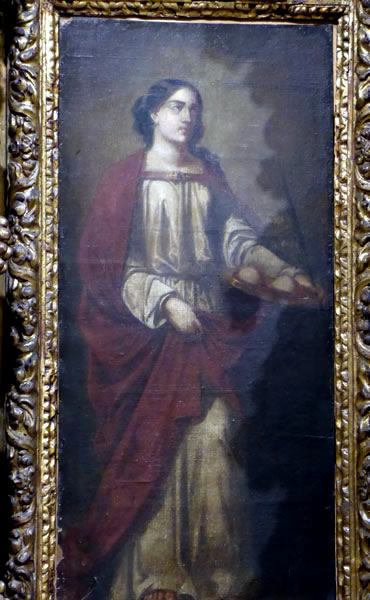
Saint Agatha
According to her legend, Agatha was a young woman from Catania, on the island of Sicily (today’s Italy), who had converted to christianity and therefore suffered many tortures. The most known torture is that her breasts were cut. That is why she is holding a plate with these attributes on it and a palm leave, which indicates that she died as a Martyr.
The Saint is beautifully dressed with a white tunic, the symbol of virginity and purity, and a read robe.
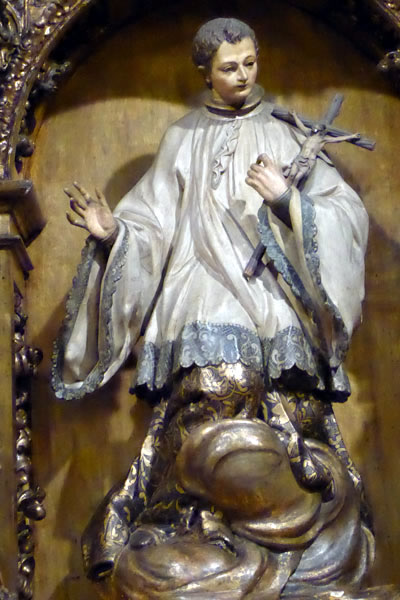
Saint Aloysius Gonzaga
This sculpture from around 1750 depicts Aloysius Gonzaga, a Jesuit, who reached holiness in his youth and died at the age of only 23. He became a good example for a college such as that of Saint Andrew, to which today’s church of Santos Juanes belonged. Dressed with the Jesuit habit, he carries in his left hand a crucifix, which he is looking at.
The movement of his clothes, in particular of the sleeves, which are daintily folded, stands out.
This picture is ascribed to Salvador Carmona, one of the most important sculptors of the 18th century.
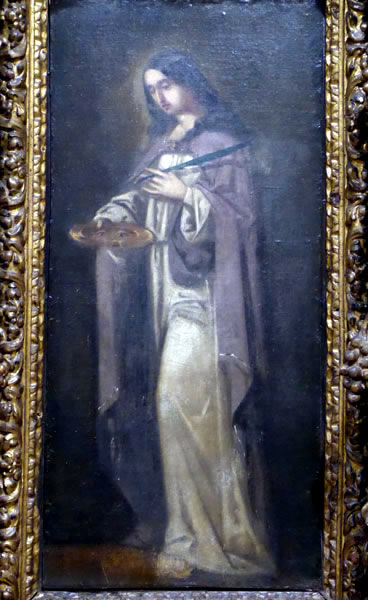
Saint Lucia
According to her legend, Lucia was a young woman from Sicily, who was denounced by her betrothed of being christian, therefore martyred and beheaded for not wanting to make sacrifices to the roman gods. During her martyrdom her eyes were ripped out, which are depicted on a plate in her hand.
In the left hand, she holds a palm leave, which indicates that she died as a martyr.
She is depicted as a young woman with loose hair and beautifully dressed with a white tunic, the symbol of virginity and purity, and a purple robe.
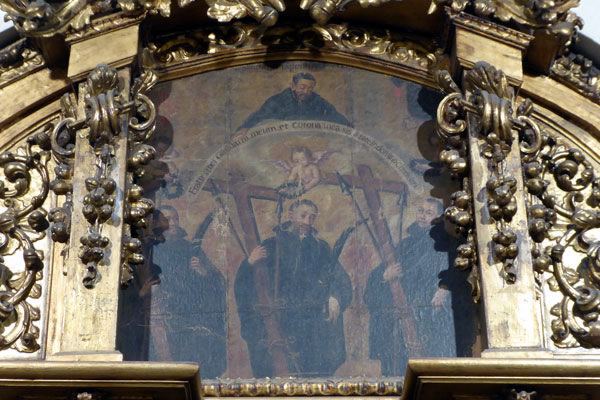
Martyrs of Nagasaki
A painting showing three of the 26 Christians who were crucified in 1597 in Nagasaki (Japan) during the preaching of Saint Francis Xavier. The three saints were crucified and pierced with lances just as in this picture. Three angels are crowning them with a laurel wreath, which is the symbol for immortality and stands for the Saints’ victory over the death.
In the upper part of the picture, a person dressed like a Jesuit holds up the Latin inscription FRATRES MEI GAEDIUM MEUM ET CORONA MEA SIC STATE IN DOMINO CHARISSIMI.