
Altarpiece of the Sacred Heart of Jesus
Collection of altarpieces
- Town: Bilbao
- Church: Saint John the Baptist and Saint John the Evangelist Church
- Location: Chapel of the Sacred Heart of Jesus
- Patron: donations from private persons and from institutions
- Chronology: 18th century (1749)
- Style: Baroque
The Jesuits promoted the devotion to the Sacred Heart of Jesus – the protagonist of this altarpiece
Interactive altarpiece: click on the pictures to get more information.
Church:
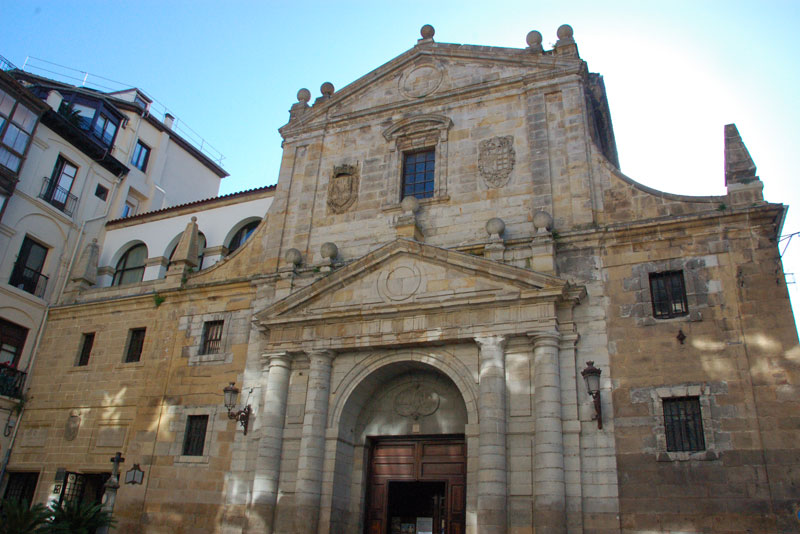
The Saint John the Baptist and Saint John the Evangelist church is located in the historic centre (Casco Viejo) of Bilbao, in the street “Calle de la Cruz”. It was founded by the jesuits in 1617 as a church for the Saint Andrews college, which was located outside of the city wall, in a place which had not been part of the seven original streets of Bilbao.
As it is common for the jesuit churches, its ground plan forms a rectangle with chapels on both sides of the central nave.
Today, the cloister and the premises of the college are used by the Euskal Museoa – the Basque Museum.
Patronage:
The Sacred Heart is a way of devotion proper to the catholicism to venerate the Heart of Jesus as symbol of the Love of God to the humanity.
Its origin is very old; it was mentioned by the medieval tradition. However, the Jesuits spread this devotion around the world from 1673 onwards.
Description:
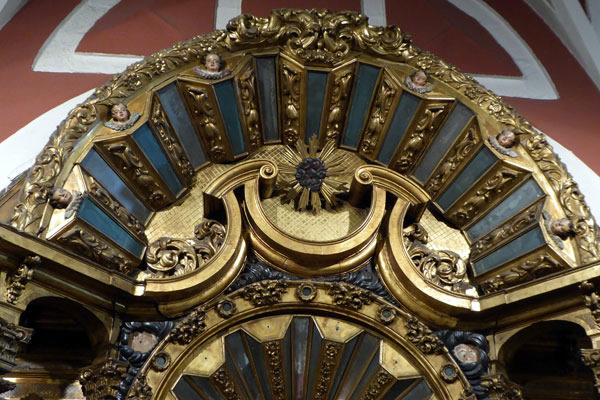
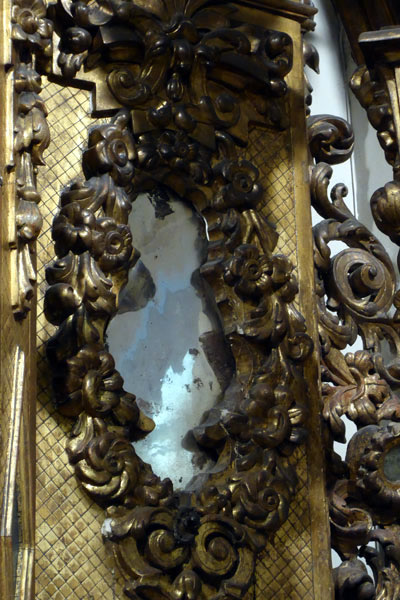
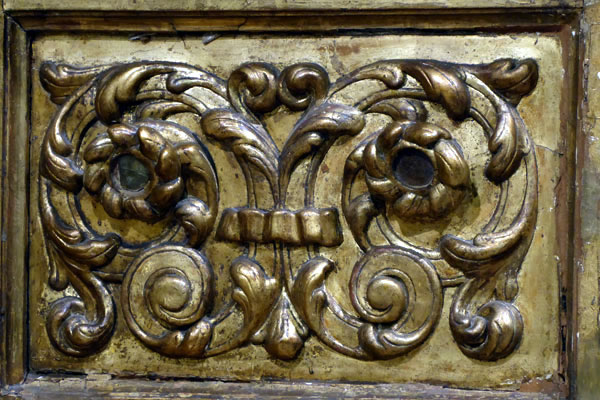
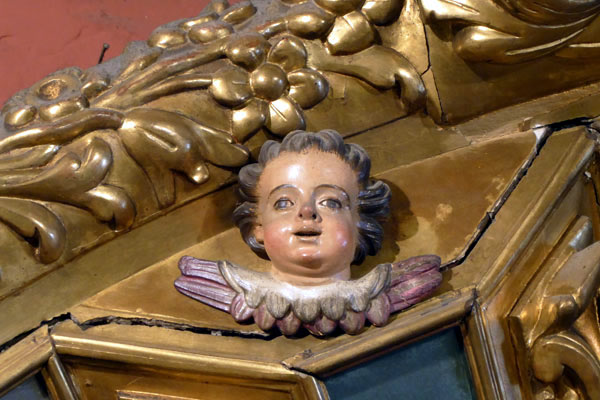
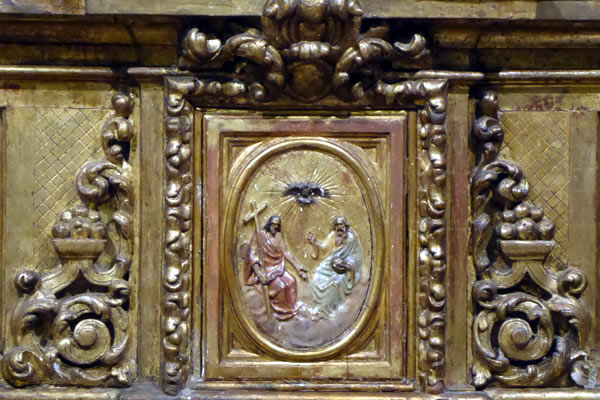
This single-piece 


History:
In 1749, the director of the Jesuits Saint Andrews college (today Saint John the Baptist and Saint John the Evangelist church) ordered this altarpiece.
It was paid with donations from private persons and from institutions, in particular the council of Bilbao.
Sculptures:
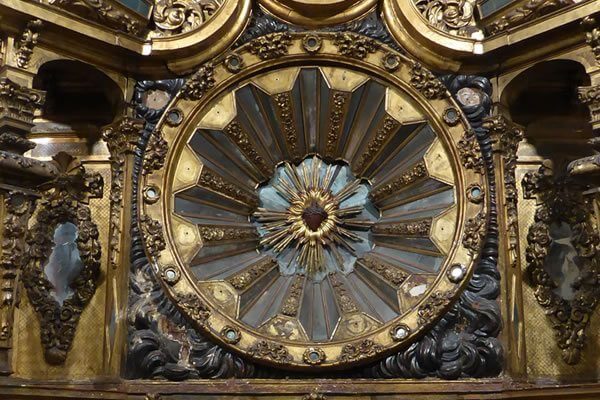
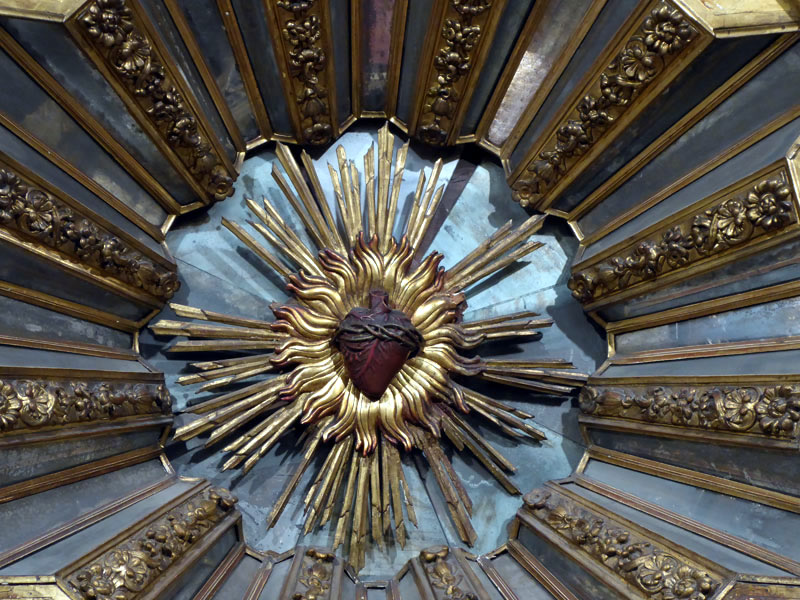
Sacred Heart of Jesus
The Love of God to the humans depicted in a symbolic way: A heart pierced with a crown of thorns – the heart of Jesus Christ from which flames and golden rays radiate. It is a sign of the divine Love.