
Altarpiece of Saint Joseph
Collection of altarpieces
- Town: Bilbao
- Church: Saint John the Baptist and Saint John the Evangelist Church
- Location: Chapel of Saint Joseph
- Patron: donations from private persons and from institutions
- Chronology: 17th century (1694)
- Style: Baroque
Two young Jesuit Saints accompany the father of Jesus of Nazareth
Interactive altarpiece: click on the pictures to get more information.
Church:
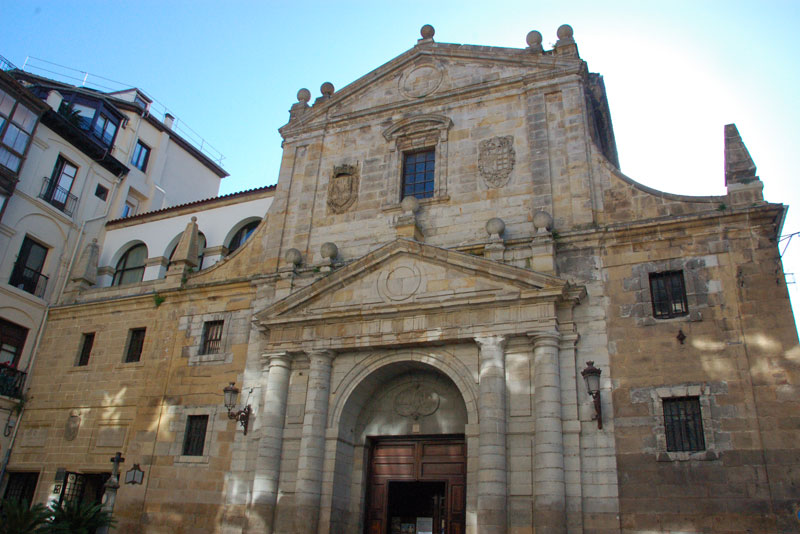
The Saint John the Baptist and Saint John the Evangelist church is located in the historic centre (Casco Viejo) of Bilbao, in the street “Calle de la Cruz”. It was founded by the jesuits in 1617 as a church for the Saint Andrews college, which was located outside of the city wall, in a place which had not been part of the seven original streets of Bilbao.
As it is common for the jesuit churches, its ground plan forms a rectangle with chapels on both sides of the central nave.
Today, the cloister and the premises of the college are used by the Euskal Museoa – the Basque Museum.
Patronage:
Joseph is the husband of Mary and the adoptive father of Jesus of Nazareth. According to the gospel of Matthew, he was an artisan – later, the tradition concretised his profession as carpenter. He was of humble status, although he belonged to the lineage of king David.
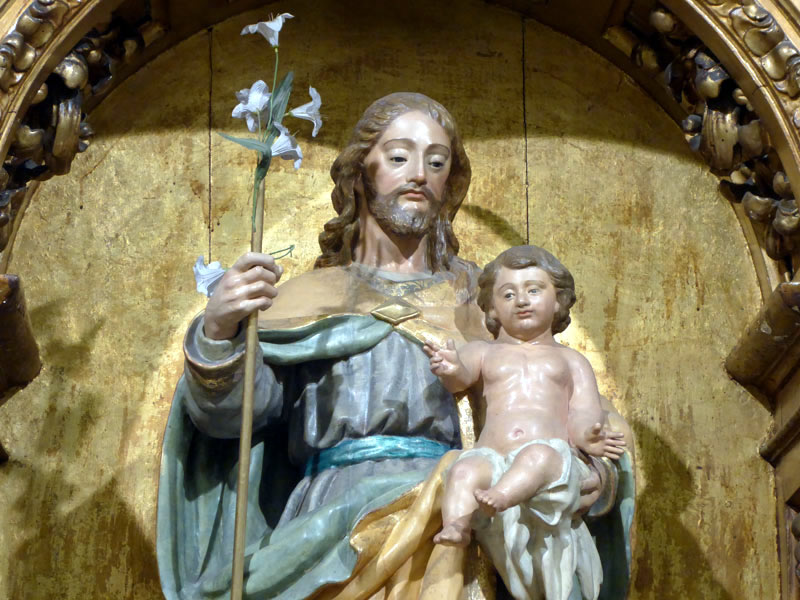
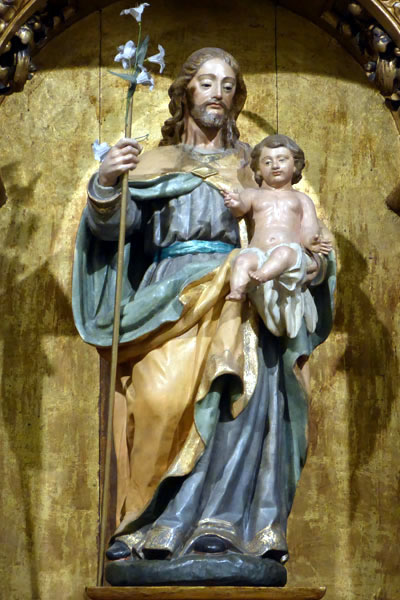
In this sculpture, he is portrayed with the Child in his arms, who turns towards the saint, emphasising their proximity.
In his right hand, the saint carries a flourishing stick as an allusion to the miracle that made the priests recognise him as the suitable husband for the Virgin Mary.
Description:
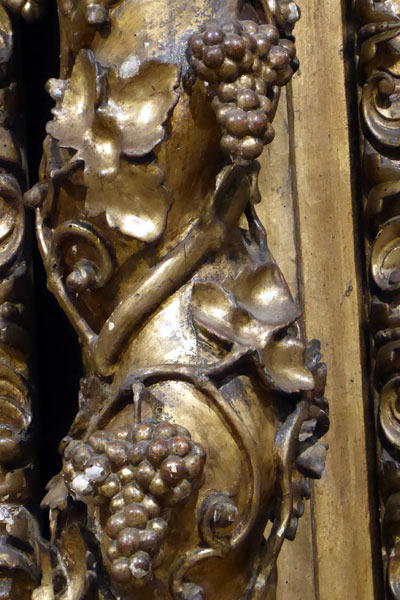
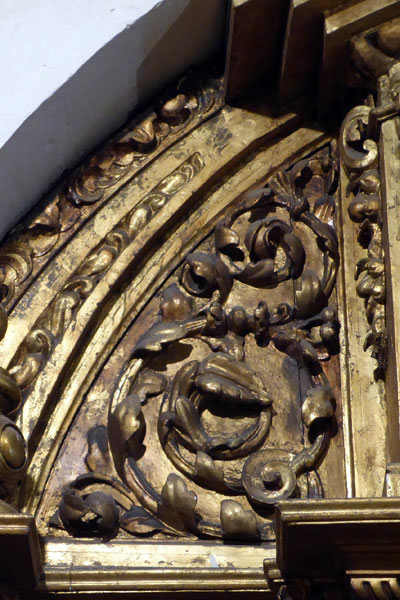
The single body 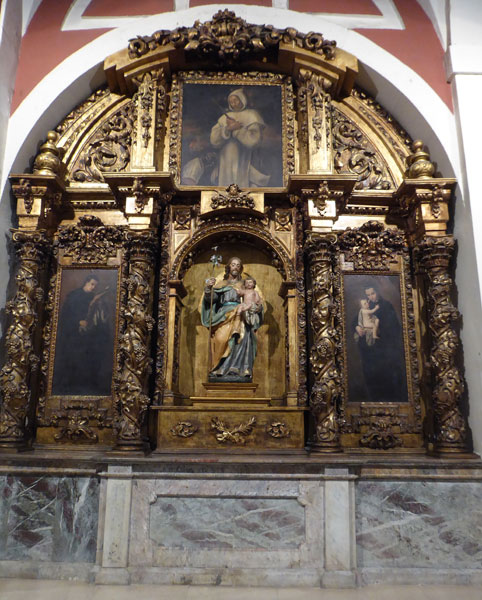

History:
In 1694, the director of the Jesuits Saint Andrews college (today Saint John the Baptist and Saint John the Evangelist church) ordered this altarpiece.
It was paid with donations from private persons and from institutions, in particular the council of Bilbao.
Sculptures:

Saint John Berchmans
The jesuit saint from Flanders (today’s Belgium) lived in the 17th century and defended the doctrine of the Immaculate Conception of the Virgin Mary. He reached holiness in his youth and died at the age of only 22. John became a good example for a college such as that of Saint Andrew, to which today’s Church of Santos Juanes belonged.
He is depicted as a young man, who with great devotion carries a crucifix.
Saint Joseph
This modern sculpture substitutes the original picture, which disappeared in the floods of 1983 by which the historic centre (Casco Viejo) of Bilbao was destroyed.
Saint Joseph with the Christ Child in his arms carries a flourishing stick, which shows him as the husband of the Virgin Mary and therefore as the adoptive father of Jesus.
Saint Stanislaus Kostka
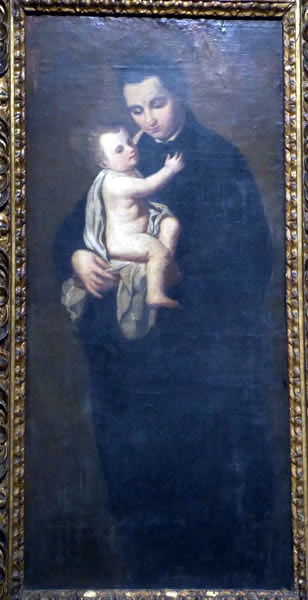
Stanislaus Kostka was a Jesuit novice, who reached holiness in his youth and died at the age of only 17. He became a good example for a college such as that of Saint Andrew, to which today’s church of Santos Juanes belonged.
He is dressed with the Jesuit habit and with great devotion he is holding the Christ Child in his arms.
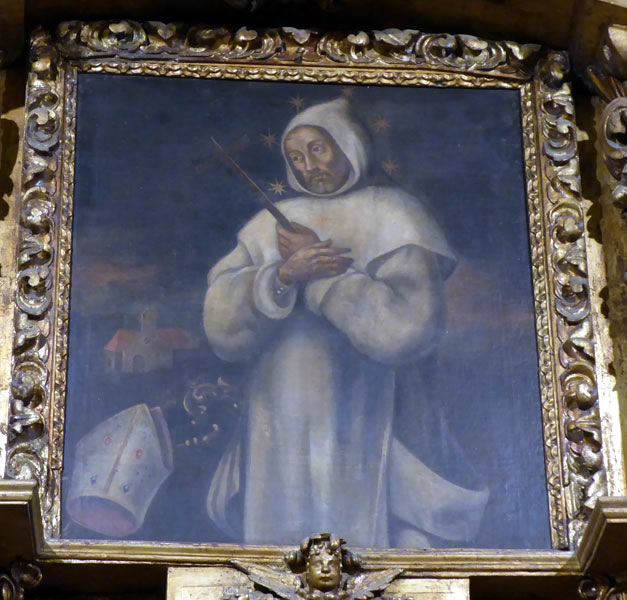
Saint Bruno
Bruno of Cologne was a German priest and the founder of the order of carthusians. Therefore, in this picture he is wearing the order’s white habit, is kneeling and carries a cross while his hands are crossed on his chest, all in front of a landscape with a monastery, which represents those he founded.
Above his head is a crown of stars as allusion to the miracles which are ascribed to him: One day, Bishop Hugo from Grenoble dreamed of seven stars. When he got up, Bruno and six companions appeared before him asking for his blessing to begin a life of spiritual retreat. This was seen as a sign that they had been destined to found the Order of Carthusians.
Next to his feet are attributes of the bishops, the mitre and the crosier, which are symbols for the Saint’s humility, as he refused to be appointed archbishop of Reggio (today’s Italy).