
Altarpiece of Cristo de la Villa
Collection of altarpieces
- Town: Bilbao
- Church: Saint John the Baptist and Saint John the Evangelist Church
- Location: on the left side of the crossing
- Artists: José de Egusquiza and José de Munárriz (architects)
- Patron: Confraternity of Vera Cruz
- Chronology: 17th century (1696)
- Style: Baroque
The confraternity of Vera Cruz ordered this altarpiece for their patron, the Cristo de la Villa
Interactive altarpiece: click on the pictures to get more information.
Church:
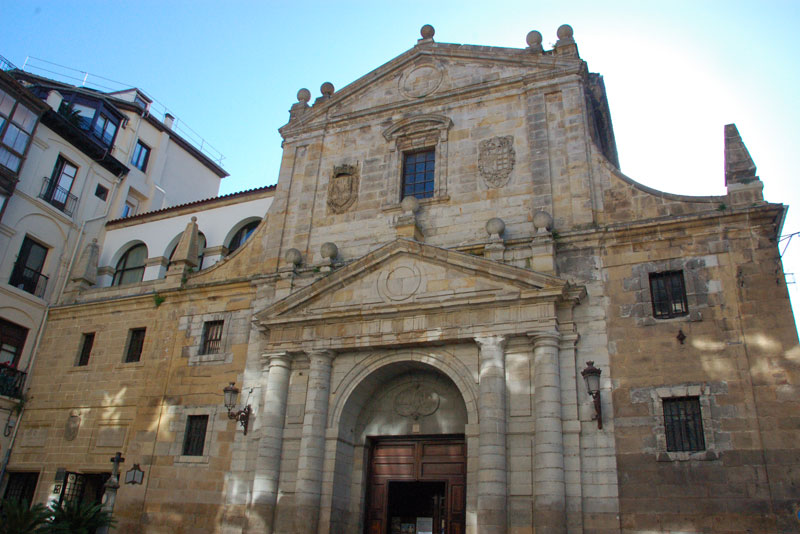
The Saint John the Baptist and Saint John the Evangelist church is located in the historic centre (Casco Viejo) of Bilbao, in the street “Calle de la Cruz”. It was founded by the Jesuits in 1617 as a church for the Saint Andrews college, which was located outside of the city wall, in a place which had not been part of the seven original streets of Bilbao.
As it is common for the jesuit churches, its ground plan forms a rectangle with chapels on both sides of the central nave.
Today, the cloister and the premises of the college are used by the Euskal Museoa – the Basque Museum.
Patronage:
The Holy Christ is one of the titles christians give to Jesus of Nazareth to consider him as the saviour of humanity.
Therefore, the main picture of this altarpiece is the one of the crucified Christ. According to the christian doctrine, the forgiveness of sins comes through the death of Christ on the cross and the access to the eternal life, which means the salvation, is open for the faithful.
Description:
The 
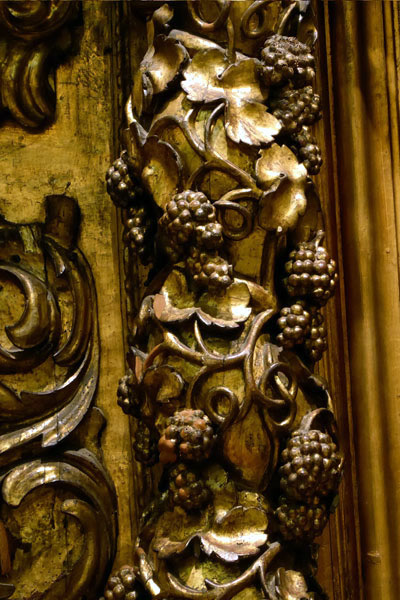
On the lower part is the altar table. The central body consists of the picture of the Cristo de la villa surrounded by four 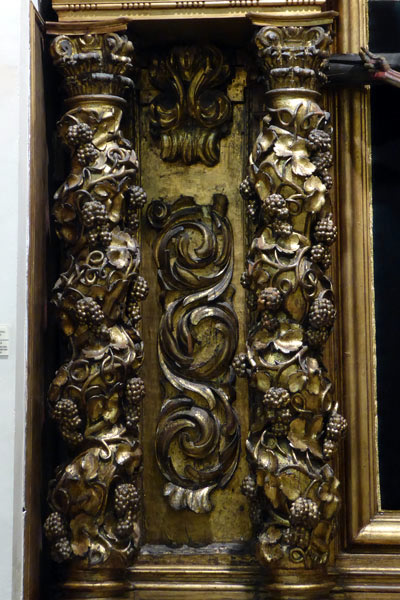
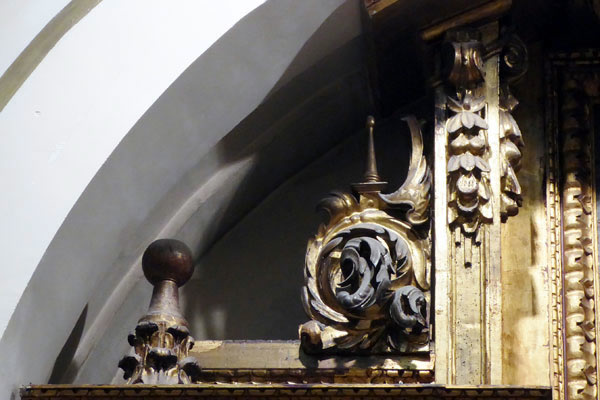
The combination of a sculpture with a painting in the same furniture is also something proper to the baroque style. In this case, the main picture is a sculpture, while the one on the top of the altarpiece is a rectangular painting.
History:
This altarpiece was ordered in 1696 by the confraternity of Vera Cruz, the oldest one of all existing confraternities in Bilbao (the foundation dates back to 1553), to bring the statue of their patron saint to bear. The statue is known as Cristo de la Villa and was certainly built at the same time when the confraternity was founded. The altarpiece was built by two architects: José de Egusquiza from Bilbao and José de Munárriz from Peralta in Navarro.
The work cost 1550 spanish real, was originally in the Saint John the Baptist and Saint John the Evangelist church in Atxuri, which nowadays no longer exists, and was translated in 1770. At that time, the Saint Andrew church no longer belonged to the jesuits but became one of the parish churches in Bilbao and was named after the church in Atxuri.
Sculptures:
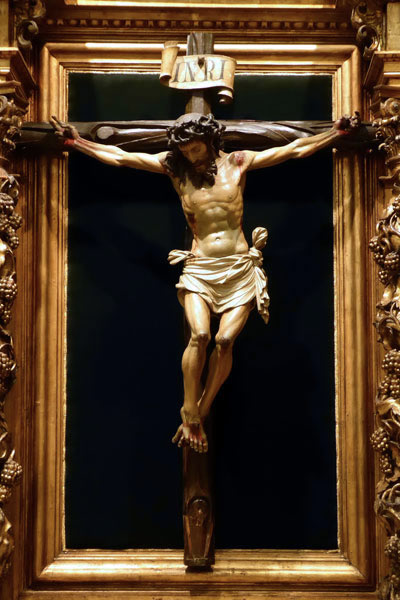
Cristo de la Villa
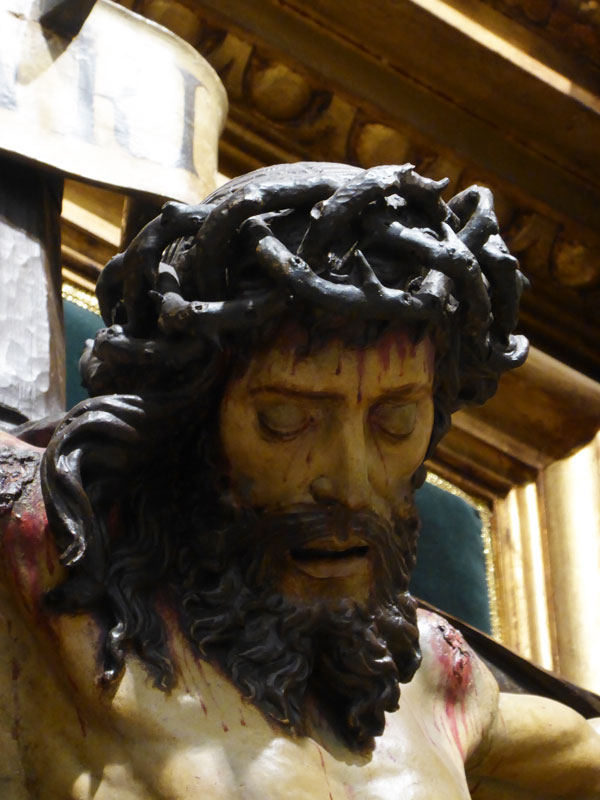
Picture of the Crucified Christ ascribed to Juan de Beaugrant, one of the most important renaissance artists in Bizkaia.
The dead body of Jesus with the inclined head and bleeding wounds on the hands, feet and flank and with an accurate polychromy stands out. In addition to his face, the impressive crown of thorns and the skill, with which the hair and the pleats of the loincloth are carved, attract attention.
The confraternity of Vera Cruz carries this sculpture in procession on wednesday in the Holy Week and on God Friday. Furthermore, it is venerated on 3rd May when the council of Bilbao asks Christ to protect the town.
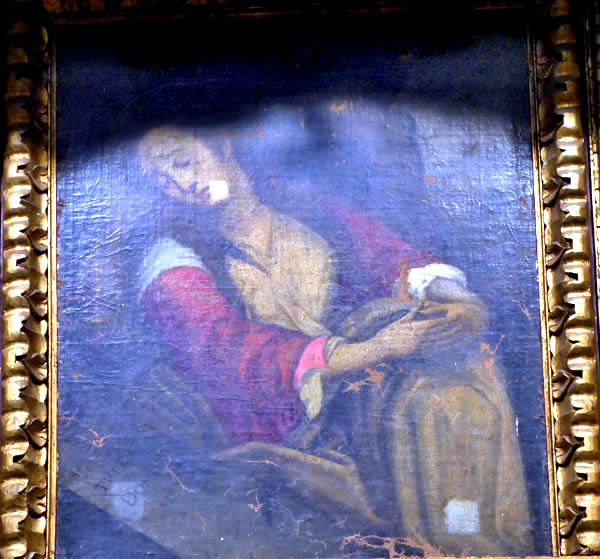
Saint Mary Magdalene
A painting of Mary Magdalene, one of the women who, according to the gospels, followed Jesus of Nazareth in his preaching and who stood at the foot of the cross on mount Golgotha.
The saint is mourning with folded hands and a sad face. This emphasises the ideas of the death of Christ on the cross and of his Resurrection, as the Risen Christ first appeared to Mary Magdalene.