
Collection of altarpieces
- Town: Bilbao
- Church: Saint John the Baptist and Saint John the Evangelist Church (Los Santos Juanes)
- Location: High Altar and side-chapels
- Artist:
- Patron: several patrons
- Chronology: 17th and 18th century (1683-1747)
- Style: Baroque
A spectacular collection of nine altarpieces in the historic centre (Casco Viejo) of Bilbao
A collection of 9 altarpieces in the Saint John the Baptist and Saint John the Evangelist Church (Los Santos Juanes)

Church:
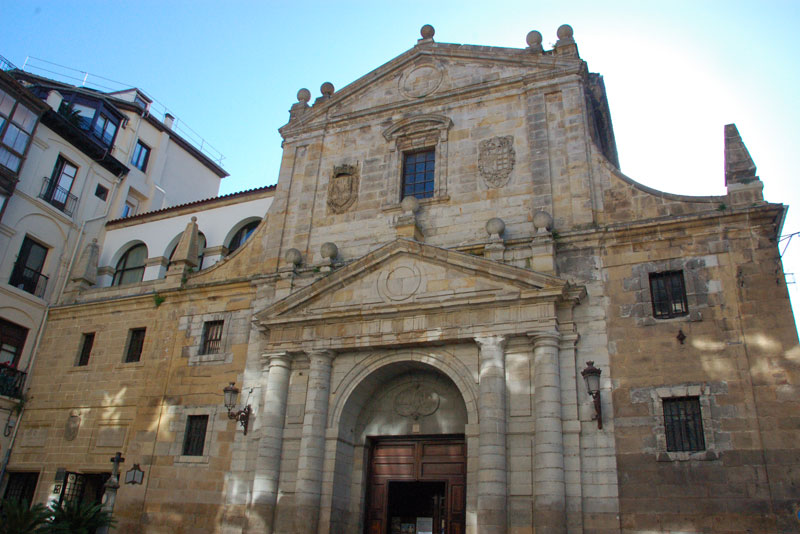
The Saint John the Baptist and Saint John the Evangelist Church is located in the historic centre (Casco Viejo) of Bilbao, in the street “Calle de la Cruz”. It was founded by the Jesuits in 1617 as a church for the Saint Andrews college, which was located outside of the city wall, in a place which had not been part of the seven original streets of Bilbao.
As it is common for the jesuit churches, its ground plan forms a rectangle with chapels on both sides of the central nave.
Today, the cloister and the premises of the college are used by the Euskal Museoa – the Basque Museum.
History:
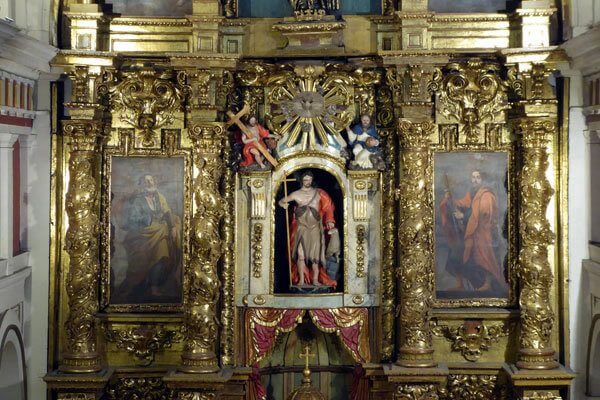
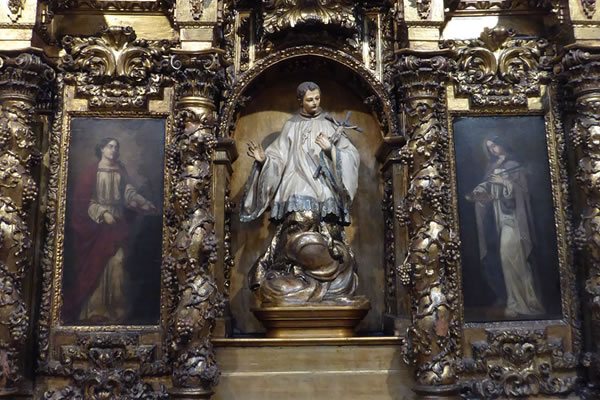
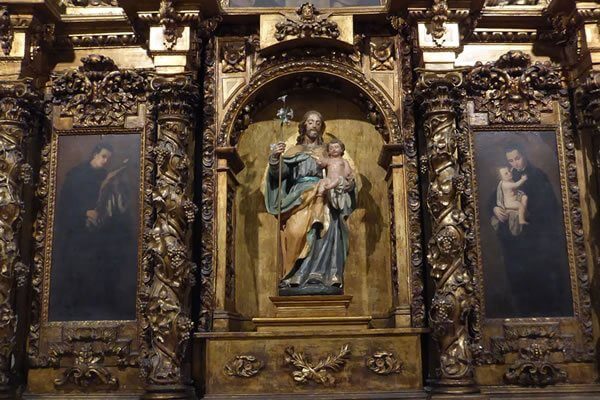
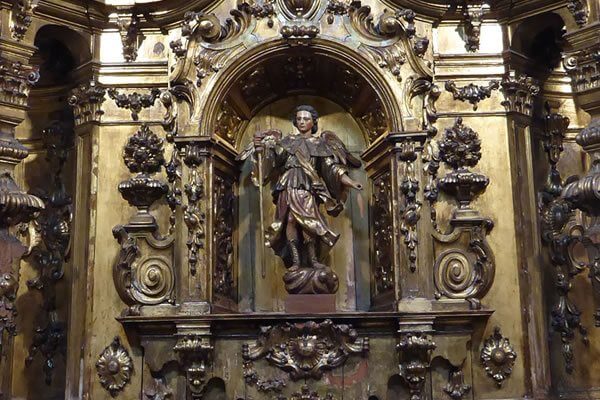
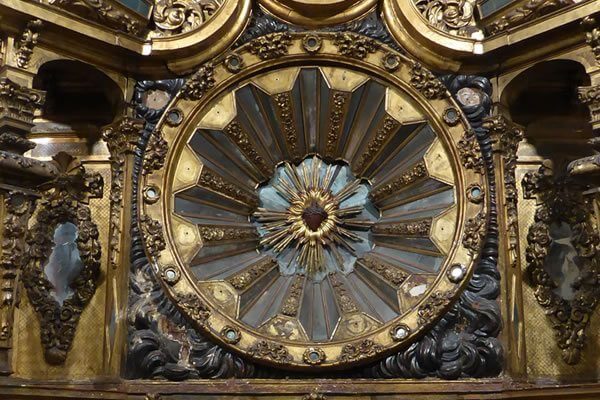
The collection of altarpieces that can be seen today in the Church of Los Santos Juanes has diverse origins and, therefore, has been created by various artists at different times. The oldest are the main altarpiece and the lateral altarpieces of the Virgin of Carmen and Saint John the Evangelist, which were commissioned in 1683, while the lateral altarpieces of Saint Raphael and the Sacred Heart, the last to be made, were not completed until 1747.
In fact, not all the altarpieces were commissioned for this church: in 1770, coinciding with the expulsion of the Jesuits from the Kingdom of Spain, what had been a school of the Society of Jesus became one of Bilbao’s parish churches. At that time, altarpieces from other churches in Bilbao were moved here, such as the one from the now defunct Church of Los Santos Juanes in Atxuri, from which it would take its name.
Description:
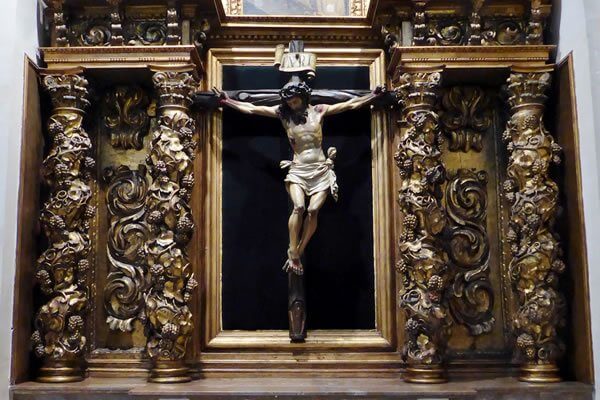
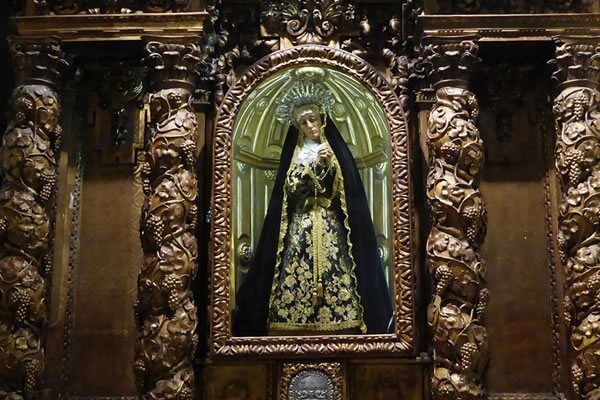
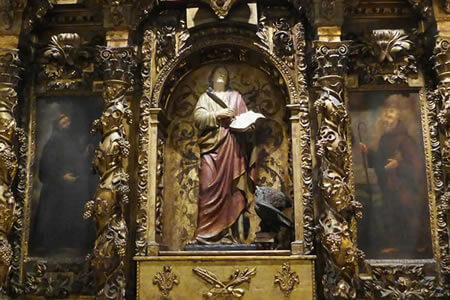
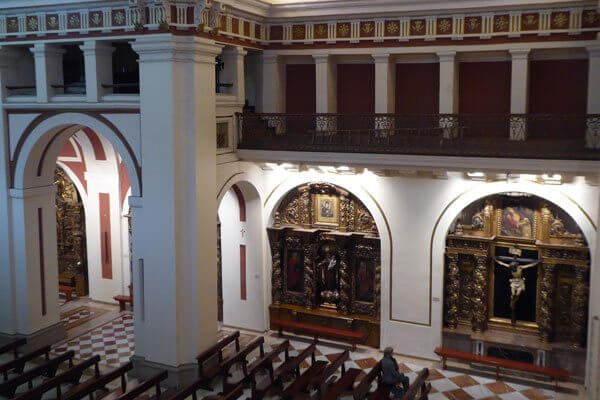
The collection consists of the main altarpiece, which is dedicated to Saint John the Baptist, and eight lateral altarpieces: four are in the gospel nave (the left nave of the church) and four in the epistle nave (the right nave of the church). The gospel nave contains the altarpieces Cristo de la Villa, the Virgin of Carmen, Saint Aloysius Gonzaga and Saint Rafael. In the epistle nave are Our Lady of Solitude, Saint John the Evangelist, Saint Joseph and the Sacred Heart of Jesus.
Due to their different origins, the altarpieces show pictures and paintings of different styles; nevertheless, the collection is also coherent: all altarpieces were built between 1683 and 1747 in the baroque style. The oldest ones are characterised by a much-decorated baroque. It is called churrigueresque, as the architects of the Churriguera Family were the foremost representatives of this style.
The altarpieces made after 1740, on the other hand, have softer and more refined forms and less overloaded decoration: This is what is known as rococo.