Collection of altarpieces
- Town: Bermeo
- Church: Church of the Assumption of our Lady
- Artists: Pedro Belaunzaran and Pedro Lumbreras (architects), José de Alcoverro (sculptor) and Pedro Belaunzaran (painter of the polychrome)
- Patron: Council of Bermeo
- Chronology: 19th century (1869-1871)
- Style: Neoclassical
A church in the Classical Style
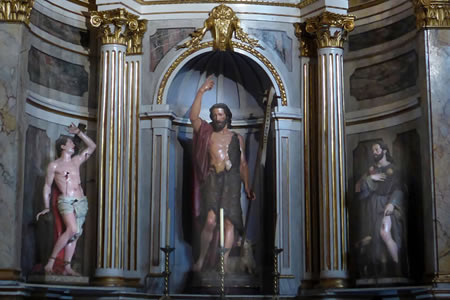
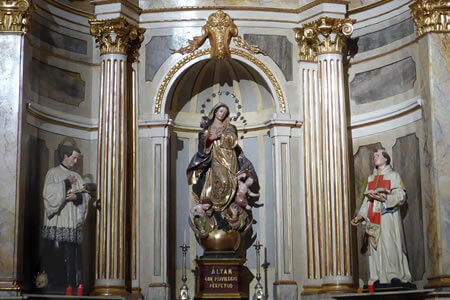
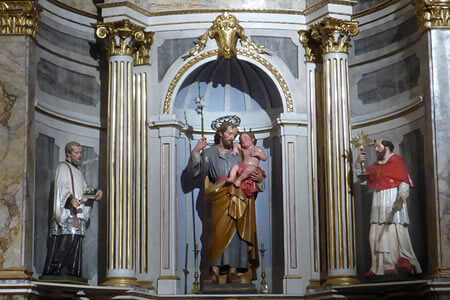
Collection of 4 altarpieces in the Church of Our Lady of the Assumption
Church:
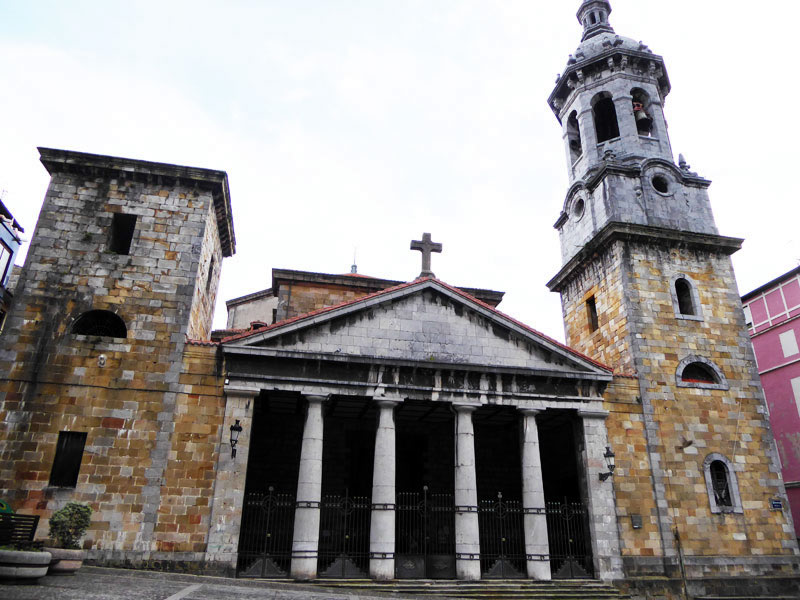
The parish church dedicated to the Assumption of Our Lady was constructed at different periods in the 19th century (1820/22 – 1869) and was designed by the architect Silvestre Pérez. The main portal protrudes from the building, its columns and triangular gable roof resembling an ancient greek temple. The church is flanked by two towers. The tower on the left side is unfinished, and that on the right, completed in the 19th century, functions as the belfry. The church’s ground plan with four equal arms forms a greek cross, which is surmounted by a large central dome. Inside the church, between the arches, supporting the dome, there are four altarpieces, above which are paintings, by Pablo Uranga from 1912, depicting the four evangelists.
History:
The four lateral altarpieces of the Church of Our Lady of the Assumption were commissioned by the council of Bermeo and sponsored by the local community. Additionally, individual donors like Andrés de Uriarte, left bequests, which paid for the sculptures. The architect, Pedro de Belaunzaran, was commissioned to plan the design. Another architect, Pedro Lumbreras (1869), oversaw the construction process and the polychrome scheme. The catalan sculptor José de Alcoverro (1870-1871) painted the pictures.
Description:
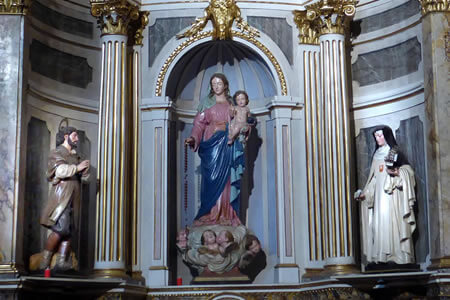
Apart from its main altarpiece, dedicated to the Assumption, the church has a 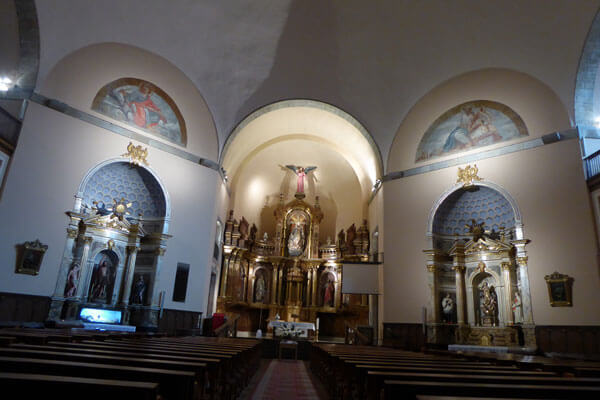
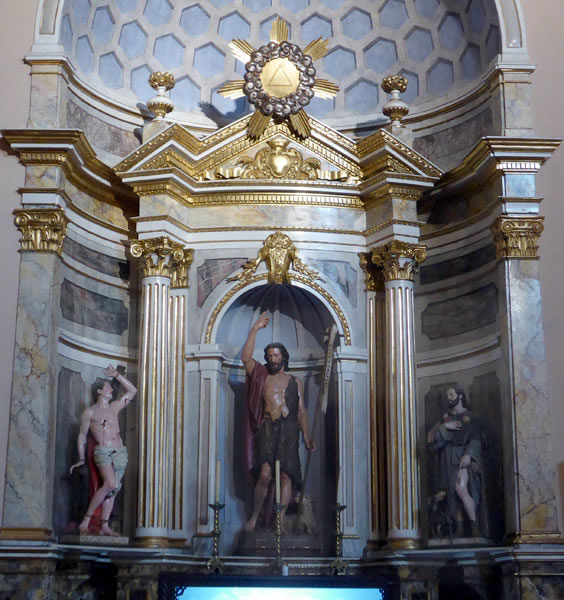
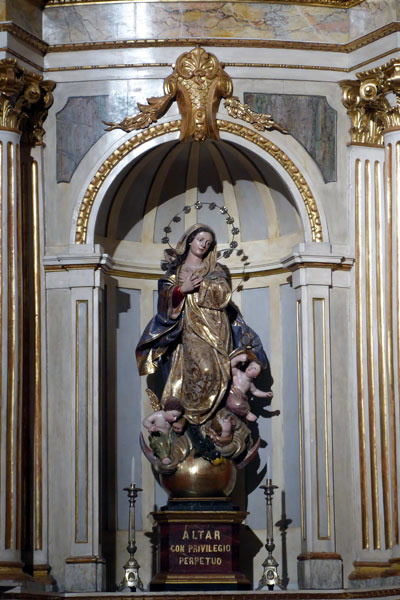
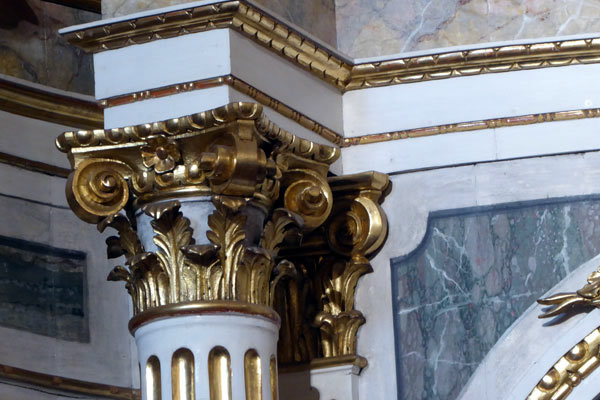
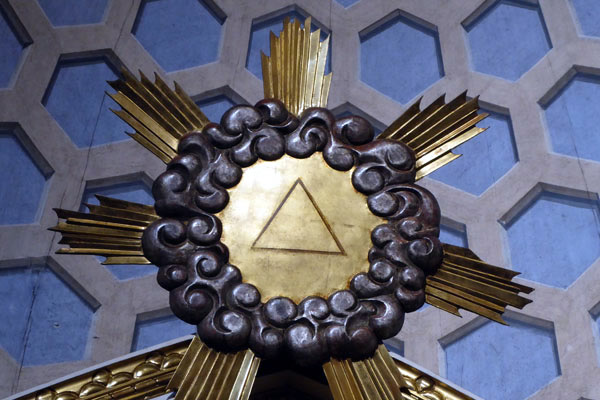
corinthians columns framing the most important painting. In the upper part there is a gilded
circle with a triangle (representing the Trinity) surrounded by clouds and lightning bolts (representing the divine Glory). The four altarpieces are carved in wood of red pine, painted in white and ornamented in