
Altarpiece of Saint John the Evangelist
- Town: Berriz
- Church: Saint John the Evangelist Church
- Location: High Altar
- Artist: Martín de Zaldúa (planner)
- Patron: Pedro Bernardo Villarreal de Bérriz
- Chronology: 17th-18th century (1695-1703, paintings and sculptures 1704-1727)
- Style: Baroque
A work as ahead of its time as its patron
Interactive altarpiece: click on the pictures to get more information.
Church:
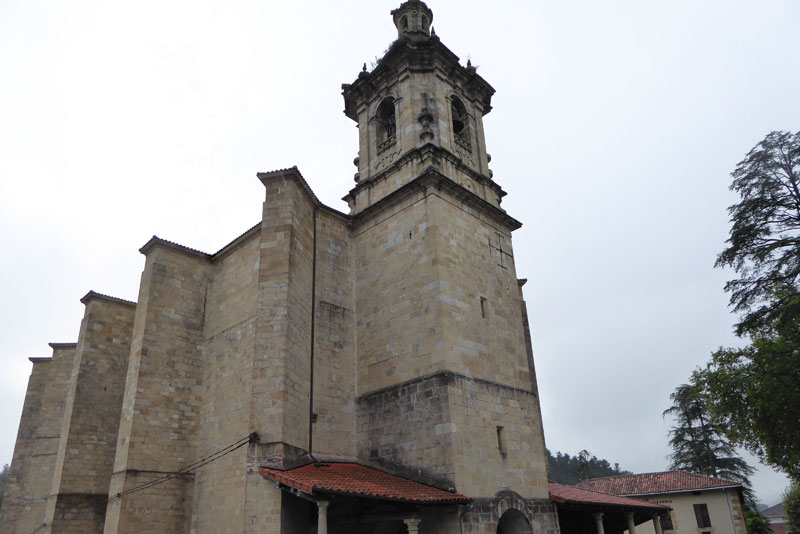
The Saint John the Evangelist Church is located in Elizondo, in the heart of the municipality of Berriz, to which it gives its name (elizondo means in Basque “next to the church”). The church forms a complex of buildings together with the 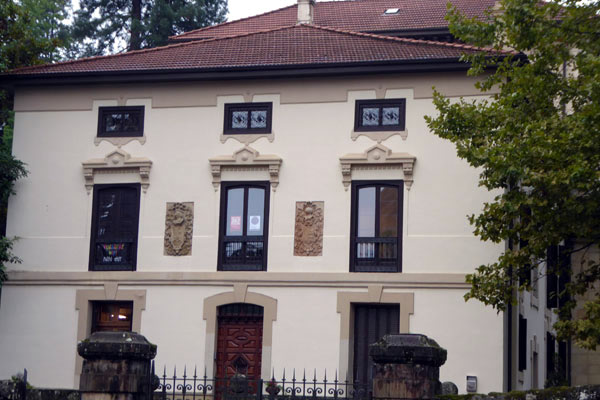

Although the church was probably constructed at around 1200, its current design looks like it was reconstructed, with the beginning at around 1535, starting with a late gothic style that would be mixed with a renaissance and a baroque style.
Patronage:
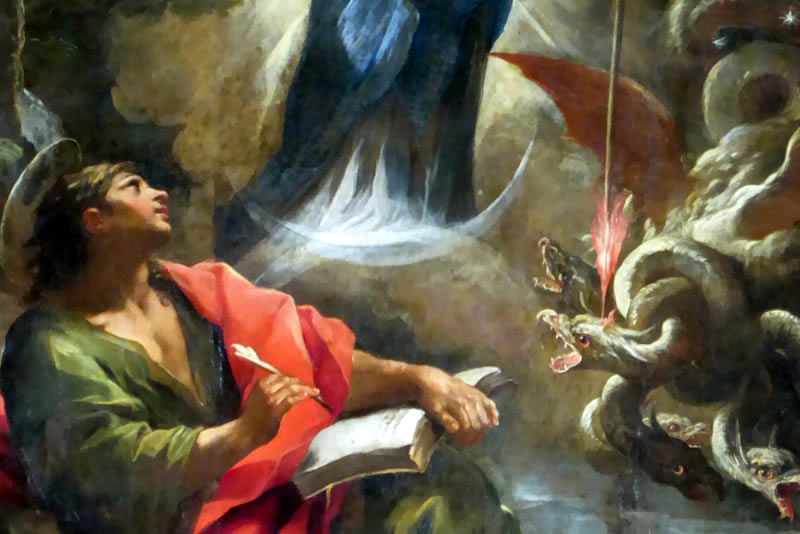
John was one of the twelve apostles. When he was a young man, he and his brother James were called by Jesus to be his disciples. During the persecution under the roman emperor Domitian, about 50 years after the death of Christ, John was send into exile to the island of Patmos in the Aegean Sea (today’s Greece). There, according to the tradition, he had the vision of the end of the world, the Apocalypse, which he described in the last book of the Bible.
He is also the author of one of the four gospels that the Catholic Church acknowledges as true and directly inspired by God.
Description:
The 

The pictures combine painting and sculpting. A 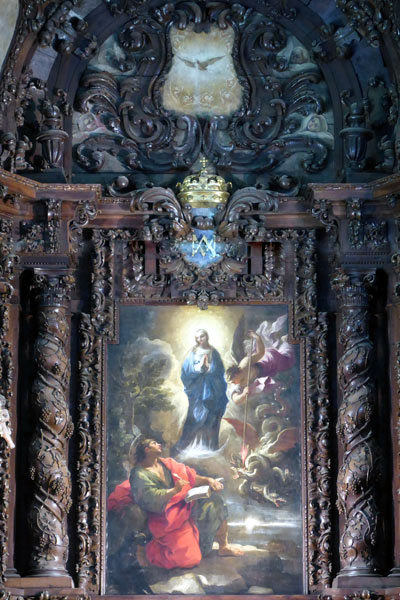
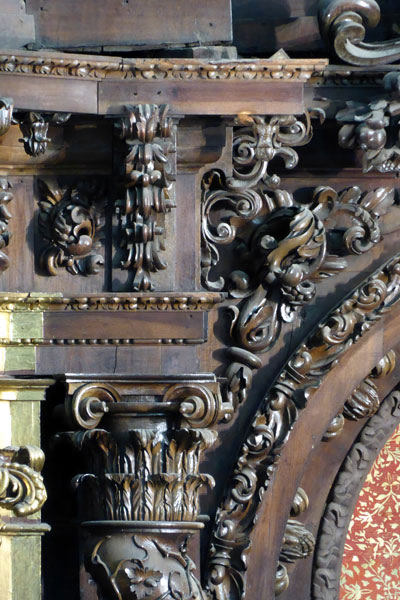
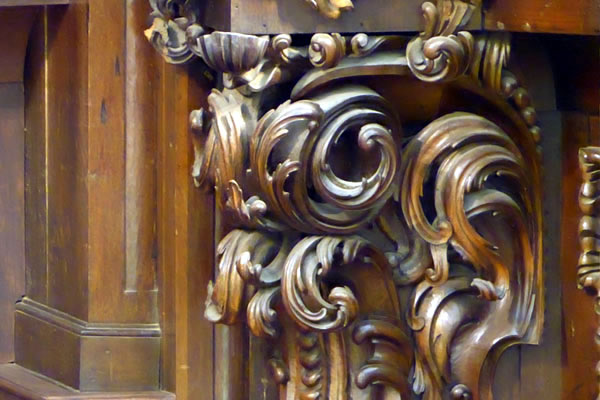
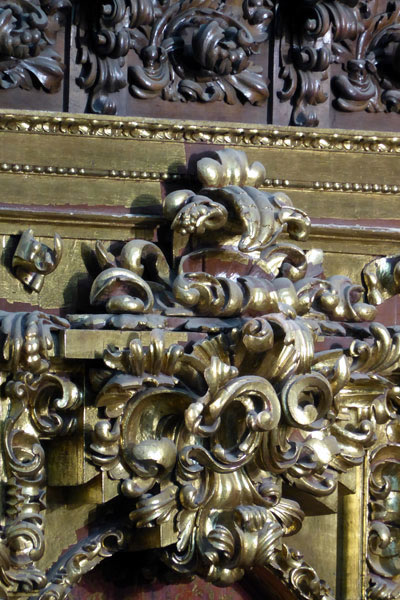
It stands out that the polychromy is only in the niches and sculptures, leaving the architectural part in its original colour of wood. What in the 18th century was a solution to the problem of lack of money to finish the work today seems to increase the sense of brilliance of the altarpiece.

History:
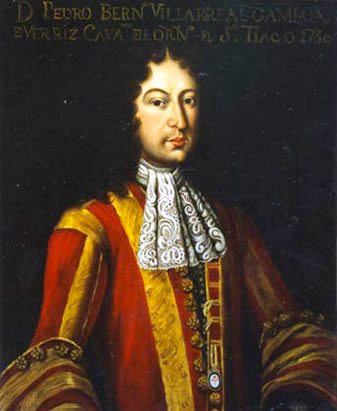
This altarpiece was built thanks to donations of the locals and in particular to the funding of Pedro Bernardo Villarreal de Bérriz, an entrepreneur and engineer from Arrasate (province of Gipuzkoa) who was one of the precursors of the enlightenment in the Basque Country. The structure or design of the altarpiece is the work of the architect Martín de Zaldúa from Gipuzkoa.
The architect, Martín de Olaizola was in charge of the construction process. He was also from Gipuzkoa, but lived in Elorrio, which was one of the most important artistic centres in Bizkaia (province in the Basque Country) at that time. The work was finished in 1704; however, the altarpiece was unpainted. Only two decades later, between 1726 and 1729, the niches and sculptures were gilded thanks to money donated from Guatemala by Domingo de Gomendio a resident of Berriz who was an Oidor of the Audience there.
After the Liturgical Reform from 1965, which was decided at the Second Vatican Council, the altar linked with the altarpiece was removed and the lower part of the altarpiece was refurbished.
Sculptures:
Body 1
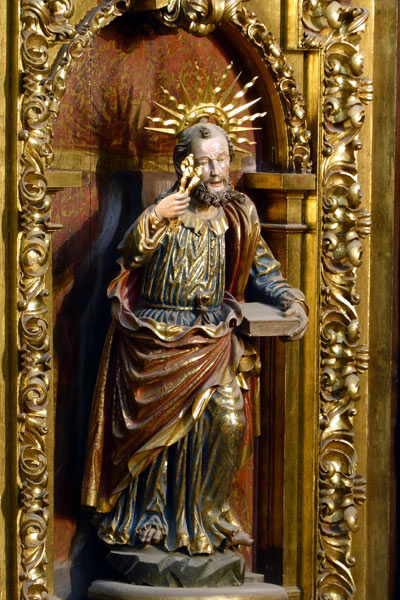
Saint Peter.
Peter was one of the twelve Apostles. Jesus nominated him as his successor, therefore he is considered as the first pope of the Catholic Church. In this picture, he can be recognised by carrying a book in his left hand and the keys of the Kingdom of God in the right one.
Like the other sculptures in the altarpiece, the picture appears a bit stiff, despite the movement of the clothes. This is something particular for the Baroque of these years.
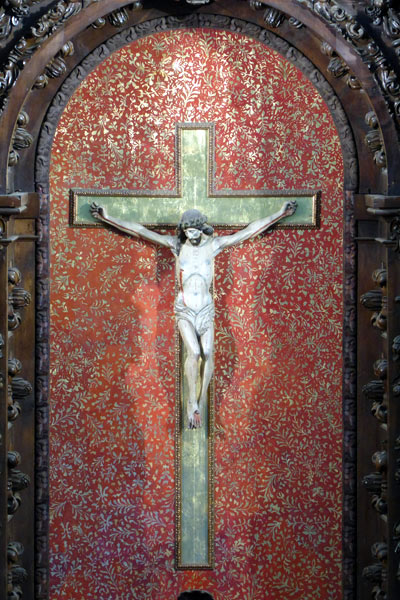
Crucified Christ
According to the christian doctrine, it is through the death of Christ on the cross that salvation comes and the access to the eternal life is open. Therefore, Jesus is portrayed in the moment of his death with the wound in his side, his head inclined and as a consumed body.
The picture, which occupies the position of a former tabernacle, dates from the mid-16th century, and is older than the altarpiece.
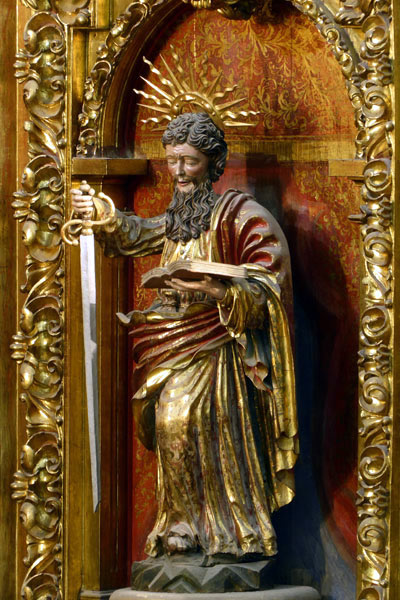
Saint Paul
Paul was one of the first missionaries of christianity, the religion to which he himself converted after Christ had appeared to him. In this picture, he is portrayed with the sword, the symbol for his death by beheading, and the book, a reference to the text of the Acts of the Apostles and his fourteen Pauline epistles that are part of the Bible.
Like in the other sculptures, the clothes move a bit stiffly. His beard stands out, resembling the one of Moises painted by Michelangelo.
Body 2
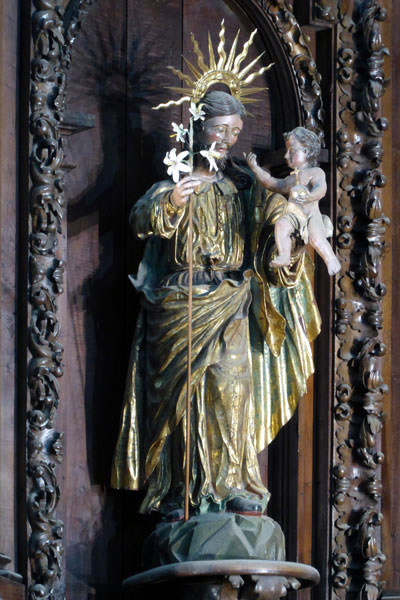
Saint Joseph
Joseph is the husband of Mary and the adoptive father of Jesus of Nazareth. Therefore, in this sculpture, he is portrayed with the Child in his left arm, who turns towards the Saint while carrying in his own left hand a ball with a cross on top, which is a symbol for the triumph of the christianity in the world.
On the right hand, Joseph carries a flourishing stick as an allusion to the miracle that made the priests recognise him as the most suitable husband for the Virgin Mary.
It is the most dynamic piece of this collection.
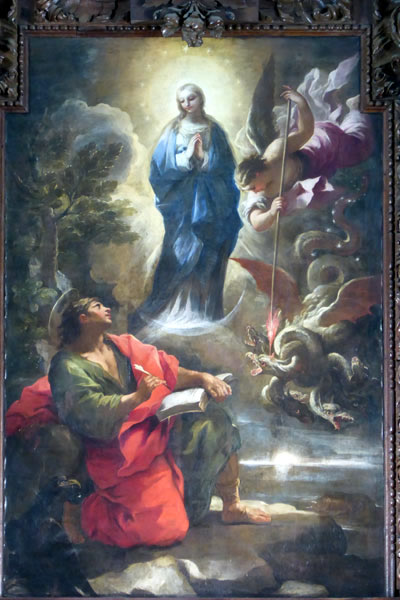
Vision of Saint John in Patmos
During his exile on the island of Patmos, Saint John the Evangelist had several visions, which he described in the Book of Revelation. The painting shows the moment when the Saint saw the apparition of a woman, wearing a blue robe (symbol of heaven), with the moon under her feet (representing her chastity and the triumph of the christians against the turks after the battle of Lepanto) and crowned with twelve stars (the twelve privileges of the Virgin). The catholic theology considers this symbolic picture as the Immaculate Conception of the Virgin Mary. Next to her, an angel kills a dragon with seven heads (the evil, the sin, and the Apocalypse itself). Saint John is depicted writing the Book of Revelation with a feather, being accompanied by an eagle, which is his own symbol and distinguishes him from the other three authors of the Gospels: Matthew, Mark and Luke.
This painting, as well as the other ones of the altarpiece, are works of great quality and were brought from Rome in 1704.
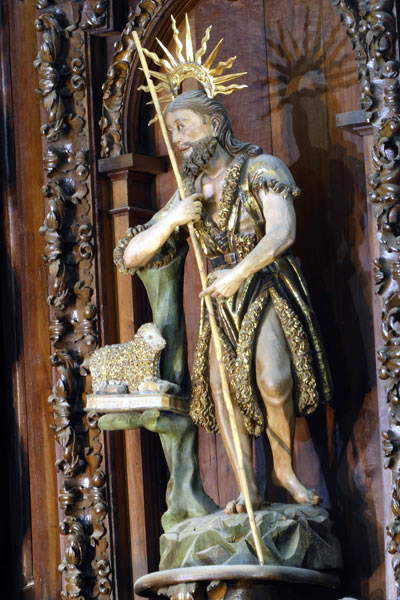
Saint John the Baptist
According to the gospels, John the Baptist carried out his work in the beginnings of the christianity. In the region of the river Jordan, he baptised those who searched for the conversion – therefore he is called the Baptist. Among the people he baptised was Jesus of Nazareth. John the Baptist is described as a hermit who lived in the desert and wore a camel-skin robe.
He is portrayed with a Lamb, the symbol of christ, a cane – it was originally a cross – and a skin robe.
Attic
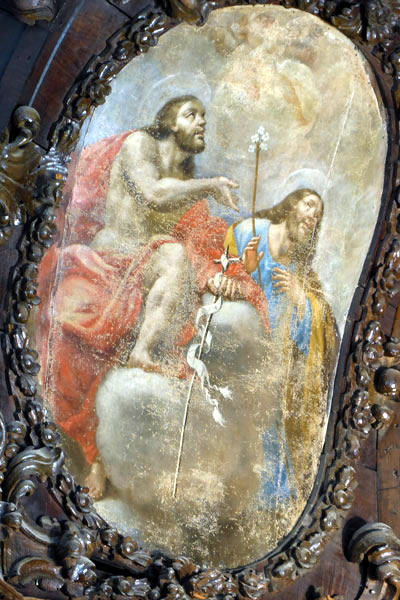
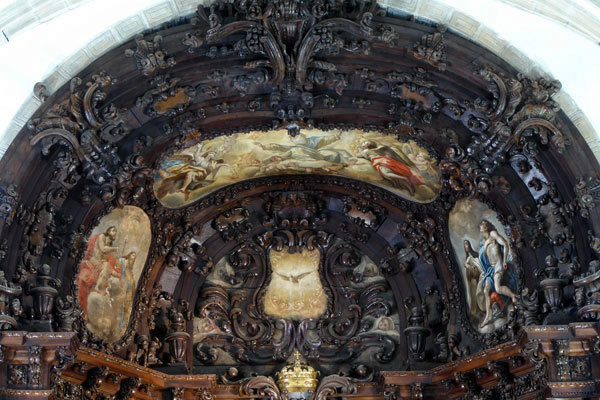
Christ and Saint Joseph
The painting portrays Jesus Christ and Saint Joseph in the Glory, surrounded by clouds and angels. Christ wears a purple cloak, the symbol of the Resurrection, and carries a cross in his hand, which represents the triumph over the death.
It stands out how he puts his leg on the cloud and it seems like he is moving towards the Eternal Father, who is depicted on the top of the altarpiece. Next to Christ is Saint Joseph with a blue tunic and a yellow cloak, carrying the flourished stick, which identifies him as the husband of the Virgin Mary, and looking towards heaven.
The painting was brought from Rome in 1704.
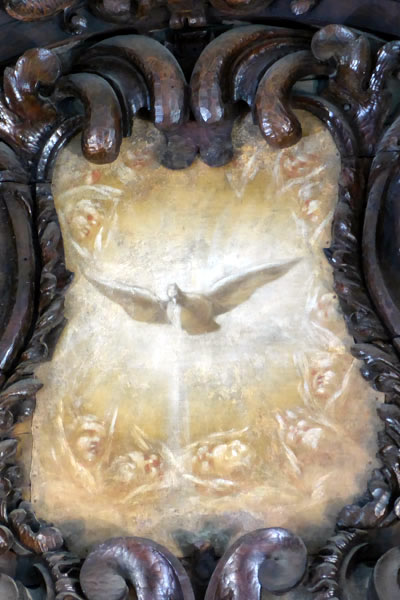
Holy Spirit
According to the cristian religion, the Holy Spirit is one of the three persons of the Most Holy Trinity. Together with God the Father and his Son Jesus Christ, the Holy Spirit forms a single divine essence. The Holy Spirit is usually portrayed as a white dove, with outstretched wings forming a cross.
In this picture the Holy Spirit is surrounded by angels, which intersperse themselves with the clouds, the symbol for the divine Glory.
The painting was brought from Rome in 1704.
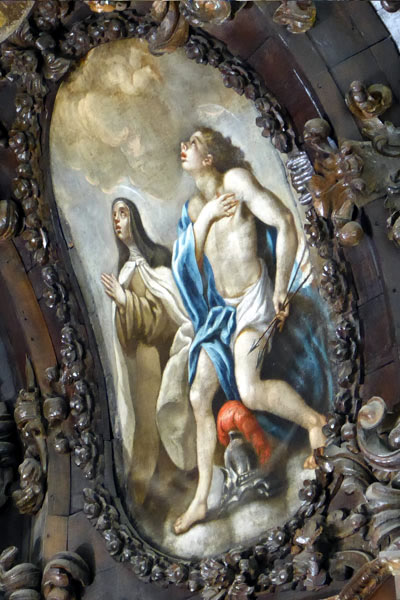
Saint Teresa and Saint Sebastian
Teresa of Ávila wears the habit of the discalced carmelites, a congregation that she reformed. She is portrayed praying on her knees and with faulted hands. Next to her is Sebastian, portrayed with a helmet next to his feet, which identifies him as a roman soldier, and three arrows in his left hand, the symbol of his martyrdom.
Both move their eyes towards God the Father, who is depicted on the top of the altarpiece.
The painting was brought from Rome in 1704.
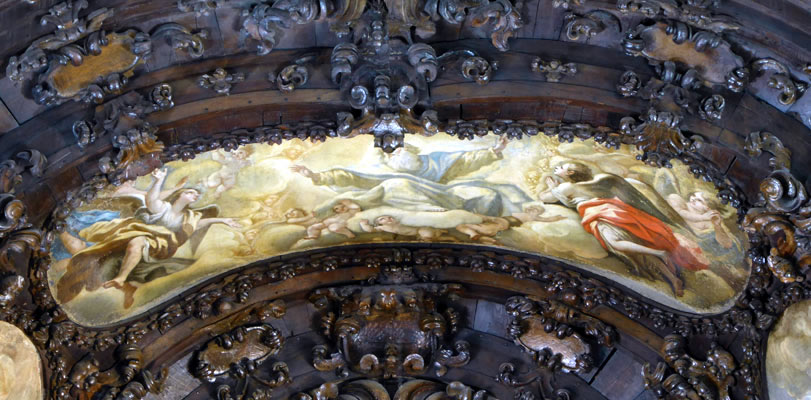
God the Father accompanied by Angels
God the Father is portrayed in the Glory, surrounded by clouds and angels. He is painted as an old man with white beard and hair outstretching his arms as a symbol of clemency.
Next to him, two angels are looking at and adoring him.
The painting was brought from Rome in 1704.