
Altarpiece of Saint Joseph (former Saint Ignatius of Loyola)
Collection of altarpieces
- Town: Orduña
- Church: Church of the Holy Family
- Location: crossing, Gospel Side
- Artists: Felipe del Castillo (architect) and Martín del Hoyo (sculptor)
- Patron: Juan de Urdanegui and Constanza de Luxan y Recalde, marquises of Villafuerte
- Chronology: 17th century (1688-1689)
- Style: Baroque
From a Jesuit altarpiece to an altarpiece dedicated to Saint Joseph
Interactive altarpiece: click on the pictures to get more information.
Church:
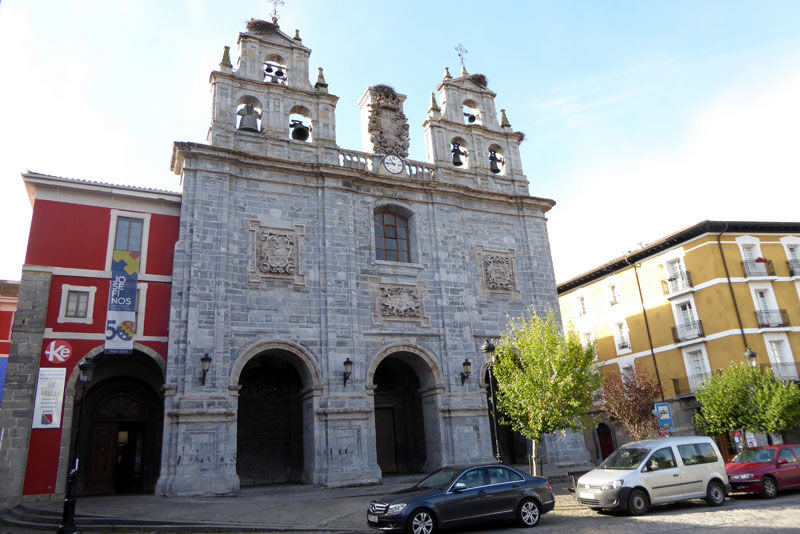
The Holy Family church originally was the church of the important Jesuit College in Orduña. This college is located in the centre of Orduña next to the customs facilities and the town hall. Its construction started in 1683 thanks to the donations given by 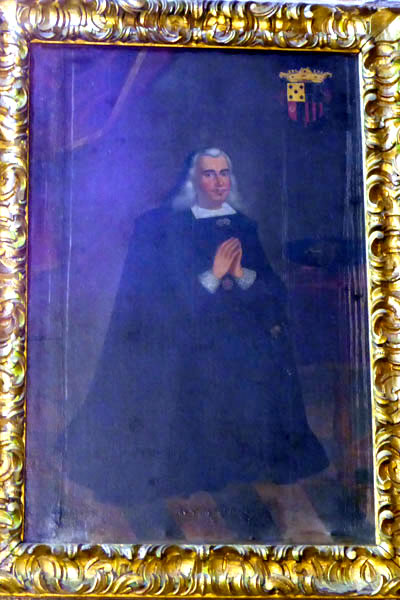
The church stands out for its monumentality with the portico, the two belfries and the large 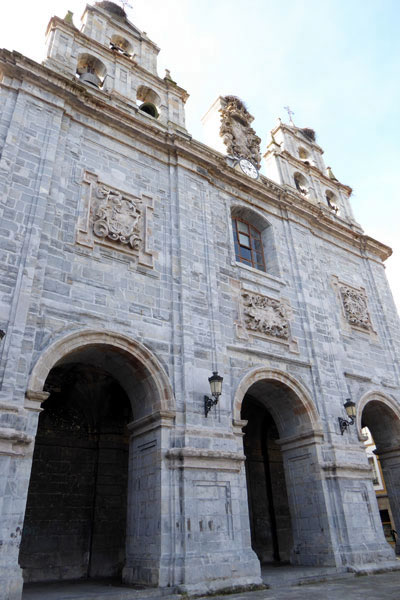
Patronage:
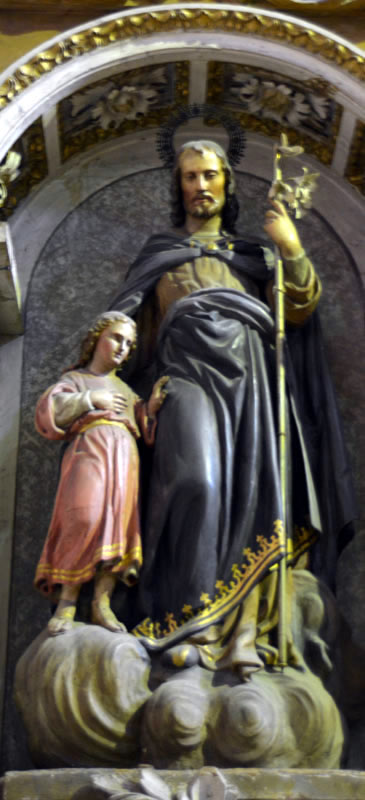
Even though the altarpiece was originally dedicated to Saint Ignatius of Loyola, today its main sculpture represents Saint Joseph. Joseph is the husband of Mary and the adoptive father of Jesus of Nazareth. According to the Gospel of Matthew, he was an artisan – later, the tradition concretised his profession as carpenter. He was of humble status, although he belonged to the lineage of King David.
Joseph is accompanied by the Christ Child Jesus and carries in his right hand a flourishing stick as an allusion to the miracle that made the priests recognise him as the suitable husband for the Virgin Mary.
Description:
The 
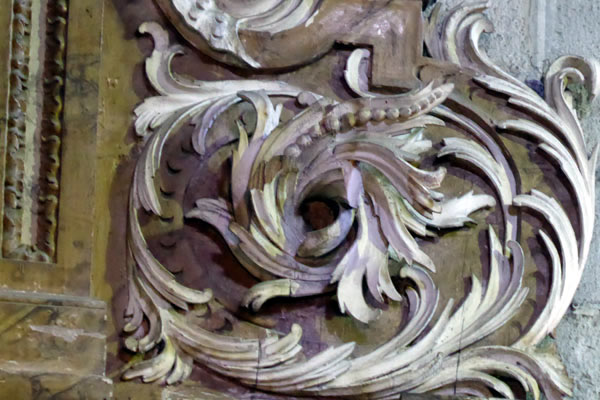
It is a much-decorated baroque altarpiece. The central alcove is framed by four 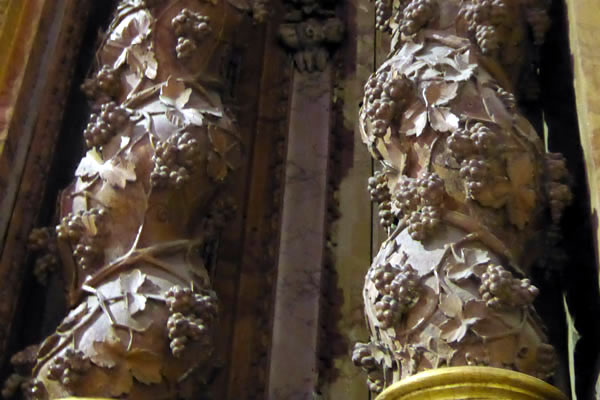
The polychromy of the altarpiece is kept simple. It appears mainly in the sculptures and makes them look like marble. However, the sculpture of Saint Joseph is 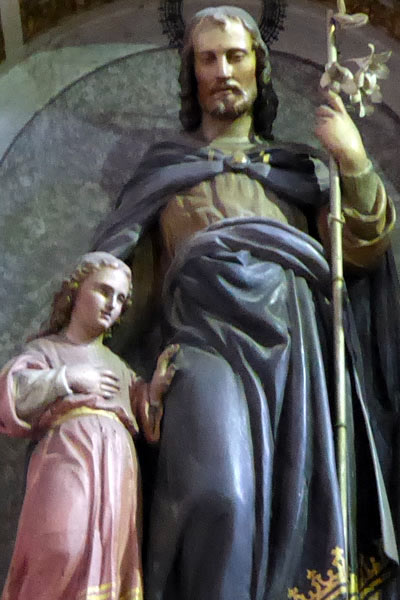
History:
This collection of altarpieces was built between 1688 and 1689 thanks to the nobleman and commander Juan de Urdanegui, who in 1666 had promised financial aid for the construction of a Jesuit College and Church in Orduña. Martín del Hoyo, a sculptor from Cantabria, and Felipe del Castillo, an architect from Orduña, were in charge of the construction. The latter one had built other works for the Society of Jesus such as the Saint John the Baptist and Saint John the Evangelist Church in Bilbao. (Iglesia de los Santos Juanes)
The altarpiece was originally dedicated to Saint Ignatius of Loyola, the founder of the Jesuits. However, in 1963, the monks of the Congregation of Saint Joseph, who currently run the College, changed the main sculpture and dedicated the altarpiece to their patron, Saint Joseph.
Sculptures:
Body 1
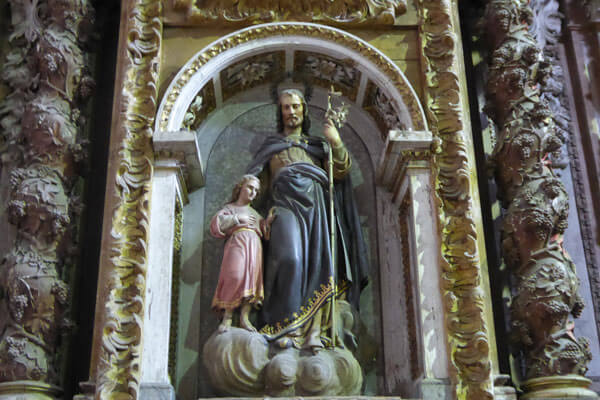
Saint Joseph
This sculpture from the 20th century depicts Joseph and the Christ Child Jesus.
Joseph carries in his left hand a flourishing stick that identifies him as the husband of the Virgin Mary and therefore as the adoptive father of Jesus of Nazareth.
Attic
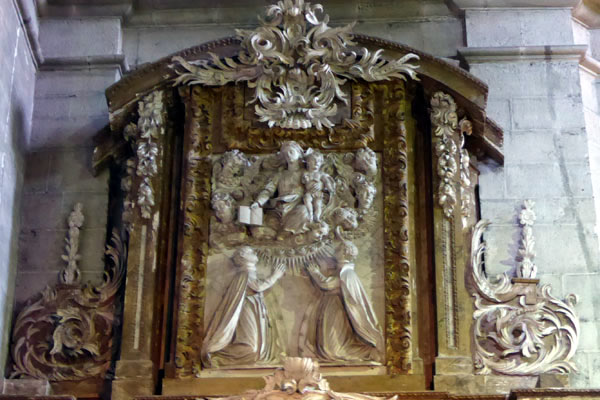
The handover of the Jesuit’s rule to Saint Aloysius Gonzaga and Saint Stanislaus Kostka
This wooden relief painted as if it was made of marble is of great importance for the Jesuits. It shows the moment when the Virgin Mary, holding the Child in her arms, appears in heaven and hands over the Rule of the Jesuit Order to Saint Aloysius Gonzaga and Saint Stanislaus Kostka. They were two Jesuits who already gained holiness as young men. Therefore, they are good examples for a college like this in Orduña.
Aloysius Gonzaga was an Italian noble who rejected his heritage, position and property to become a Jesuit. During the plague epidemic, which ruined Rome in 1591, he cared for the sick people. He himself became infected with this disease and died at the age of only 23 years. Stanislaus Kostka was a Jesuit novice from Poland, who stood out for his great devotion to the Virgin Mary and died at the age of only 17.